
You're trying to grow the business, not become a part-time media buyer, SEO analyst, web strategist, and marketing ops lead. But that's what usually happens. The website needs work, leads are inconsistent, your local visibility is patchy, and every agency site says the same thing about “results-driven strategies.”
That's where most small businesses get stuck. You don't need another glossy pitch. You need a partner that fits the way your business sells, whether that means local lead gen, ecommerce revenue, recurring appointments, or content-driven traffic. And you need to know what each agency is best at, because a strong PPC shop and a strong local growth partner are not the same thing.
This guide focuses on the best digital marketing agencies for small business by core strength, not just by name recognition. Some are broad, process-heavy operators. Some are better for local services. Some are strongest in social. One stands out because it combines marketing with custom development and practical AI support, which is still rare in this category. If you want a short list you can use, start here.
1. Up North Media
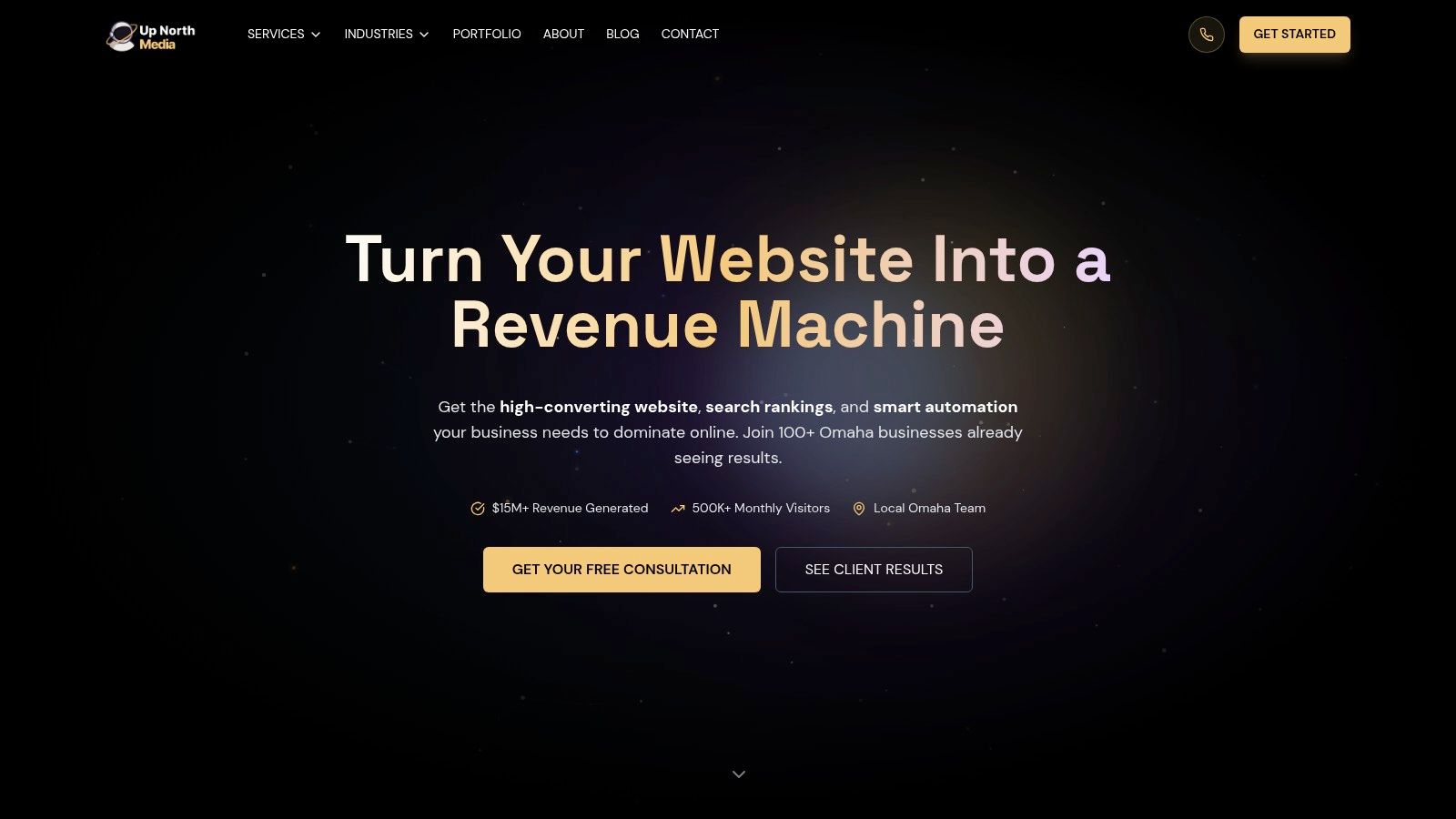
If your business needs more than campaign management, Up North Media is the most interesting option on this list. It's an Omaha-based agency that combines SEO, custom web development, and AI consulting, which makes it a better fit for businesses that don't just need traffic. They need better systems, better conversion paths, and fewer manual bottlenecks.
That combination matters more now because many agency roundups still focus on classic services like SEO, PPC, and social while overlooking implementation and integration support. At the same time, McKinsey reported that 65% of organizations were using generative AI regularly in 2024, which creates a real opening for agencies that can connect marketing with automation and operations.
Why Up North Media stands out
Most small businesses hire one partner for marketing and another for technical work. That split often slows everything down. The SEO team wants landing page changes, the developer has a backlog, and the owner sits in the middle trying to translate priorities.
Up North Media solves that problem by keeping strategy and execution close together. Its offering is built around conversion-focused websites, data-driven SEO, and practical AI applications that can support lead handling, internal workflows, and customer experience.
Practical rule: If your agency can't change the site, fix tracking, and improve the funnel, it can only influence part of your growth problem.
The agency is especially relevant for local services, ecommerce brands, publishers, startups, and businesses with niche operational needs. That includes companies that need custom portals, web apps, content engines, or automation layered into marketing.
Best fit and trade-offs
This is the featured local Omaha option for a reason. Businesses that want a hands-on regional partner often get more value from an agency that understands local sales realities and can still execute technically.
A few things stand out:
- Best for custom growth systems: Up North Media is stronger than a typical marketing-only shop when you need development, SEO, and automation working together.
- Best for businesses with operational friction: If leads are falling through the cracks or your team is buried in repetitive work, AI consulting can be more useful than adding another ad platform.
- Best for owners who want guidance: The agency offers a consultative process instead of forcing businesses into rigid packages.
The trade-off is simple. Pricing is custom, so if you want instant package comparison, you won't get it on the site. Larger enterprise buyers should also confirm fit if they need a very large national team structure.
If you're evaluating agencies and want sharper vetting criteria, Up North Media's guide on how to choose a digital marketing agency is worth reading before you book calls.
You can explore the agency directly at Up North Media.
2. WebFX
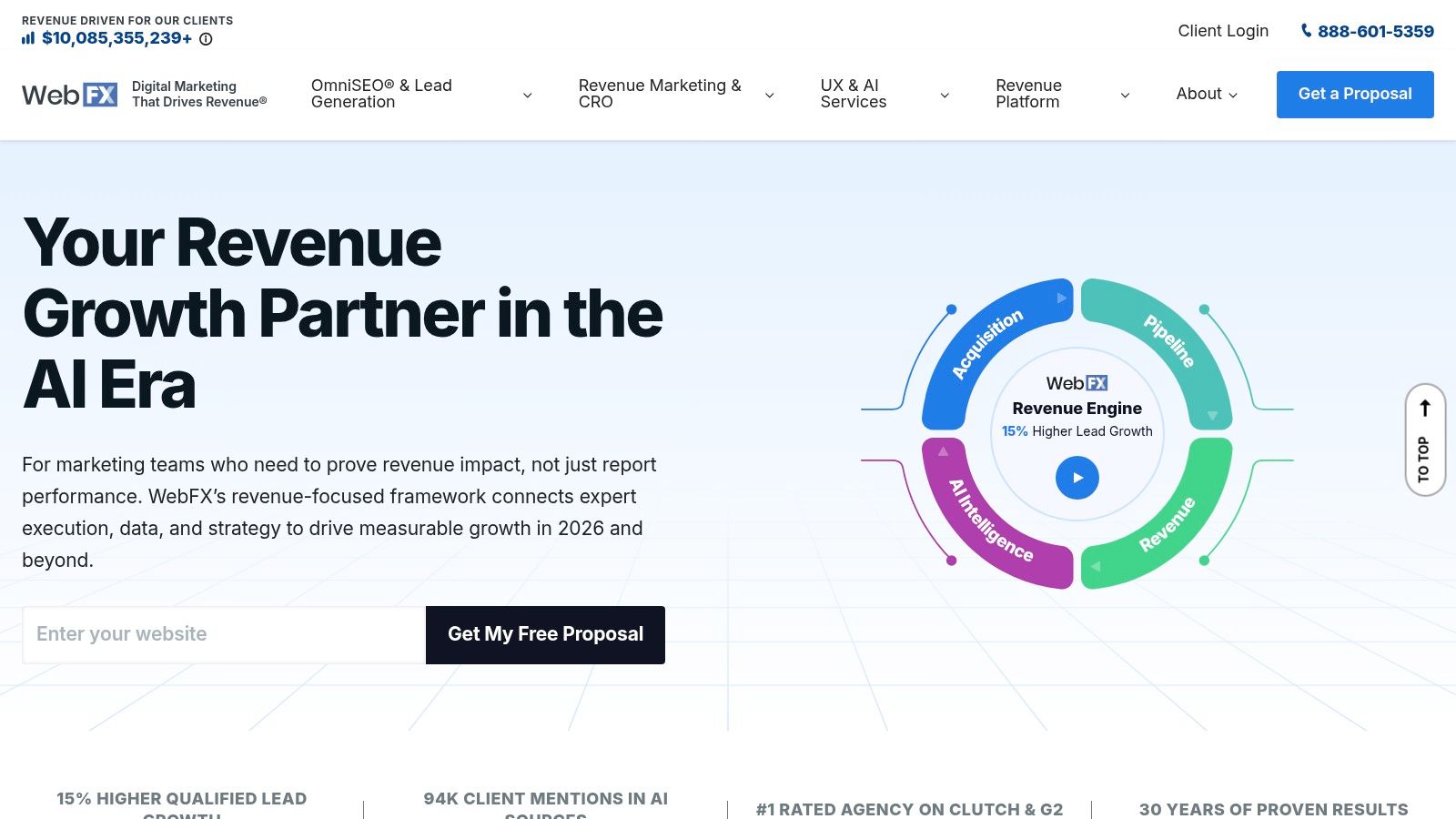
WebFX is the agency I'd put in front of a small business that wants one partner, broad channel coverage, and mature reporting. It's one of the most visible names in this category, and that scale shows up in its process. The service mix spans SEO, PPC, content, CRO, social, and web design.
That profile also lines up with broader market benchmarks. One roundup of small-business agency rankings placed WebFX at #1 and KlientBoost at #2, and described WebFX as an analytics-led operator using proprietary tooling for custom growth strategies.
Where WebFX works best
WebFX makes the most sense when you need a full-service partner with clear internal structure. Small teams often don't have separate people for paid media, SEO, landing pages, and analytics. WebFX can cover all of that under one roof.
Its RevenueCloudFX platform is a practical advantage for owners who care about lead quality and revenue visibility, not just traffic charts. That's important because strong small-business agencies increasingly win by tying marketing activity to conversions and revenue rather than stopping at awareness.
A large agency is useful when your business needs process discipline more than personality.
The main trade-off is that bigger firms can feel less bespoke. You may get strong execution, but not always the boutique-level intimacy some owners want. Service minimums can also be a hurdle for very small budgets.
- Choose WebFX if: you want broad capabilities, structured reporting, and a single vendor.
- Skip it if: you want a hyper-specialized boutique or need very low-budget experimentation.
- Website: WebFX
3. SmartSites
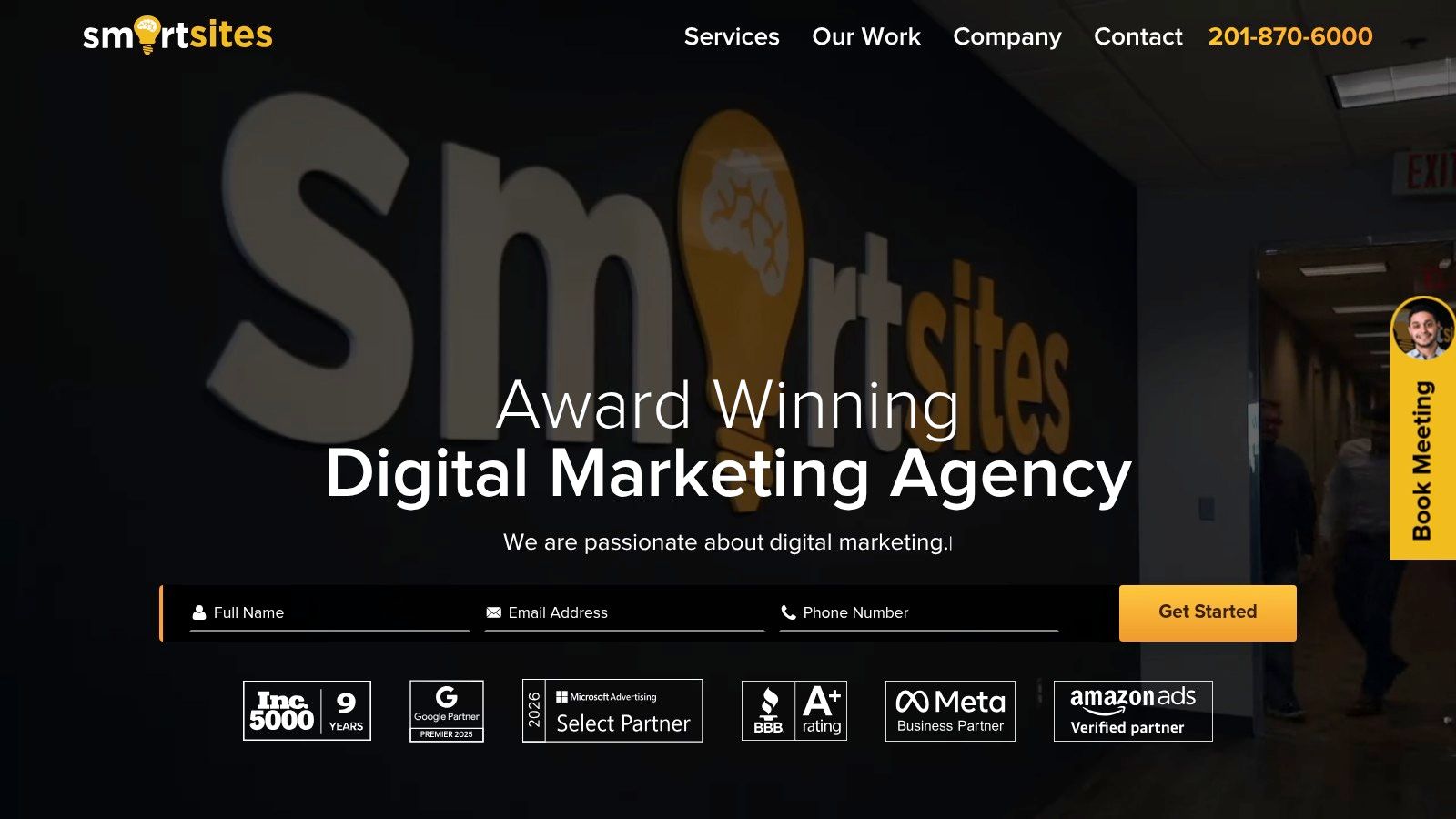
A common small-business problem looks like this: traffic is coming in, ad spend is active, but leads still feel expensive because the website is doing a poor job of converting visitors. SmartSites stands out in that situation.
Its real strength is the connection between paid media, SEO, and web design. That makes it a useful pick in a guide organized by agency strength, not just brand name. If WebFX is the broader systems-driven option, SmartSites is the clearer choice when the site itself is holding back growth.
Best for businesses that need traffic and site performance fixed together
SmartSites fits ecommerce companies, local lead generation businesses, and search-heavy service brands that depend on landing pages to turn intent into revenue. Sending more clicks to a weak site usually raises cost per lead. SmartSites is easier to justify when the better move is to improve the user experience and acquisition strategy at the same time.
That trade-off matters. Some agencies are strong on channel management but treat the website as a separate project. SmartSites is better suited to owners who want one team thinking about page speed, offer clarity, conversion paths, and campaign performance together.
Before hiring any agency in this category, it helps to know what you want the website to do. A clear digital marketing strategy for small businesses makes those conversations far more productive.
A few practical constraints are worth asking about early:
- Custom pricing only: budget fit usually becomes clear after a sales call.
- Paid media works better with enough spend: very small ad budgets can slow testing and learning.
- Best fit: businesses where site improvements can directly raise leads, sales, or booked appointments.
I'd shortlist SmartSites when a business does not need a huge all-in-one relationship, but does need sharper execution around landing pages, search traffic, and conversion paths.
- Website: SmartSites
4. Thrive Internet Marketing Agency
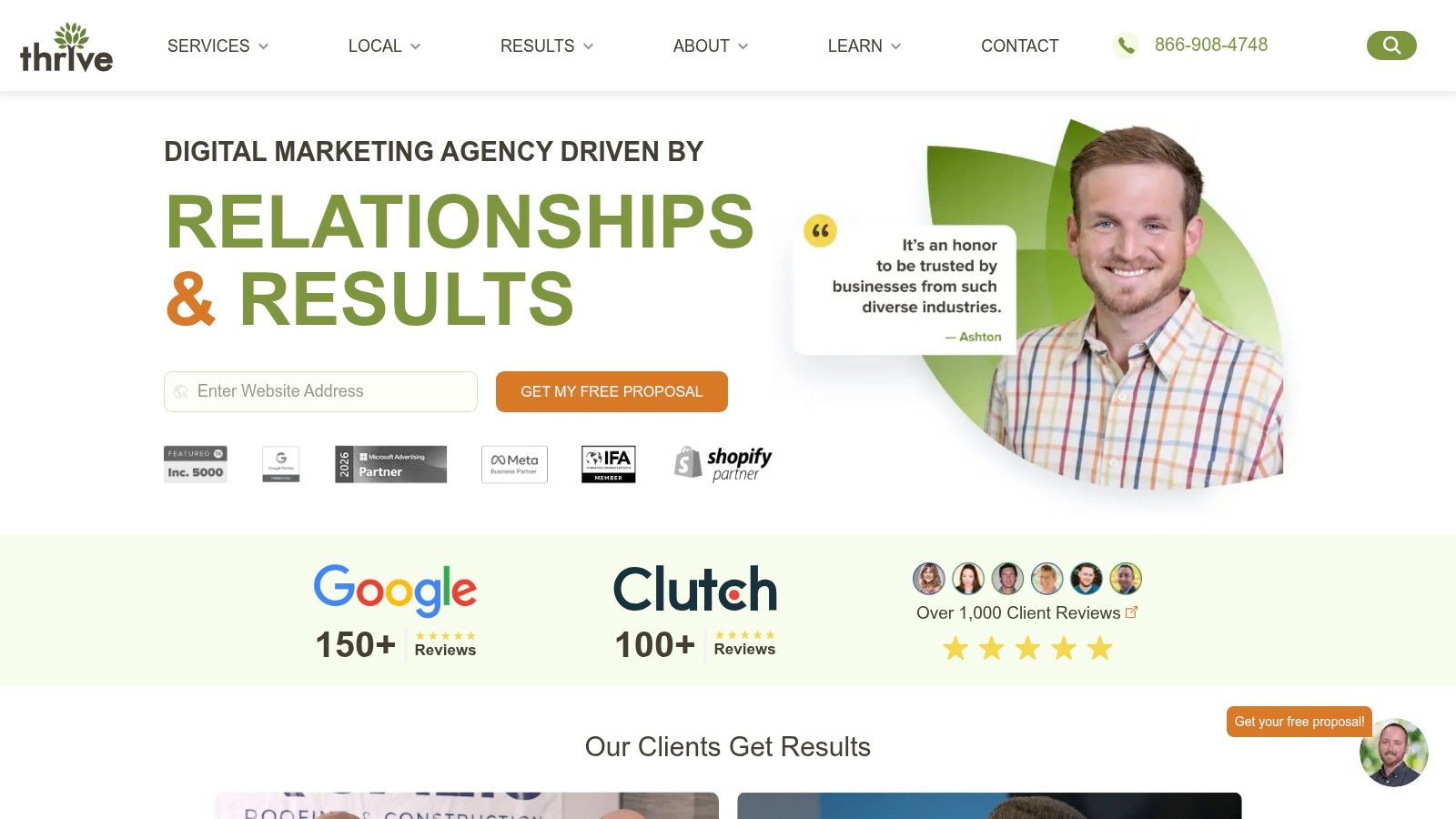
Thrive is a practical choice for small businesses that want full-service support without committing to a rigid long-term setup. It offers the usual core stack, including SEO, PPC, social, web design, CRO, and reputation management, but the appeal is really in how it packages those services for SMB use.
Its proprietary tools and reporting layer help simplify what can otherwise feel messy. That matters because small businesses usually don't need more dashboards. They need a clearer read on what's working and what to do next.
Best for flexible full-service support
Thrive is especially useful for local service businesses that need local SEO, reviews, search visibility, and ads moving together. It's also a reasonable middle ground if you want broader service coverage than a niche shop but don't want a giant agency relationship.
Small-business marketing data helps explain why this model works. In a survey of over 1,000 small businesses, social media ranked as the top opportunity for acquiring new customers, followed by email marketing and online paid media, with content marketing next. Agencies that can connect those channels sensibly have an advantage over firms that only sell one lane.
If you need help framing your own channel mix before hiring anyone, this primer on how to create a digital marketing strategy is a useful planning resource.
What works: one agency handling search, social, and reputation for a service business with limited internal bandwidth.
What doesn't: expecting a generalist agency to replace deep custom development or highly technical product work.
Thrive's main limitation is that highly specialized build work may fall outside its sweet spot. But for SMBs that want flexibility and consolidated reporting, it's a solid contender.
- Website: Thrive Internet Marketing Agency
5. Hibu
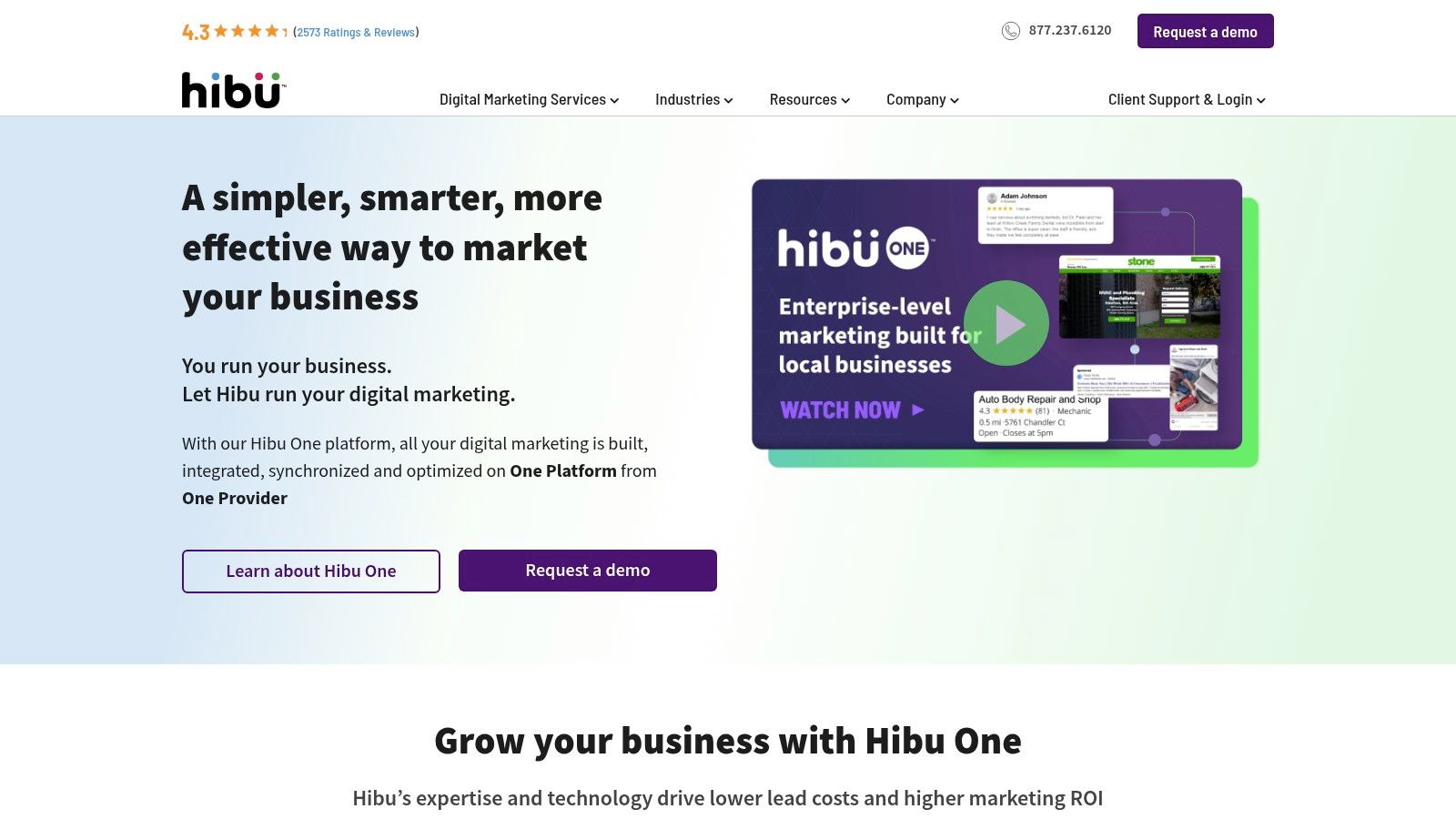
Hibu is built for the owner who wants as much done-for-you support as possible. If you run a local business and don't want to assemble separate vendors for your website, listings, reviews, ads, and lead handling, Hibu is one of the clearest all-in-one options.
That bundled approach won't appeal to everyone. But for busy operators, simplicity has real value.
Best for local businesses that want one dashboard
Hibu's strength is operational convenience. It combines website services, business listings, review management, local SEO, and managed advertising into one managed offering. That setup is often a better fit for owner-led businesses than hiring separate specialists and trying to coordinate them yourself.
Small businesses already tend to concentrate on a few core channels rather than spreading budget everywhere. The same Campaign Monitor survey found that Facebook was used by nearly 69.6% of respondents and email marketing by 64.1%, with other channels trailing behind. In practice, that means all-in-one providers can work well when they organize the basics clearly and keep execution moving.
The upside with Hibu is low internal lift. The downside is lower flexibility.
- Best for owner-operators: especially local services, medical, and multi-location businesses that need visibility and review support.
- Less ideal for advanced marketers: if you want granular control over every channel decision, Hibu can feel restrictive.
- Contract caution: buyers should review terms carefully and ask direct questions about ownership, access, and transition processes.
For small businesses that need momentum more than customization, Hibu is easy to understand. Before signing with any managed provider, it helps to review practical digital marketing tips for small businesses so you know what should remain under your control.
- Website: Hibu
6. Scorpion
Scorpion is strongest when vertical expertise matters as much as channel expertise. If you're in legal, healthcare, home services, or franchising, that specialization can be more valuable than working with a general agency that has to learn your intake process, compliance constraints, and local competition from scratch.
Its model blends marketing services with a platform layer for reporting, lead tracking, and intake workflows. That's useful for businesses where missed calls, delayed follow-up, or poor lead routing can waste good marketing spend.
A strong fit for local service categories
I'd consider Scorpion when the business depends on local lead volume and the sales process has more moving parts than a simple form fill. That includes firms where intake speed, call handling, and visibility by location all affect return.
This is also where many generic “best digital marketing agencies for small business” lists fall short. They compare service menus but don't do enough to evaluate whether the agency can prove ROI quickly or reduce wasted spend through better tracking and first-party data. Technology adoption barriers and harder attribution make that more important for smaller firms, especially in uncertain conditions, as noted in TechnologyAdvice's discussion of ROI, conversion tracking, and first-party data strategy.
If your business loses leads after the click, more traffic won't save you. Intake and tracking matter just as much.
Scorpion's trade-off is control. Some businesses love the platform-plus-service model. Others prefer to choose each channel partner separately. But if you want a verticalized system built around local service growth, Scorpion deserves a close look.
- Website: Scorpion
7. LYFE Marketing
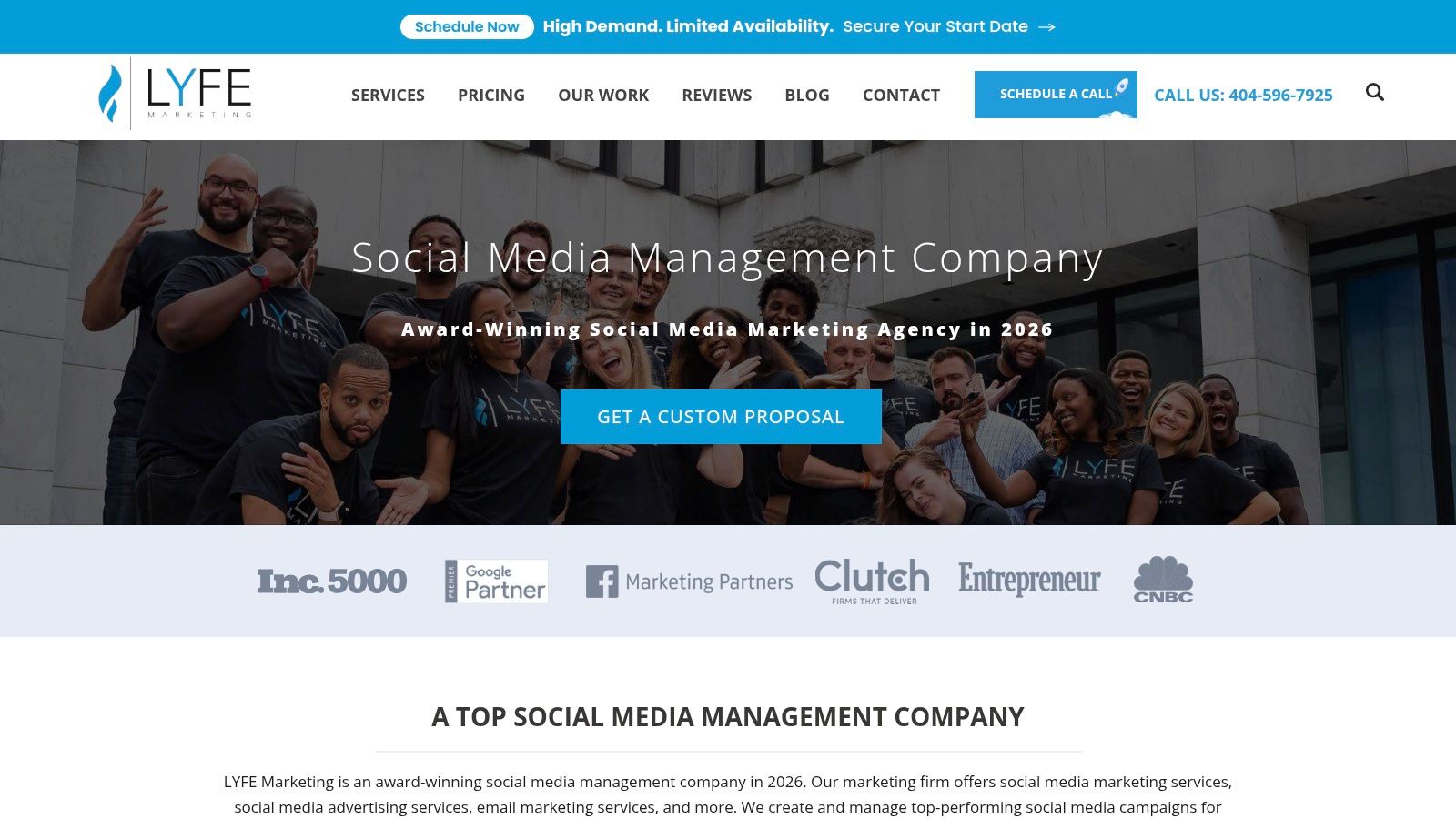
LYFE Marketing is the social-first option on this list. That makes it a smart pick for businesses that don't need a heavy full-service retainer but do need consistent posting, content production, moderation, and paid social support.
For many small businesses, that's enough. Not every company needs a broad agency relationship right away. Some need to clean up one channel and build consistency.
Best for steady social execution
LYFE works best when social media is a meaningful sales or visibility channel and the business lacks time to manage it properly. Its package structure is easier to understand than many agency offers, which is helpful for smaller teams that want clearer expectations.
The broader SMB channel mix supports this focus. Salesforce's SMB marketing guidance frames digital marketing around core channels like websites, content, social media, email, and search engine marketing, while also emphasizing the importance of combining these efforts with measurement and customer data where possible. That's why I'd treat LYFE as a focused partner, not a universal answer.
Use LYFE when social is the job to be done.
- Good fit: retail, personal brands, wellness, local lifestyle businesses, and service companies that benefit from regular social touchpoints.
- Less ideal: businesses that need serious SEO, CRO, analytics architecture, or technical website work.
- Practical benefit: easier entry point for owners who want managed content without enterprise complexity.
If you're comparing agencies and one promises everything equally well, be skeptical. LYFE is narrower, but that honesty is part of the appeal.
- Website: LYFE Marketing
Top 7 Digital Marketing Agencies for Small Business, Comparison
| Agency | Implementation Complexity 🔄 | Resource Requirements ⚡ | Expected Outcomes ⭐📊 | Ideal Use Cases | Key Advantages 💡 |
|---|---|---|---|---|---|
| Up North Media | Medium–High 🔄🔄🔄 (custom full‑stack builds) | Medium ⚡⚡ (dedicated team, custom scope) | High ⭐⭐⭐⭐ · measurable traffic & conversion lifts 📊 | Local SMBs needing conversion‑first web + SEO + AI | 💡 Integrated full‑stack execution; strong ROI focus |
| WebFX | Medium 🔄🔄 (process-driven, end‑to‑end) | Medium–High ⚡⚡⚡ (large in‑house team, managed stacks) | High ⭐⭐⭐⭐ · revenue‑linked analytics via RevenueCloudFX 📊 | SMBs wanting a single mature partner for growth | 💡 Clear scopes, strong reporting and account management |
| SmartSites | Medium 🔄🔄 (PPC + landing optimization) | Medium ⚡⚡ (ad budgets and creative resources) | High for paid/e‑commerce ⭐⭐⭐⭐ · measurable CPA/ROAS gains 📊 | E‑commerce and lead‑gen SMBs focused on paid acquisition | 💡 Deep PPC expertise and conversion‑minded design |
| Thrive Internet Marketing Agency | Medium 🔄🔄 (multi‑channel but modular) | Low–Medium ⚡⚡ (flexible month‑to‑month plans) | Good ⭐⭐⭐ · consolidated insights via Thrive tools 📊 | SMBs seeking flexible, consolidated reporting & tools | 💡 Proprietary tooling (Thrive Score/Stats/AI) and transparency |
| Hibu | Low 🔄 (turnkey platform) | Low ⚡ (managed, low internal lift; contract terms apply) | Steady ⭐⭐–⭐⭐⭐ · simplified lead handling & listings 📊 | Owner/operators wanting an all‑in‑one local marketing platform | 💡 Turnkey setup with unified dashboard and playbooks |
| Scorpion | Medium–High 🔄🔄🔄 (verticalized platform + services) | High ⚡⚡⚡ (platform, specialized teams) | High in service verticals ⭐⭐⭐⭐ · improved lead intake & ROI 📊 | Local service SMBs (legal, healthcare, home services, franchises) | 💡 Deep vertical playbooks and AI‑guided media allocation |
| LYFE Marketing | Low–Medium 🔄🔄 (social‑led execution) | Low ⚡ (tiered SMB pricing, focused scope) | Good for social growth ⭐⭐⭐ · consistent engagement metrics 📊 | SMBs needing ongoing social content, moderation and ads | 💡 Transparent SMB‑friendly pricing and social focus |
How to Choose the Right Agency for Your Business
A small business owner usually hires an agency at the point where something is already breaking. Leads are inconsistent. The website gets traffic but few form fills. The phone rings, but not from the right prospects. At that stage, choosing an agency by name recognition alone is expensive.
Start by identifying the constraint. A home services company that needs booked jobs should not shop the same way as an ecommerce brand trying to lower acquisition costs or a publisher trying to grow qualified search traffic. This guide groups agencies by core strength for that reason. Some are better as all-in-one platforms. Some are stronger in paid acquisition, social media, or custom web development. The right fit depends on the problem you need solved first.
Specialization has also increased across the agency market, as noted earlier. That creates better options for small businesses, but it also makes evaluation harder. The practical question is not "Who offers the most services?" It is "Who can improve the bottleneck that is costing us revenue right now?"
Questions worth asking before you sign
Use these in every sales call, and press for clear answers:
- How do you define success for this engagement? Ask which metrics they review regularly and how they tie campaign activity to leads, sales, booked calls, or revenue.
- Who will do the work? Some agencies sell through a senior strategist and hand execution to junior staff or offshore teams. That model is not automatically bad, but you should know it upfront.
- What would you fix first on my site or funnel? A good agency should spot likely friction quickly, whether that is weak landing pages, unclear offers, slow load times, poor tracking, or broken follow-up.
- Have you worked with businesses that share my sales cycle? Industry logos matter less than understanding how your customers buy, how long decisions take, and what a qualified lead is worth.
- How will communication work? Ask who owns the account, how often you meet, what gets documented, and how scope changes are handled.
- What do you need from my team to get results? Strong agencies are clear about dependencies. Approvals, content, CRM access, call tracking, and sales feedback all affect performance.
A strong answer is usually specific. A weak answer is usually broad, polished, and hard to measure.
What usually works
The best agency relationships are built around control and accountability. If an agency is responsible for lead volume but has no say over landing pages, forms, offer positioning, or tracking, results often stall. If reporting stops at clicks and impressions, you will struggle to tell whether the work is paying off.
Good partnerships also match your operating reality. Some small businesses need a low-lift, managed platform because the owner has no internal marketing team. Others need a specialist that can work alongside an in-house person and improve one part of the funnel fast. Neither model is universally better. The trade-off is usually convenience versus flexibility, or broad support versus channel depth.
What usually goes wrong
Problems start when an agency prescribes tactics before diagnosing the business. If the first recommendation is "you need SEO" or "you need more ads" before anyone asks about close rates, attribution, site performance, or lead handling, be careful.
Another common issue is fragmented ownership. One vendor runs ads, another built the website, someone else manages the CRM, and no one owns conversion performance end to end. Small businesses feel this quickly. Spend goes up. Reporting gets noisy. Decisions slow down.
The agencies in this list are easier to evaluate if you use them for what they are strongest at, not what their sales page says they can do. Hibu and Scorpion make sense for businesses that want a more managed platform approach. LYFE Marketing fits companies that need social media execution. WebFX and SmartSites are stronger picks when performance marketing and measurable lead generation are the priority. Up North Media is a useful Omaha example because it combines SEO, conversion-focused development, and practical AI support for businesses that need traffic growth and funnel improvements working together.
Fit drives ROI. Clear scope, good tracking, realistic expectations, and the right specialization usually matter more than agency size.
If your business needs more than surface-level marketing help, Up North Media is worth a serious look. It's especially strong for Omaha businesses, ecommerce brands, publishers, and service companies that need SEO, conversion-focused web development, and practical AI support working together. Book a consultation if you want a partner that can improve traffic, tighten the funnel, and help your team operate more efficiently at the same time.