
Choosing the best web app development framework usually starts with a real deadline, not a theory exercise. An Omaha business might need a store that can rank, a publisher platform that needs fast pages and clean content workflows, a SaaS product that has to scale, or an internal app that the team can maintain without hiring a niche specialist. In that moment, the most popular option is not automatically the right one.
This roundup compares ten strong choices by rendering model, SEO implications, performance, architecture, hiring realities, integration flexibility, migration risk, and long-term maintenance. It also separates the practical categories that get blurred in comparison posts, frontend application frameworks, full-stack frameworks, and backend-focused options. For a founder-friendly framing of how product goals shape framework decisions, Refact's web application development guidance is a useful companion read.
The field itself has changed in ways that matter. React's rise from a 2013 open-source release into a dominant frontend option reflects the broader shift toward component-driven development, while the 2010 to 2015 wave of AngularJS, React, and Vue.js established the modern framework era source. That history explains why teams now ask different questions than they did a decade ago, especially around SEO, server rendering, and delivery architecture.
1. Next.js
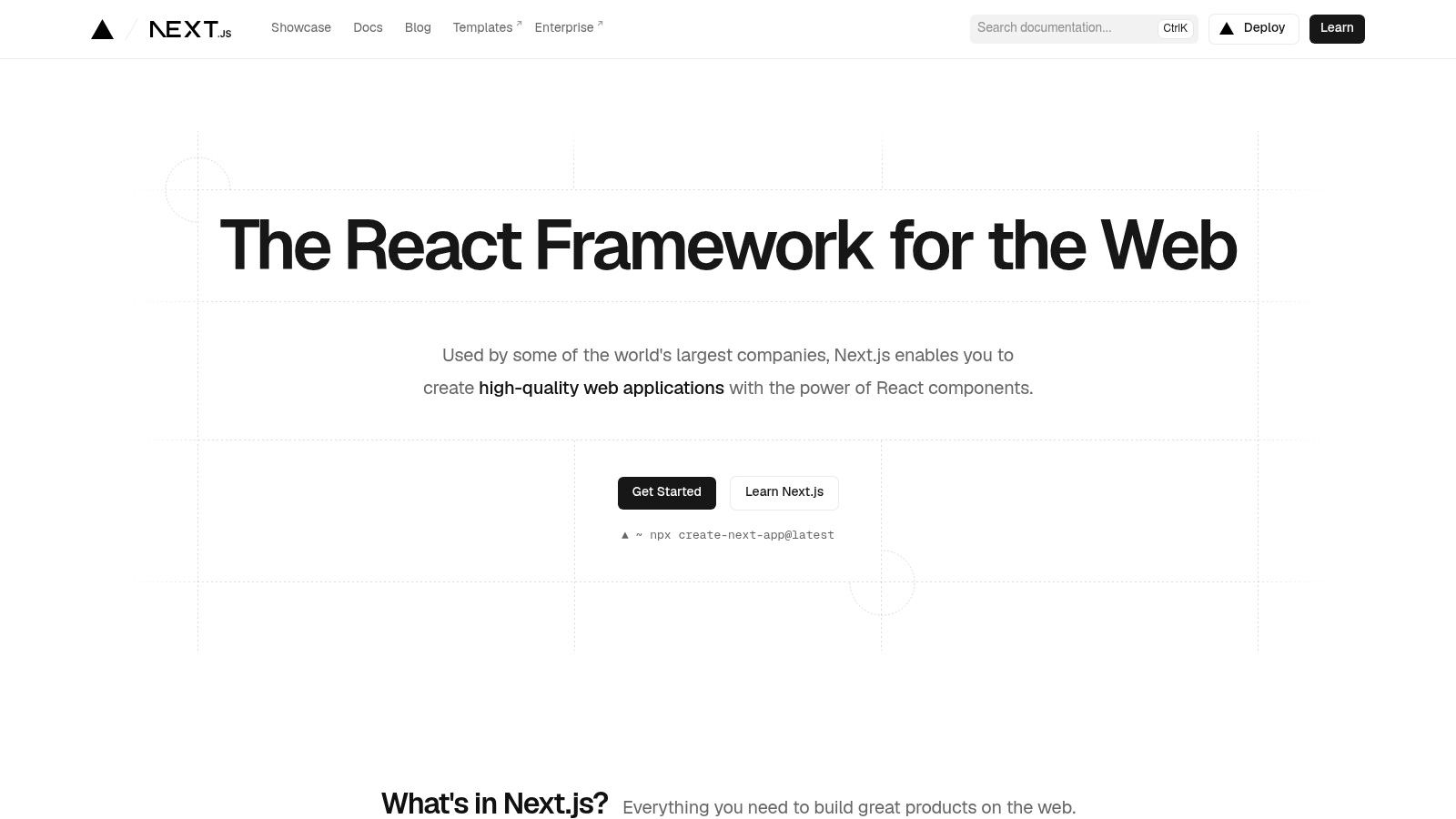
Next.js is often the first serious answer when a team wants React without giving up SEO, SSR, or production-grade routing. The platform is built around hybrid rendering, so you can choose the right mode per route instead of forcing every page into the same delivery pattern. That matters for marketing pages, e-commerce catalogs, SaaS onboarding, and content apps that need both fast iteration and search visibility.
The platform's own architecture reflects that flexibility. It combines Server Components, SSR, SSG, and ISR, along with file-based routing, API routes, image and font optimization, caching controls, and first-class TypeScript support at Next.js. The result is a framework that fits teams that want React's ecosystem but need a more complete web app layer than a bare component library.
Practical rule: choose Next.js when the app needs a strong public-facing layer and a React-based product surface, then verify that your routing and caching plan is understood before launch.
The trade-off is real. Next.js ties you to React's mental model, and the App Router introduces patterns that can slow teams down during migration. For Omaha SMBs and content-heavy stores, that's usually acceptable if the team wants one stack for pages, products, and app flows. It also pairs well with the kind of tool selection thinking outlined in this web application development tools guide, especially when a project needs to connect framework choice to deployment, testing, and operations.
2. Angular
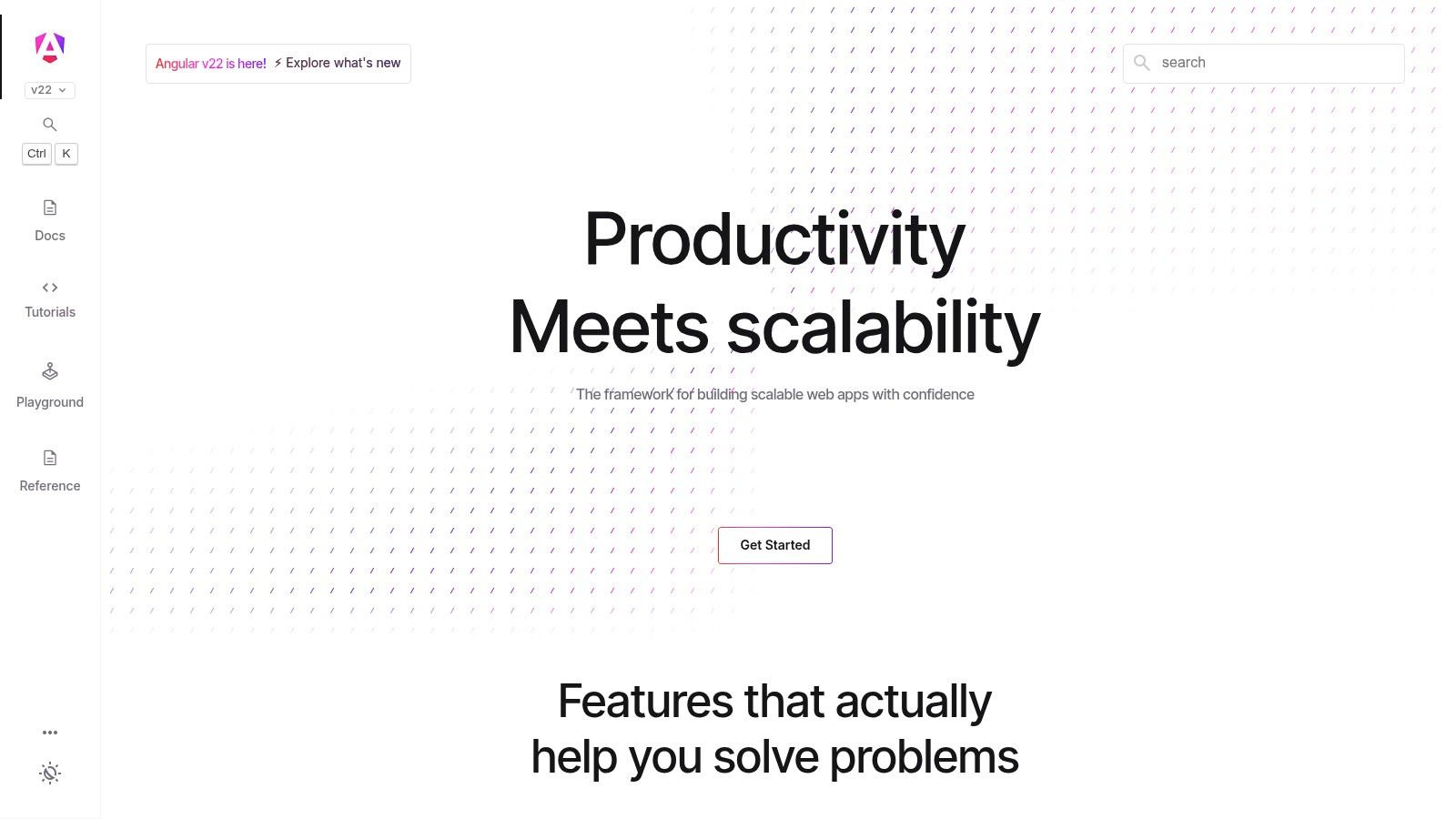
Angular is the framework I'd pick when a team wants strong conventions and doesn't want the codebase to drift in five different directions. It's opinionated by design, which is a benefit for large internal apps, enterprise portals, and teams that need predictable structure across many developers. The upfront learning curve is steeper than lighter options, but that discipline pays off when multiple squads touch the same application.
The current Angular platform leans into Signals, fine-grained reactivity, and modern control flow, while still supporting SSR, SSG, hydration, and incremental hydration at Angular. Its first-party routing, forms, dependency injection, and CLI tooling make it feel like a full application platform instead of a pieced-together frontend stack. For regulated businesses or long-lived enterprise products, that consistency can reduce architectural confusion.
A strong Angular team usually cares less about novelty and more about control. That's why it can work well for back-office dashboards, complex admin surfaces, or operations-heavy applications where reliability matters more than fast experimentation. It's also a reasonable choice when hiring in a TypeScript-first organization, because the framework's architecture gives new developers a clearer path than a highly flexible, loosely governed stack.
What does not work well: treating Angular like a quick throwaway front end. If the project is small, moving fast, and likely to change shape every few weeks, Angular can feel heavier than the product needs.
3. Vue.js
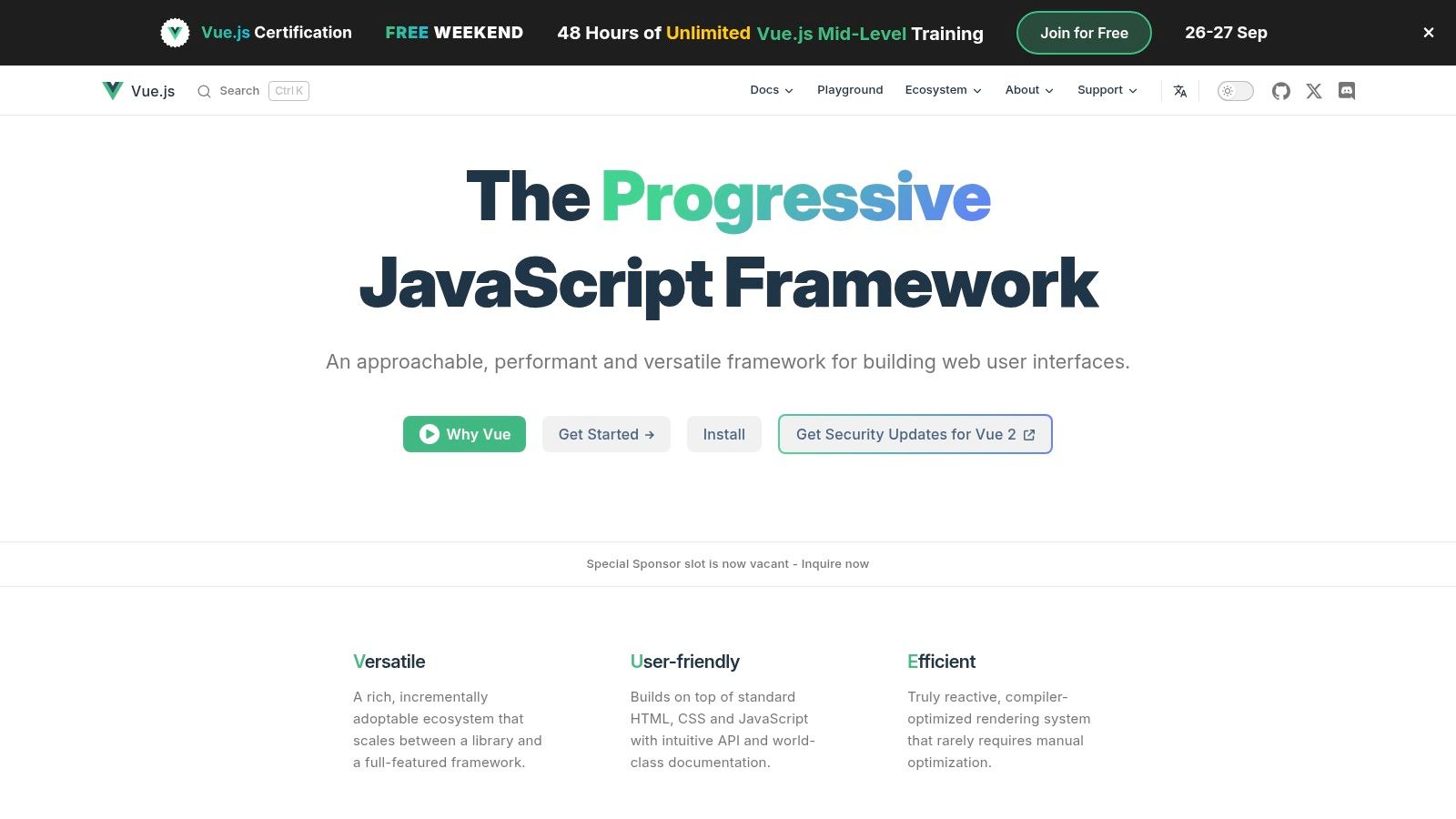
Vue.js is the framework to look at when the team wants approachability without sacrificing real application structure. It's often easier to adopt than Angular, and its single-file components keep markup, logic, and styling readable for smaller teams. That makes it a strong fit for dashboards, content sites, and product teams that want to move quickly without a steep onboarding tax.
The official ecosystem centers on the Composition API, reactive core, Vue Router, Pinia, and single-file components, with companion frameworks handling SSR and SSG when needed at Vue.js. That last part matters. Vue itself is flexible and lightweight, but if the business needs full-stack delivery or SEO-heavy server rendering, teams usually add Nuxt or similar server tooling rather than assuming the base framework will handle everything alone.
Vue is often underrated in migration projects because it can sit inside a larger codebase without forcing a total rewrite. That flexibility is useful for Omaha SMBs that already have a working site or admin panel and want to modernize one slice at a time. For startups, it can also be a lower-friction way to build polished UIs before the product team commits to a deeper architecture.
The trade-off is straightforward. Vue's ecosystem is mature, but if you need an all-in-one server-rendered app story, you'll assemble more pieces yourself than you would with Next.js or a backend framework. For publishers and smaller commerce teams, that's fine if the dev team values clarity and incremental adoption more than a prescriptive platform.
4. SvelteKit
SvelteKit is the best choice here for teams that want a lean runtime and a clean developer experience without carrying a large framework tax. It's the official app framework for Svelte, and it focuses on file-based routing, server endpoints, form actions, and adapters for multiple hosts. That makes it useful for apps where performance and simplicity matter more than ecosystem size.
The platform supports SSR, SSG, and SPA modes, plus adapters for Node, Vercel, Cloudflare, Netlify, and static hosting at SvelteKit. In practice, that gives product teams a straightforward path from prototype to deployment without forcing a heavy client bundle. The compile-time approach also reduces the amount of runtime machinery the browser has to carry.
SvelteKit works best when the team is willing to trade ecosystem breadth for a lighter application surface.
That trade-off matters for hiring and third-party integrations. SvelteKit can absolutely power serious applications, but the ecosystem is smaller than the React, Angular, or Vue universe. For an Omaha startup or a performance-sensitive publisher, that's often acceptable if the project needs quick interfaces, low boilerplate, and strong perceived speed. For a large organization with many integration dependencies, it's safer to validate the required libraries and deployment path early.
5. Django
Django is the framework that keeps showing up in serious business conversations because it removes a lot of decision fatigue. It gives you a mature ORM, templating, forms, authentication, an admin interface, and strong security defaults in one place. That's a strong match for content-heavy applications, marketplaces, internal tools, and MVPs that need to ship without a lot of framework sprawl.
The official platform emphasizes built-in admin, documentation, and long-term stability at Django. For teams that want to move quickly but still enforce conventions, Django is a practical middle ground between rigid enterprise stacks and hand-assembled microframeworks. It works especially well when the business needs to model data first and UI second.
If you're building with Python already, Django usually shortens the path to production. The built-in admin is especially useful for publishers and SMBs that want non-technical staff to manage content or records without custom tooling. For teams evaluating broader Python web application options, this Python development guide is a relevant reference point.
Where Django can feel restrictive is in highly interactive, SPA-style front ends. Many teams pair it with a separate frontend framework rather than forcing the whole experience through server-rendered templates. That's not a flaw, it's a design decision. For Omaha businesses, Django often makes the most sense when the priority is reliability, content management, and a backend that doesn't need a lot of improvisation.
6. Ruby on Rails
A small team validating a marketplace idea can have a working workflow quickly with Rails. Convention over configuration reduces setup decisions, while scaffolding supports models, jobs, mailers, websockets, and a consistent application structure. That makes Rails a practical choice for CRUD-heavy SaaS products, marketplaces, and internal tools.
Rails provides a full-stack toolkit with Active Record, Action Mailer, Active Job, Action Cable, and Hotwire at Ruby on Rails. Teams can keep the application coherent without selecting every supporting library independently. Its conventions also make handoffs easier, although hiring developers with current Rails experience can affect project cost and delivery speed.
Best fit: validate a product, launch a workflow, and keep the codebase understandable for a small team.
Rails supports server-rendered pages that can perform well for content and SEO, while Hotwire adds richer interactions without requiring a separate single-page application. Third-party services and AI APIs fit through ordinary Ruby libraries and HTTP integrations, but teams should assess available Ruby talent before committing. For a broader comparison of Python options, see this backend framework guide by Appjet.ai.
Scaling and performance tuning demand practical Rails knowledge. Caching, database design, background jobs, and deployment choices matter as traffic grows. For Omaha SMBs, publishers, e-commerce teams, and startups, Rails is strongest when fast product validation and a focused, maintainable codebase matter more than a large local hiring pool.
7. Laravel
Laravel is one of the strongest choices for SMB web apps because it combines a polished developer experience with a broad set of first-party tools. The framework's routing, Eloquent ORM, queues, authentication, and caching give teams a dependable core without much setup overhead. For businesses that need to ship storefronts, content apps, or APIs quickly, that simplicity is hard to beat.
Laravel's ecosystem goes beyond the base framework. Official products like Forge, Vapor, Nova, and Cloud, plus starter kits for React, Vue, and Svelte, create a very complete path from build to deployment at Laravel. The CLI and documentation are part of the draw too, because they make the framework easier to hand off across a small team or agency-client relationship.
This is a strong fit for Omaha e-commerce retailers and fast-moving startups that want rapid iteration without sacrificing structure. Laravel also works well when the backend needs to support multiple frontend options instead of locking the team into one presentation layer. The main caution is that some advanced serverless and managed services are paid, so teams should budget for the ecosystem they plan to use.
8. ASP.NET Core
ASP.NET Core belongs on any serious short list for enterprise backends and structured internal systems. It's Microsoft's open-source framework for APIs, MVC apps, and real-time applications, and it fits teams that are already standardized on C# and .NET. The framework's cross-platform runtime also matters, because it runs across Windows, macOS, and Linux without tying deployment to one environment.
The platform supports Minimal APIs, MVC, Razor Pages, and SignalR for WebSockets at ASP.NET Core. That breadth makes it useful for line-of-business systems, regulated industries, and applications that need strong tooling and Azure integration. For larger organizations, the long-term support story is often just as important as raw technical features.
The trade-off is mostly organizational. Small teams unfamiliar with C# may feel the stack is heavier than they need, especially if the product is still changing shape. That said, for enterprise buyers, the combination of tooling maturity, strong deployment options, and a well-defined architecture can reduce delivery risk. If the app must live inside a broader Microsoft environment, ASP.NET Core is often one of the safest decisions.
9. Spring Boot
Spring Boot is the framework for teams that need a production-ready Java or Kotlin service layer and already live in the JVM ecosystem. It's built for convention-driven development, auto-configuration, and embedded servers, which keeps the architecture consistent across many services. That makes it a strong candidate for microservices, enterprise systems, and backend-heavy applications that need clear operational patterns.
The broader Spring ecosystem, including Security, Data, Cloud, and Actuator, gives teams a wide set of production tools at Spring Boot. That depth matters when security, observability, and data access are essential. It also explains why Spring Boot remains a common choice in large organizations that need durable service infrastructure instead of a trendy frontend-first stack.
For security-conscious teams, web application security best practices should sit alongside framework selection, not after it. Spring Boot gives you a strong base, but no framework removes the need for access control, input handling, and operational discipline.
The main drawback is resource footprint compared with lighter JS or Python stacks. That's not a problem for many enterprise deployments, but it does matter for smaller teams trying to keep hosting simple. Spring Boot is best when the team values reliability, ecosystem breadth, and standardized architecture more than minimalism.
10. NestJS
NestJS is the most compelling backend option for TypeScript-first teams that want structure without leaving Node.js. It borrows familiar architectural ideas, modules, controllers, providers, dependency injection, and wraps them in a framework that supports GraphQL, WebSockets, and microservices. That makes it a strong fit for scalable APIs, backend services, and product teams that already think in TypeScript.
The platform supports Express or Fastify adapters, built-in testing utilities, GraphQL, CQRS, and microservices transport layers at NestJS. That flexibility matters when a business wants a backend that can grow into multiple integration patterns without rewriting the foundation. It also lowers onboarding friction for developers who already know Angular-style structure.
The trade-off is abstraction. NestJS adds an opinionated layer on top of Node, which is helpful for organization but not ideal if the team wants a very small, barebones framework. For Omaha startups and software teams building APIs that will connect to React, Vue, or mobile clients, NestJS can be a smart middle ground between flexibility and maintainability.
Top 10 Web App Frameworks: Feature Comparison
| Framework | Key features ✨ | Quality & Performance ★🏆 | Best fit 👥 | Value / Cost 💰 |
|---|---|---|---|---|
| Next.js | ✨ SSR/SSG/ISR, file/API routes, image & font optim, Turbopack | ★★★★★, SEO & perf-first 🏆 | 👥 Marketing sites, e‑commerce, SaaS dashboards | 💰 Free OSS; low infra, fast ROI |
| Angular | ✨ Opinionated TypeScript, CLI, DI, Signals, SSR support | ★★★★☆, Consistent for large apps | 👥 Large teams, enterprise SPAs | 💰 Free OSS; higher onboarding cost |
| Vue.js | ✨ Composition API, SFCs, Vue Router/Pinia (Nuxt for SSR) | ★★★★☆, Approachable & performant | 👥 Small–medium teams, dashboards, content sites | 💰 Free OSS; flexible hosting |
| SvelteKit | ✨ Compile-time optimizations, file routing, adapters | ★★★★★, Tiny runtime, snappy UX 🏆 | 👥 Performance-first apps, startups | 💰 Free OSS; very low runtime costs |
| Django | ✨ Batteries-included: ORM, admin, auth, security defaults | ★★★★☆, Rapid, secure, mature 🏆 | 👥 Content-heavy apps, marketplaces, MVPs | 💰 Free OSS; fast dev ROI |
| Ruby on Rails | ✨ Convention-over-config, Active Record, generators, Hotwire | ★★★★☆, Fast path from MVP to prod | 👥 CRUD-heavy SaaS, marketplaces, internal apps | 💰 Free OSS; hosting/scale costs |
| Laravel | ✨ Eloquent ORM, queues, Forge/Vapor/Nova ecosystem | ★★★★☆, Excellent developer experience | 👥 SMB e‑commerce, APIs, startups | 💰 Free OSS; paid services (Vapor/Nova) |
| ASP.NET Core | ✨ High-performance .NET runtime, SignalR, Minimal APIs | ★★★★☆, Enterprise-grade tooling & LTS 🏆 | 👥 Enterprise backends, regulated industries | 💰 Free OSS; higher infra/tooling cost |
| Spring Boot | ✨ Auto-config, Actuator, Spring ecosystem (Security/Data/Cloud) | ★★★★☆, Enterprise reliability | 👥 JVM microservices, large enterprises | 💰 Free OSS; heavier resource footprint |
| NestJS | ✨ Modular TypeScript, DI, GraphQL & microservices support | ★★★★☆, Typed Node patterns, scalable | 👥 TypeScript teams building APIs & microservices | 💰 Free OSS; moderate infra cost |
Match the Framework to the Road Ahead
The right framework depends on what the product has to do in the next 12 to 24 months, not on which name sounds newest. For SEO-led content and commerce experiences, Next.js is often the most straightforward default because it combines React with server rendering options. Vue.js can also be a strong choice, especially when paired with Nuxt for teams that want a gentler adoption curve and a more incremental migration path.
For fast-moving SMB products and internal tools, Laravel and Django are usually the most practical bets. Laravel is a strong fit when the team wants a polished PHP ecosystem and fast iteration, while Django works well when Python, content workflows, admin interfaces, and security posture matter more than frontend novelty. Both can support a backend-first product strategy without making the team assemble every building block from scratch.
For larger, structured teams, Angular, ASP.NET Core, and Spring Boot are the frameworks that tend to hold their shape under process, scale, and multiple contributors. Angular gives frontend structure, ASP.NET Core fits Microsoft and C# environments, and Spring Boot works well for JVM-based service architectures. These choices are less about trend and more about organizational fit, especially where hiring pipelines already exist.
For a lean, performance-focused application, SvelteKit is a serious option because it keeps the runtime light and the codebase direct. For rapid product validation, Rails still stands out because conventions get a real product moving fast. For TypeScript-based APIs and services, NestJS gives teams a structured Node backend that integrates cleanly with modern application stacks.
A practical evaluation should start with the current stack. Split the decision into frontend migration and backend migration instead of treating the app as one monolith, because many projects only need to modernize one layer first. Then prove the hard parts in a small pilot, especially SSR behavior, third-party integrations, authentication, and deployment. If the framework can't survive that test without workarounds, it's the wrong fit.
Hiring matters just as much as architecture. Choose the framework your team can staff and maintain, not the one that looks best in a comparison chart. In Omaha, that often means balancing local availability, agency support, and the skills your current developers already bring to the table. Up North Media is one Omaha-based option for businesses that need help evaluating, building, migrating, or connecting a web application with SEO and AI consulting, especially when the decision has to support both growth and maintenance over time.
If you need help choosing between frameworks, migrating a legacy app, or tying web app development to SEO and AI goals, Up North Media works with Omaha businesses that want practical guidance and hands-on delivery. They can help evaluate the stack, build the application, and connect the technical choices to search visibility, performance, and conversion.