
Demand Gen Report found that 71% of B2B buyers consume blog content during the buying process. For small teams, that points to a practical truth. Lead generation usually works best when you choose channels that match how buyers already research, compare, and shortlist options, instead of spreading budget across every platform.
The right mix depends on the business model. An Omaha service business may need fast local demand from search and tighter form flows first. An e-commerce brand may get quicker returns from paid search, email capture, and product-focused content. A publisher needs audience capture it can monetize over time. A startup selling into larger accounts often needs a longer path that combines education, outreach, and nurture.
Execution matters more than channel count. Teams get better results when they pick a few strategies, set a realistic timeline for each, and build a clean handoff from visit to lead to sales follow-up. If you're also tightening your inbound foundation, these SEO content writing tips for lead generation help strengthen the traffic side before you scale conversion work.
I have seen the same pattern across SMBs, publishers, e-commerce brands, and startups. Quick wins usually come from fixing capture, follow-up, and targeting before adding another tool. AI can speed up that work too. Omaha teams are already using it to cluster search terms, score inbound leads, draft nurture emails, and identify form drop-off patterns without adding a heavy ops layer.
These 10 strategies are ranked for real-world use, with trade-offs, quick-win timelines, and examples by business type. If you're sorting new contacts and wondering how email tracking qualifies prospects, that distinction becomes more important once multiple channels start feeding the pipeline.
1. Content Marketing & SEO-Driven Lead Generation
Organic search drives 53.3% of all website traffic, according to BrightEdge research on organic search performance. For SMBs, e-commerce brands, publishers, and startups, that makes content and SEO one of the few lead channels that can keep producing after the initial work is done.
The catch is timing. Content rarely produces fast pipeline in week one, so the right approach is to publish pages with clear buying intent first, then expand into broader education once lead capture is working.
Start with content that supports revenue, not content that only sounds smart. In practice, that means pages tied to questions buyers ask before they call, book, subscribe, or start a trial.
What to publish first
Broad thought leadership can wait. Early wins usually come from pages that help someone compare options, solve a known problem, or clear a buying objection.
- SMBs: Build service pages around city-level and industry-specific searches. Add FAQ pages based on real sales and support questions. A roofing company in Omaha, for example, gets more from “commercial roof repair Omaha” and insurance-claim FAQs than from generic branding posts.
- E-commerce: Prioritize comparison pages, gift guides, use-case content, and category support articles. These help product and collection pages rank for mid-intent searches that convert better than broad top-of-funnel traffic.
- Publishers: Turn strong editorial topics into newsletter sign-up paths, gated reports, and sponsored lead programs. Traffic alone is not the goal. Captured audience is.
- Startups: Publish alternative pages, integration pages, implementation guides, and problem-led articles tied to evaluation behavior. If buyers search for migrations, stack compatibility, or setup effort, those topics belong on the roadmap early.
For execution details, use these SEO content writing tips to improve search intent match, page structure, and conversion paths.
Practical rule: If the same question shows up in sales calls twice a month, give it its own page.
The priority order matters. SMBs usually see the fastest return from local service pages and objection content within 30 to 60 days if the site already has some authority. E-commerce brands often get quicker movement from comparison and buyer-guide content tied to existing product demand. Publishers should focus first on pages that turn search traffic into subscribers. Startups should publish fewer pieces, but make each one map tightly to product evaluation.
I usually pair SEO production with light AI support, not full automation. Omaha teams can use AI to cluster keyword sets, identify missing subtopics, draft first-pass outlines, and spot internal linking gaps. Human review still carries the hard part: accuracy, local nuance, product detail, and a point of view strong enough to earn trust.
One more practical use case. Repurpose strong search content into social distribution instead of creating two separate editorial calendars. A useful how-to article can become a short founder post, a customer proof thread, or a teaser for email. If LinkedIn is part of your distribution mix, this LinkedIn posting strategy is a solid reference for extending the reach of search-led content without turning every post into a pitch.
HubSpot, Shopify, and Zendesk have all shown the same pattern at scale. Buyers read before they talk to sales. Smaller teams can use the same model by starting narrower, publishing pages closer to purchase intent, and attaching every page to a clear next step such as a quote request, email capture, demo, or downloadable asset.
2. LinkedIn B2B Lead Generation & Outreach
LinkedIn reaches nearly 1 billion members, and for many B2B companies it is still the fastest place to identify buyers by title, company, and buying context. That makes it useful for SMB service firms trying to book qualified calls, startups selling into a narrow ICP, publishers building sponsorship relationships, and even e-commerce operators prospecting wholesale or retail partners.
The catch is simple. Access is easy. Response is hard.
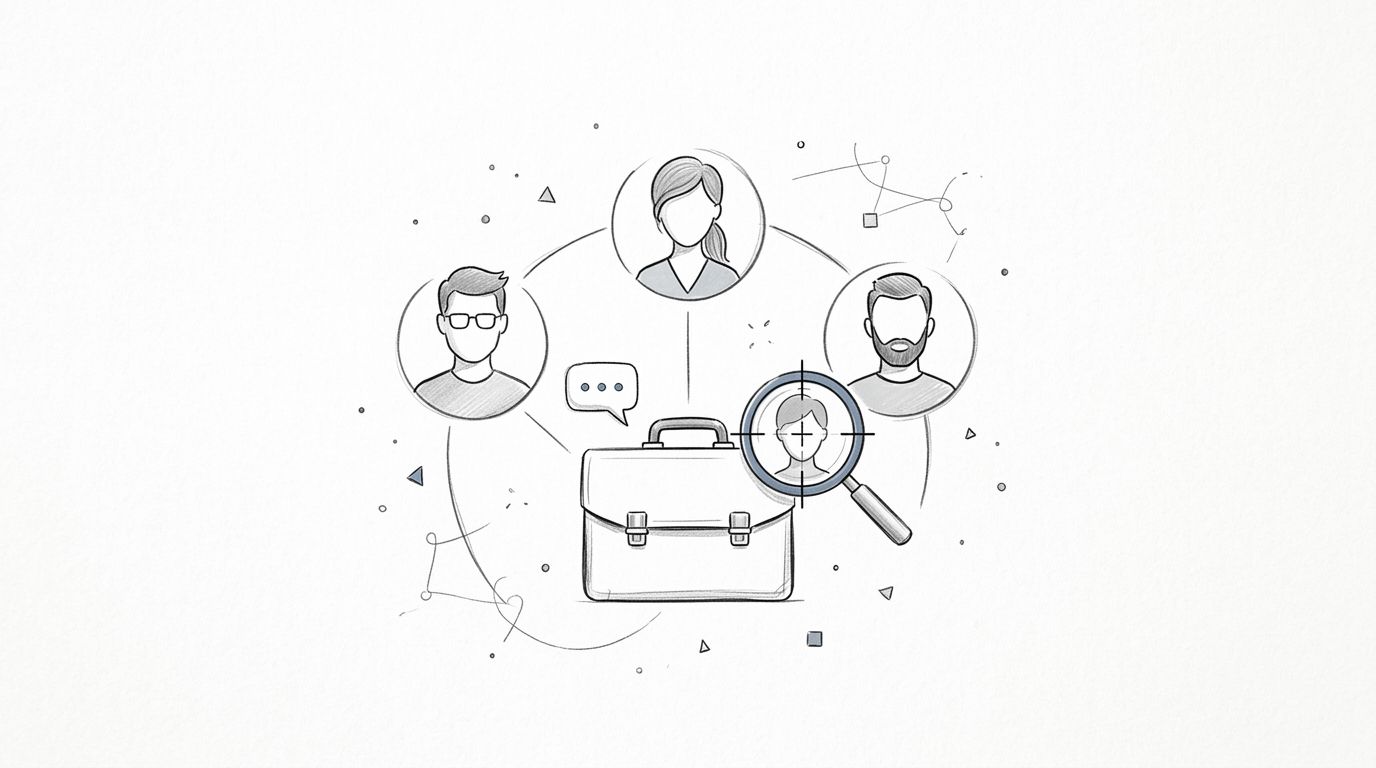
A workable LinkedIn program has two parts. Build familiarity through posting and profile activity, then run small, targeted outreach around a clear offer. Teams that skip the first part usually get low reply rates because the message arrives with no context. Teams that skip the second part get attention but no pipeline.
For SMBs, the quickest win is founder-led outreach to a tight list of 25 to 50 accounts. That can start producing replies in 2 to 4 weeks if the targeting is narrow and the offer is concrete. Startups usually do well with category education, short product teardowns, and pain-point messaging tied to one role. Publishers should focus on media buyers, content partnerships, and newsletter sponsorship targets instead of treating LinkedIn like a broad traffic channel. E-commerce brands selling B2B can use it for distributor outreach, boutique retailer prospecting, and high-value wholesale relationships.
A practical outreach sequence
Start with account selection, not copy. Choose companies that match deal size, urgency, and buying fit. Then identify one or two stakeholders per account instead of sending the same message to six people and creating internal noise.
This structure works in practice:
- Warm the account first: View profiles, engage with recent posts, and note any company updates worth referencing.
- Send a specific connection request: Mention one relevant trigger such as a new product line, hiring push, regional expansion, or a recent interview.
- Follow with one useful idea: Offer a short audit, benchmark, messaging observation, or channel recommendation tied to their situation.
- Keep the CTA narrow: Ask for a 15-minute call or permission to send a brief teardown. Broad asks lower response quality.
Posting supports this. A prospect who sees sharp commentary, customer examples, or operator-level observations is more likely to reply because the message has context. For teams building that foundation, this LinkedIn posting strategy gives a practical framework for aligning content with outreach.
I also recommend fixing the destination before scaling outreach. If the click goes to a vague page, the campaign stalls even when reply rates look decent. Review these landing page design best practices, and if your team needs a plain-English primer, learn conversion optimization with Carti.
Omaha teams can add AI in a way that actually helps. Use it to summarize target accounts, pull recent local business signals, group prospects by likely pain point, and draft first-pass research notes for reps. Keep humans responsible for the message itself. Buyers can spot templated AI outreach immediately, especially in smaller regional markets where context matters and reputations travel fast.
The trade-off is time. Personalized outreach does not scale like paid media, but lead quality is often better because targeting happens before the first message. That makes LinkedIn one of the better early priorities for service SMBs, B2B startups, and publisher sales teams that need qualified conversations without committing to a large ad budget.
3. Website Conversion Optimization & Lead Capture Forms
A small lift in conversion rate often produces leads faster than another month of traffic work. For SMBs, e-commerce brands, publishers, and startups, this is usually the point where wasted demand gets exposed.
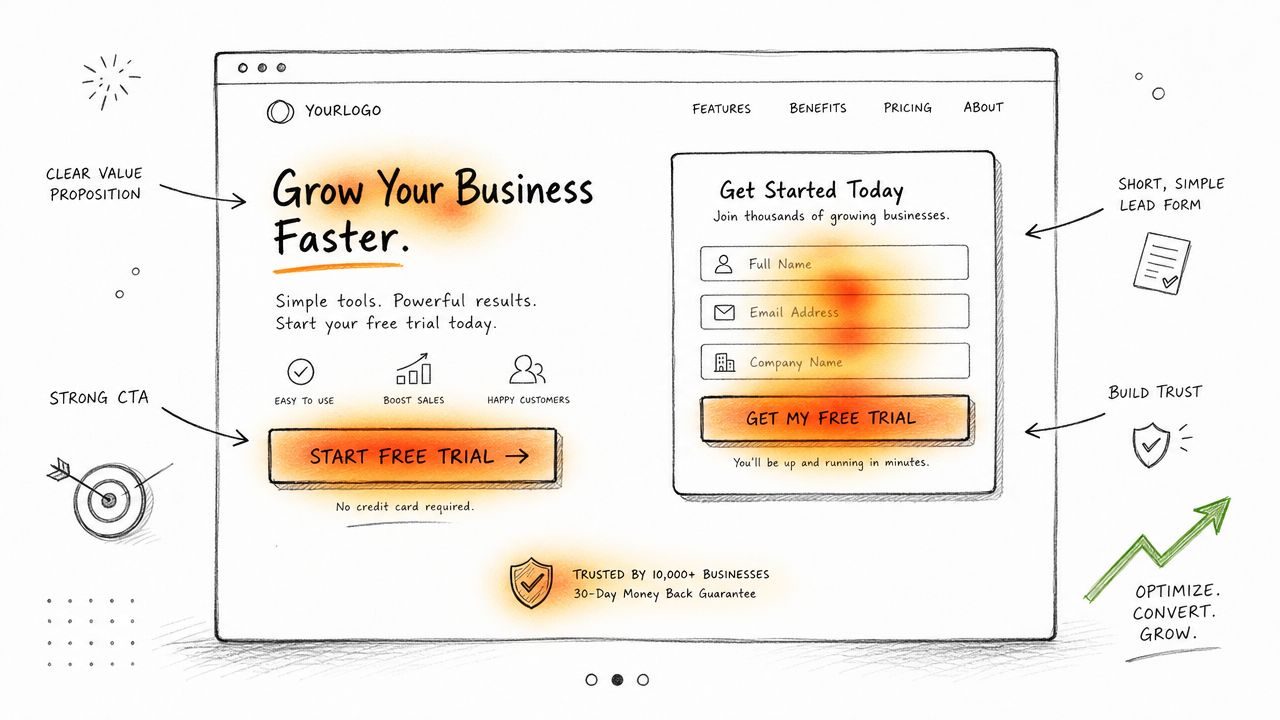
I look at four pages first: the main service page, the highest-traffic landing page, the pricing page, and the form page. Those pages usually tell you whether the problem is weak intent, weak copy, or too much friction. If a company is getting visits but not inquiries, the page usually asks people to work too hard before they trust the offer.
The fixes differ by business model.
- SMBs: Put the offer, service area, proof, and contact path above the fold. A vague "contact us" button loses to "Get a quote in one business day."
- E-commerce: Treat email and SMS capture like part of the buying journey, not a pop-up that interrupts it. Product pages need shipping clarity, returns language, reviews, and a reason to buy now.
- Publishers: Use lighter forms for newsletter signups, gated reports, and event registration. Asking for company size and phone number too early cuts list growth.
- Startups: Trim product explanation until the page supports one decision. Book a demo, start a trial, or download the buyer guide. Pick one primary action.
Good conversion work improves lead quality, not just volume.
That usually comes from a short list of changes:
- Reduce form fields: Only ask for information your team will use in the next step.
- Tighten the headline: Name the audience, the problem, and the outcome in plain language.
- Add proof near the form: Reviews, client logos, case snapshots, guarantees, and response-time expectations lower hesitation.
- Keep message match intact: The promise in the ad, email, social post, or search result should appear again on the page.
- Remove visual clutter: Sidebars, extra navigation, and competing calls to action split attention.
For layout and UX examples, review these landing page design best practices. If your team needs a plain-English primer on the mechanics behind testing and page improvement, learn conversion optimization with Carti.
The practical trade-off is speed versus certainty. A quick rewrite of a headline and form can go live this week. A stronger test program takes longer because you need enough traffic, cleaner tracking, and a clear success metric. For smaller Omaha teams, I usually start with offer clarity, form length, mobile layout, and proof placement before touching anything more advanced.
AI can help if you keep it on diagnosis, not final messaging. Omaha marketers can use it to summarize session recordings, group chatbot questions, flag repeated form drop-off points, and cluster search terms by intent. Then a human rewrites the page based on those patterns and local buying context. That matters in regional markets where generic copy stands out fast.
A realistic timeline helps teams prioritize. In the first 7 days, fix form friction, sharpen the main CTA, and add proof near the conversion point. Within 30 days, test one headline, one offer framing change, and one shortened form version on your highest-intent page. That sequence gives SMBs quick wins without turning optimization into a long design project.
If you want a visual breakdown of the mechanics, this short video gives a useful conversion framework.
Good conversion optimization asks a simpler question. How do we make the next step clear, credible, and low-risk for the right buyer?
4. Paid Search Advertising Google Ads and PPC
Paid search is the speed channel. If someone is searching for a solution right now, PPC lets you show up before your organic footprint catches up. It's one of the best options for fast testing, launch periods, seasonal pushes, and validating messaging.
The catch is cost discipline. Broad campaigns burn budget fast, especially for SMBs. That's why I usually push smaller teams toward long-tail, high-intent terms first. A startup selling custom software shouldn't start with broad vanity keywords if it can start with queries tied to implementation, migration, or platform replacement.
Where PPC fits best
PPC works when intent is clear and the landing page is built to convert that intent. It often underperforms when teams use it as a shortcut around weak messaging.
- SMBs: Focus on local commercial intent and service-specific terms.
- E-commerce: Use shopping or product-intent campaigns where margin can support the spend.
- Publishers: Promote subscriptions, lead magnets, event registrations, or sponsor-facing assets.
- Startups: Bid on high-intent category terms, alternative terms, and use-case searches.
Law firms, SaaS companies, real estate brands, and enterprise software vendors all use search ads because buyers reveal intent directly in the query. Omaha businesses can improve PPC operations with AI-assisted search term review, ad variation drafting, and landing page relevance analysis. The important part is human oversight on lead quality. More clicks don't help if they come from the wrong geography, wrong budget bracket, or wrong problem.
Quick-win timeline is usually short here. You can learn a lot within days if tracking is clean.
5. Email Marketing & Lead Nurturing Campaigns
Email keeps earning budget because the economics are hard to ignore. Once a contact is on your list, you can follow up repeatedly without paying for every click again. For SMBs and startups with uneven traffic, that matters.
The value is not the send itself. The value is matching the message to the buyer's stage, timing, and intent.
Strong nurture campaigns move leads from curiosity to action with a clear sequence. A subscriber who just downloaded a guide needs a different follow-up than a prospect who viewed pricing twice in one week. An e-commerce brand should not send the same post-signup flow to a first-time browser, a cart abandoner, and a repeat buyer. Publishers need to protect reader trust while still pushing subscriptions, newsletter upgrades, or sponsor-led conversions.
What effective nurture looks like in practice
Start with four working layers, then add complexity only after the basics perform well:
- Welcome sequence: Deliver the asset, explain what comes next, and ask one useful qualifying question.
- Education sequence: Send problem-solving content tied to one pain point, one objection, or one use case at a time.
- Behavior-based triggers: Respond to pricing-page visits, abandoned carts, repeat article reads, demo requests, or inactivity.
- Sales handoff rules: Route contacts to a rep only after they show clear buying signals, not after one random click.
Priority changes by business type. SMBs usually get the fastest return from a clean welcome flow and a reactivation campaign. E-commerce teams should start with cart abandonment, browse abandonment, and post-purchase cross-sell emails because those programs can produce results within days. Publishers often get more value from newsletter onboarding and subscriber retention sequences than from heavy promotional blasts. Startups usually need persona-based nurture tied to product category awareness, evaluation questions, and proof points.
One mistake shows up everywhere. Teams write one generic sequence and call it nurture.
A better approach is simple. Segment by source, offer, and behavior first. Then adjust message depth. A lead from a local Omaha service page may need trust signals, response-time expectations, and a clear next step. A SaaS trial user may need setup guidance, use-case education, and comparison content before sales outreach makes sense.
If you're cleaning up subject lines, sender reputation, and engagement patterns, this guide on how to improve email open rates is a practical place to start.
Mailchimp, Grammarly, and many SaaS onboarding programs show the same operating principle. Relevance beats frequency. I usually tell teams to measure reply rate, demo rate, assisted conversions, and unsubscribe spikes by segment before they obsess over total sends.
Field note: Weak nurture usually points to weak segmentation or a weak offer. Email just makes the problem visible.
Omaha teams can improve execution with AI in a few practical ways. Use it to summarize lead activity across forms, site visits, and CRM notes. Use it to draft first-pass variants for different segments, then edit for tone and accuracy. Use it to score likely intent based on behavior patterns. Keep final approval with a marketer or sales lead, especially in trust-heavy categories like legal, healthcare, finance, and high-ticket B2B services.
Quick wins usually show up in two to four weeks if the list is clean and the triggers are set up correctly. Full nurture systems take longer, but the first gains often come from fixing timing, segmentation, and handoff rules rather than sending more emails.
6. Webinars & Virtual Events for Lead Generation
73% of B2B marketers say webinars generate high-quality leads, according to ON24. That lines up with what many teams see in practice. Registration alone is a weak signal, but attendance, poll responses, chat activity, and post-event follow-up requests often reveal who is evaluating a purchase.
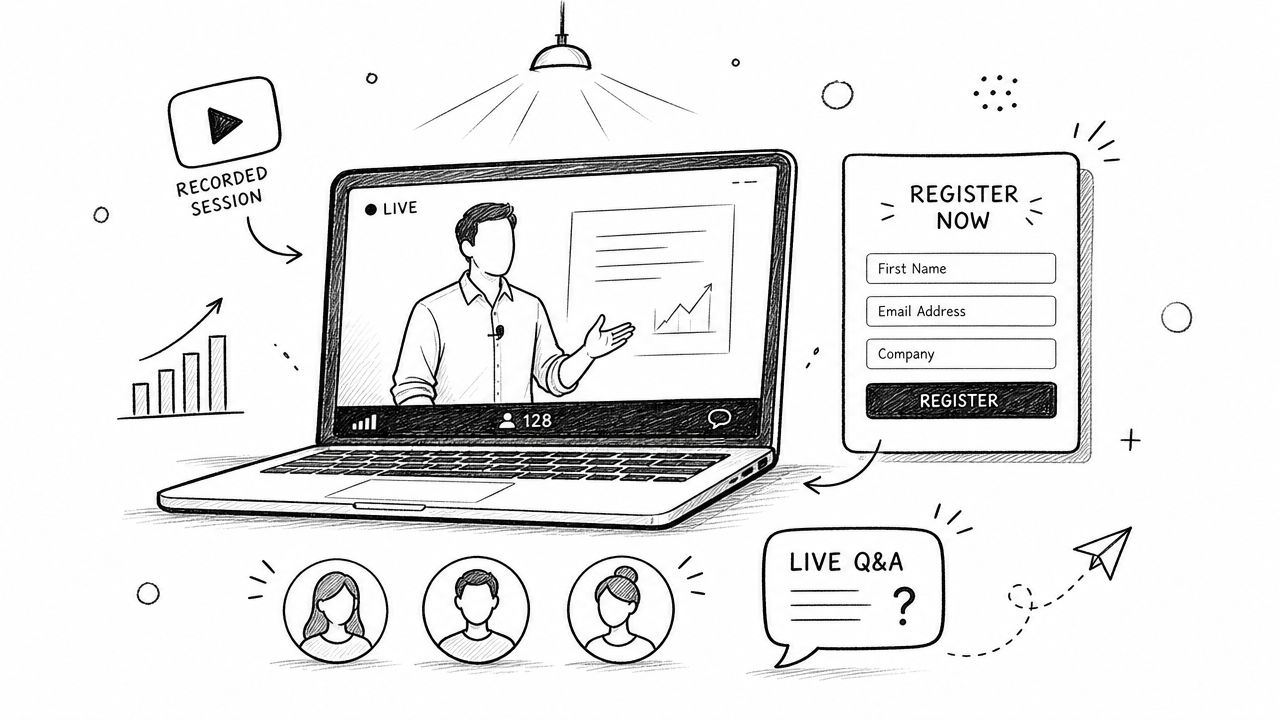
Webinars work because they compress several steps into one session. You get permission to contact the lead, direct evidence of topic interest, and live objections you can use in follow-up. The trade-off is production effort. A poor topic, weak moderator, or generic deck will waste more time than a well-run email or paid campaign.
Topics that work better than product tours
The best webinar topic solves one expensive problem for one clear audience segment. Broad "industry update" webinars can help brand visibility, but SMBs, e-commerce brands, publishers, and startups usually get better lead quality from narrower sessions tied to a real decision.
Try formats like these:
- SMBs: "How to fix lead leaks on your website without rebuilding it."
- E-commerce: "What shoppers need to see before they trust a product page."
- Publishers: "How to turn content traffic into newsletter and sponsor demand."
- Startups: "How to shorten evaluation cycles when buyers need internal buy-in."
I usually advise smaller teams to start with one monthly event before building a full webinar program. A focused 30-minute session with one sharp takeaway often performs better than a 60-minute presentation packed with surface-level advice.
Execution matters more than polish. Strong webinars usually include a practical promise in the title, two or three real examples, a live Q&A, and one next step matched to intent. For an Omaha retailer, that next step might be an AI-assisted product page review. For a local B2B service firm, it could be a short audit based on the questions asked during the session. For publishers, a post-event package might segment attendees by sponsor interest, subscription interest, or editorial partnership potential.
The follow-up window is short. Send the replay fast, tag attendees by engagement, and separate no-shows from active participants. AI can help Omaha teams summarize Q&A themes, draft replay emails by audience type, and score which attendees showed buying intent based on watch time, clicks, and questions. Keep a marketer or sales lead in the loop before outreach goes out, especially in regulated categories.
Quick wins usually show up in two to six weeks if the topic is timely and the follow-up path is clear. Longer-term gains come from turning repeated questions into future webinar topics, sales enablement content, and landing pages that keep pulling in leads after the live event ends.
7. Referral & Partnership Programs for Lead Generation
Referral programs often get treated as a side channel. For many SMBs and agencies, they should be a core channel. Referred leads usually come in with borrowed trust, better context, and less skepticism than cold outreach.
This works especially well when your service touches adjacent vendors. An Omaha web development shop can partner with photographers, branding studios, IT consultants, CRMs, ad buyers, printers, or local business associations. An e-commerce brand can work with creators, affiliates, or complementary tools. Publishers can partner with newsletters, communities, and software vendors serving the same audience.
What makes a referral program usable
Most referral programs fail because they're vague. Partners don't know who to refer, how to refer, or what happens next.
- Define the fit: Tell partners exactly what a good lead looks like.
- Make the handoff easy: Use a simple form, intro email template, or dedicated contact path.
- Close the loop: Let the referrer know when the lead was received and whether it's a match.
- Give partners assets: One-pagers, positioning notes, and sample intros save time.
Dropbox, Uber, Tesla, HubSpot, and Zappos all built growth loops around people recommending them. The models differ, but the core lesson is the same: referrals work when the experience is easy to share and easy to trust.
For Omaha companies, AI can support this channel in quiet but useful ways. It can classify inbound referral quality, route leads by fit, and help partners access customized co-marketing material without adding admin work.
8. Social Media Marketing & Community Engagement
Social media rarely works as a direct-response shortcut for every business, but it can be a strong lead assist channel. It builds familiarity, creates repeat exposure, and gives buyers low-friction ways to evaluate your point of view before they ever submit a form.
This channel is especially useful for e-commerce brands, publishers, founder-led startups, and local businesses with visible expertise. It also matters for low-budget teams because organic participation in communities can produce leads without expensive software.
A useful underserved angle comes from the fact that 45% of decision-makers actively post in LinkedIn and Reddit groups seeking solutions, while 70% of B2B firms ignore these free channels. That's one reason community participation often beats generic broadcasting for smaller firms.
Where social actually produces leads
Social usually performs best when you match the platform to buying behavior.
- Instagram and TikTok: Better for product discovery, creator partnerships, and lifestyle proof.
- LinkedIn: Better for expertise, B2B demand capture, and direct outreach support.
- YouTube: Better for education and search-driven trust.
- Reddit, Facebook groups, niche communities: Better for intent-rich conversations if you participate honestly.
Dollar Shave Club, Glossier, GoPro, Slack, and Nike all used social differently because the channel follows audience behavior, not marketing theory. Omaha teams can use AI to summarize comment themes, identify recurring pain points, and repurpose strong posts into multiple formats. Don't automate the community voice itself. People notice fast when a reply was written by a machine.
9. Account-Based Marketing for High-Value Leads
ITSMA found that 87% of marketers who measure ABM say it delivers higher ROI than other marketing investments. That result only matters in the right situation. ABM works best when a small number of accounts can produce outsized revenue, the sales cycle involves multiple stakeholders, and winning one customer can pay back months of focused effort.
For SMB service firms, B2B SaaS startups, and Omaha companies selling into regional enterprises, ABM is usually a priority after the basics are working. Get your site conversion paths, email nurture, and outbound process in order first. Then concentrate budget and attention on a short target-account list instead of spreading effort across hundreds of weak-fit leads.
Where ABM actually fits
ABM is not a universal play. E-commerce brands rarely need it unless they sell wholesale, enterprise procurement programs, or high-ticket B2B product lines. Publishers can use a light ABM model for sponsorship sales and strategic partnerships. Startups use it well when they need 10 to 50 high-fit accounts more than 1,000 low-intent signups.
The trade-off is simple. ABM raises the cost and effort per account, but it can improve deal quality, close rates, and average contract value if the target list is disciplined.
Only 25% of survey respondents achieved full sales-marketing alignment. That gap shows up fast in ABM. Marketing reports engagement from the wrong contacts, sales works a separate list, and no one owns account progress from first touch to opportunity.
Operational advice: Build ABM around one account plan, one owner, and one definition of progress.
A practical SMB ABM setup
A workable ABM program does not need enterprise software on day one. It needs selection discipline and a repeatable workflow.
- Choose 20 to 50 target accounts. Score them by revenue potential, fit, urgency, and access to decision-makers.
- Map the buying group. Identify the budget owner, operational user, technical reviewer, and executive sponsor.
- Create account-specific messaging. Tie the outreach to an active initiative, visible pain point, or recent company change.
- Coordinate touches across channels. Use email, LinkedIn, retargeting, direct outreach, and customized landing pages in one sequence.
- Measure account movement. Track meetings booked, stakeholders engaged, opportunities created, and deal velocity.
For an Omaha startup selling workflow software to mid-market logistics firms, a quick win often comes within 30 to 45 days if the account list is tight and the message is tied to a current operational issue. For a publisher selling annual sponsorship packages, ABM can surface meetings faster by focusing on local business categories already buying similar audience access. For an SMB agency, the quickest version is often a 10-account pilot with custom outreach and one industry-specific case study.
Salesforce, Demandbase, HubSpot, and Terminus all built mature versions of this motion, but smaller teams do not need to copy enterprise complexity. They need a short list, strong research, and follow-up that reflects how each account buys.
AI helps on the research side. Omaha teams can use it to summarize earnings calls, pull role-based talking points from public sources, cluster target accounts by pain point, and draft first-pass personalization for review. Human judgment still decides which accounts deserve attention, what offer fits, and when a signal is strong enough to justify sales time.
10. Video Marketing & YouTube Channel Development
Wyzowl's video marketing research consistently shows that marketers use video because it helps audiences understand products faster and supports lead generation across the funnel. That lines up with what happens in practice. A clear two-minute video often answers the questions that stall a form fill, demo request, or first sales call.
Video works especially well for SMBs, e-commerce brands, publishers, and startups because each of those teams has repeated questions they can answer once and reuse everywhere. The trade-off is production discipline. One useful video published this month will usually outperform six half-finished concepts sitting in review.
Start with videos tied to buying decisions, not vanity metrics.
- SMBs: Film service explainers, local proof videos, technician or founder introductions, and short FAQ clips that sales reps can send after inquiries.
- E-commerce: Prioritize product demos, side-by-side comparisons, setup walkthroughs, returns or sizing explainers, and UGC-style edits for paid social and product pages.
- Publishers: Create topic explainers, editor interviews, event previews, and short clips that push viewers into newsletter signup or sponsorship inquiry paths.
- Startups: Record onboarding walkthroughs, feature demos, integration videos, pricing objection answers, and customer use-case clips for late-stage prospects.
Priority matters here. If an Omaha HVAC company has weak close rates on estimate requests, film the "what happens after you book" video first. If an Omaha startup sells software to regional logistics firms, record a 90-second workflow demo before investing in a full YouTube series. If a local publisher wants more advertiser interest, publish a short audience explainer and one sponsorship case example before building a studio calendar.
Examples in the market are easy to spot. HubSpot Academy built search-driven education. Moz Whiteboard Friday turned recurring expert commentary into pipeline influence. Wistia uses product education well. Dollar Shave Club showed how a strong concept can create demand fast, but that style is harder for smaller teams to repeat consistently. For SMBs, the safer bet is usually utility over polish.
AI improves the production process in specific ways. Omaha teams can use it for transcript cleanup, captioning, clip selection, title and description drafts, topic clustering, and turning one webinar or product demo into short YouTube clips, email follow-ups, and blog outlines. Human review still matters because AI will miss local context, customer nuance, and claims that need compliance or accuracy checks.
The quick win timeline is mixed. Sales enablement videos can help within one to two weeks if reps start using them right away. A YouTube channel takes longer, usually 60 to 90 days before patterns emerge, but it can compound if each video targets a real search question or buying objection.
10-Strategy Lead Generation Comparison
| Strategy | Implementation Complexity 🔄 | Resource Requirements ⚡ | Expected Outcomes ⭐📊 | Ideal Use Cases 💡 | Key Advantages ⭐ |
|---|---|---|---|---|---|
| Content Marketing & SEO-Driven Lead Generation | High 🔄 (long-term, ongoing) | Moderate–High ⚡ (writers, SEO tools, time) | High ⭐ (compounding organic leads over 3–6+ months) | B2B SaaS, e‑commerce, publishers, service firms | Sustainable traffic, lower CAC over time |
| LinkedIn B2B Lead Generation & Outreach | Medium 🔄 (targeting + personalization) | Moderate ⚡ (Sales Navigator, outreach, ads) | High ⭐ (targeted decision‑maker leads; variable conversion time) | B2B agencies, enterprise software, professional services | Direct access to decision‑makers; precise targeting |
| Website Conversion Optimization & Lead Capture Forms | Medium–High 🔄 (testing + analytics) | Moderate ⚡ (CRO tools, designers, dev) | High ⭐ (better conversion from existing traffic) | SaaS, e‑commerce, agencies, landing pages | Improves ROI without increasing traffic |
| Paid Search Advertising (Google Ads & PPC) | Medium 🔄 (continuous management) | High ⚡ (ad spend, PPC specialists) | High ⭐ (immediate visibility and measurable ROI) | Quick lead generation, competitive keywords, local services | Fast scale, precise intent targeting |
| Email Marketing & Lead Nurturing Campaigns | Medium 🔄 (segmentation + automation) | Low–Moderate ⚡ (ESP, content, CRM) | Very High ⭐ (industry‑leading ROI; sustained nurture) | SaaS trials, e‑commerce, repeat customers, agencies | High ROI, owned channel, scalable automation |
| Webinars & Virtual Events for Lead Generation | High 🔄 (planning + production) | Moderate–High ⚡ (platforms, promotion, presenters) | High ⭐ (pre‑qualified engaged leads; event dependent) | B2B software, consulting, agencies, education | Authority building, rich engagement, data capture |
| Referral & Partnership Programs for Lead Generation | Medium 🔄 (program setup + tracking) | Low–Moderate ⚡ (incentives, tracking systems) | High ⭐ (highly qualified leads; volume variable) | SaaS, marketplaces, agencies, e‑commerce | Low CAC, high conversion from trusted sources |
| Social Media Marketing & Community Engagement | Medium 🔄 (consistent content + moderation) | Moderate ⚡ (creators, community managers, ad budget) | Medium ⭐ (brand growth and lead flow over time) | B2C brands, creators, local businesses, agencies | Broad reach, engagement, creative storytelling |
| Account-Based Marketing (ABM) for High‑Value Leads | High 🔄 (research + personalization) | High ⚡ (sales alignment, custom content, tools) | Very High ⭐ (larger deals, higher conversion; low volume) | Enterprise B2B, consultancies, high‑ACV targets | Highly targeted, efficient use of resources for big deals |
| Video Marketing & YouTube Channel Development | High 🔄 (production + channel SEO) | Moderate–High ⚡ (equipment, production, editing) | High ⭐ (strong engagement, long‑term authority) | Tutorials, product demos, SaaS, e‑commerce, branding | High engagement, repurposable assets, SEO lift |
Putting It All into Action
The best lead generation strategies aren't the ones that look impressive on a planning deck. They're the ones your team can execute consistently, measure objectively, and improve without constant reinvention.
If you're an SMB, start with the shortest path to qualified conversations. That usually means tightening your website conversion path, launching focused email nurture, and using local SEO or targeted PPC to capture demand already in market. If you're in e-commerce, prioritize product-page conversion, email flows, and video that answers buyer hesitation. If you run a publisher model, audience capture comes first. Turn traffic into owned subscribers, then segment and nurture. If you're a startup with larger deal sizes, combine content, LinkedIn, and selective ABM so your brand and outbound efforts reinforce each other.
A practical rollout often looks like this. First, fix the capture points you already own. That means forms, landing pages, thank-you pages, and response workflows. Next, choose one compounding channel and one fast-feedback channel. Content and SEO are the compounding play. PPC, LinkedIn outreach, or webinar promotion can give you faster signal. Then make follow-up tighter. Leads are far more likely to convert when teams respond quickly. Sales and marketing both need to understand what counts as a qualified lead and what happens after submission.
Omaha businesses also have an advantage if they use AI with restraint. Local service firms and growth-stage teams don't need a bloated automation stack. They need practical enhancements: lead routing, email drafting, transcript summaries, account research, content clustering, and conversation analysis. Used that way, AI speeds up execution without flattening your brand voice or creating low-trust outreach.
One more point matters more than most tactical guides admit. Channel selection is only half the job. Handoff quality determines whether those leads become pipeline. If sales and marketing define success differently, even strong channels underperform. Shared KPIs, a clear response process, and regular review beat another shiny tactic.
If you need outside help building the underlying system, Up North Media is one Omaha-based option for web app development, SEO marketing, and AI consulting. The right partner should help you prioritize channels, improve conversion paths, and build measurement around actual lead quality, not vanity metrics.
If you're ready to sharpen your lead generation strategy, Up North Media offers Omaha-based support across SEO, custom web development, conversion-focused digital experiences, and AI consulting. Reach out for a free consultation if you want help choosing the right channels, improving lead capture, or building a system that turns traffic into qualified opportunities.