

B2B SaaS SEO generates an average 702% ROI over three years, reaches break-even in 7 months, and organic search drives 20 to 40% of total traffic for SaaS companies while producing leads at $147 compared with $280 from paid search. A SaaS SEO agency is a specialized marketing partner that uses organic search strategies suited to the unique business model of software-as-a-service companies to drive recurring revenue and user acquisition, which matters when you’re tired of paying more for every click and getting less pipeline back.
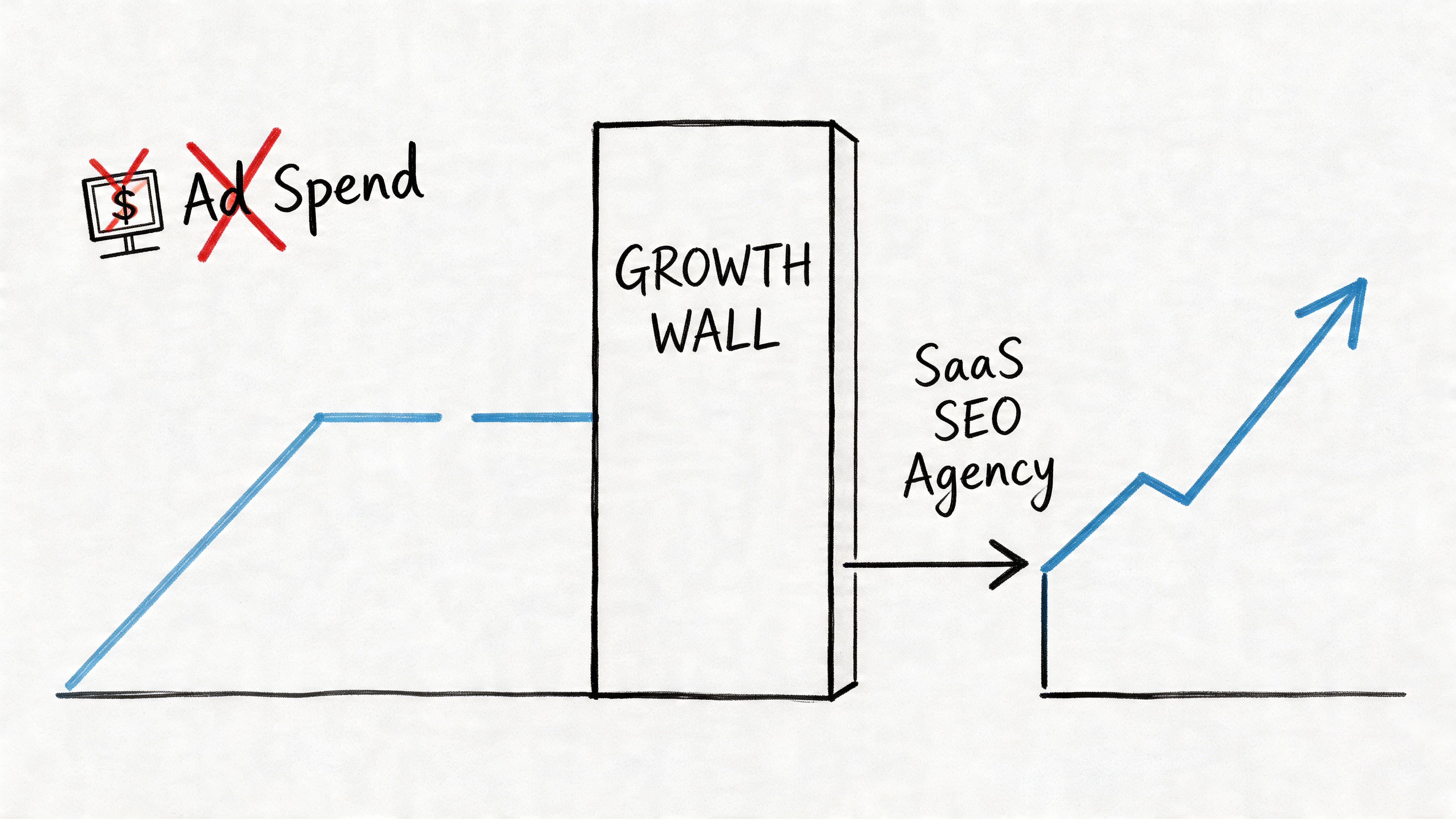
A lot of SaaS owners hit the same point. Paid ads worked at first, then cost more, competition rose, and growth started to feel rented instead of owned. You’re still spending, but each month starts at zero again.
That’s where a saas seo agency earns its keep. The job isn’t to “get you more traffic” in the abstract. It’s to build an acquisition system that keeps generating trials, demos, signups, and revenue after the content is published and the technical issues are fixed.
For SMBs outside major tech hubs, that distinction matters even more. You usually don’t have enterprise budgets, huge in-house teams, or the luxury of waiting forever for results. You need SEO tied to actual business outcomes, not a report full of impressions and ranking screenshots.
What a SaaS SEO Agency Actually Does
When a founder says, “our paid channels are plateauing,” the underlying issue usually isn’t channel fatigue alone. It’s that the business needs an asset that compounds. A saas seo agency builds that asset by aligning search visibility with the way SaaS companies make money: recurring subscriptions, free trials, demos, upgrades, and retention.
A generalist SEO firm might optimize title tags, publish blog posts, and send monthly keyword reports. Sometimes that helps. But SaaS is different because the buyer journey is longer, the product is more complex, and the value of a customer often depends on what happens after the first conversion.
It works backward from revenue
A real SaaS-focused agency starts with commercial goals. That means asking different questions:
- Revenue model: Is growth tied to free trial starts, booked demos, self-serve upgrades, or expansion revenue?
- Sales motion: Do buyers convert from content directly, or does SEO need to support a sales-assisted funnel?
- Product complexity: Are feature pages, comparison pages, integrations, docs, and use cases all part of how people evaluate the software?
- Measurement: Can the team connect organic traffic to MRR, CAC, and trial-to-paid movement?
That last point matters more than most businesses realize. Clean tracking often decides whether SEO becomes a strategic growth channel or just another marketing line item. If you want a practical breakdown of the critical role of analytics in agencies for campaign optimization, that resource is useful because it explains why bad data leads to bad decisions, even when campaign activity looks busy.
It treats your site like a growth engine, not a blog
SaaS websites usually contain more than a homepage and a few service pages. There are product pages, industry pages, documentation, knowledge bases, login-adjacent experiences, integrations, and feature comparisons. A saas seo agency looks across all of those surfaces.
Practical rule: If an agency talks mostly about blog traffic and barely mentions trials, demos, or product pages, it probably doesn’t understand SaaS deeply enough.
Work often includes mapping high-intent searches to bottom-of-funnel pages, fixing crawl issues that hide valuable content from search engines, improving internal links so evaluation pages carry more authority, and tightening messaging so the right visitors convert.
It builds for the long game
Paid media is like renting a booth at a trade show. Useful, but temporary. SEO is closer to building a storefront on the street where your buyers already walk.
That’s why many SaaS companies treat organic search as foundational. According to Ahrefs’ B2B SaaS SEO statistics, SEO delivers an average 702% ROI over a three-year period, reaches break-even in 7 months, and organic search drives 20 to 40% of total traffic while producing leads at $147 compared with $280 from paid search.
For an Omaha-area software company or a lean SaaS team anywhere outside the coasts, that’s the difference between always chasing the next campaign and building a channel that compounds.
Core SEO Strategies for SaaS Growth
A good saas seo agency builds an acquisition system, not a pile of disconnected tasks. Content, technical SEO, product positioning, authority signals, and on-page conversion work need to support the same business goal. For a small SaaS company in Omaha or any market outside the big tech hubs, that usually means getting more qualified demos, trials, and expansion revenue without adding another expensive paid channel.
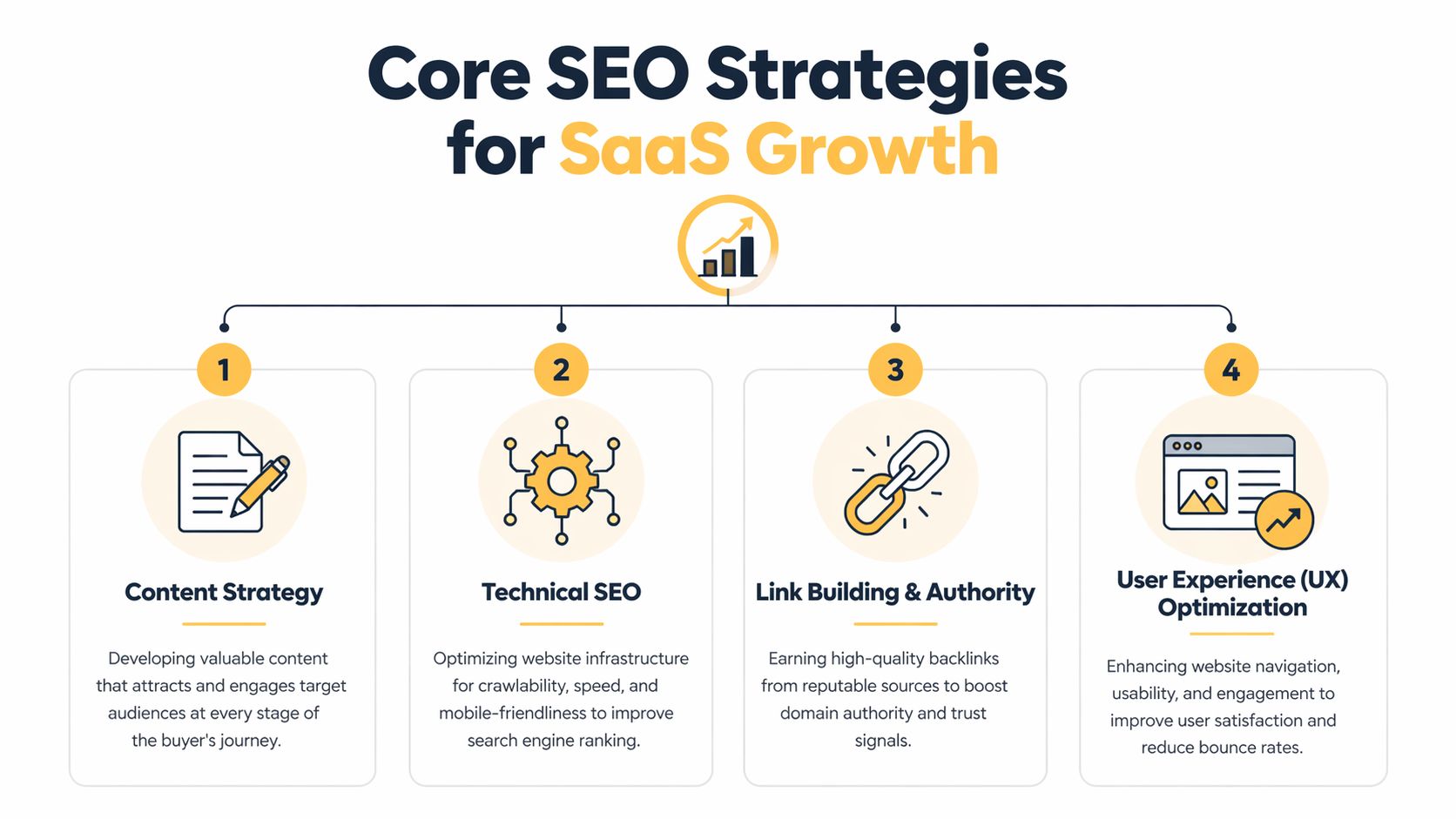
Content strategy built around buying intent
A common mistake in SaaS is publishing educational content that earns visits but rarely influences pipeline. Glossary pages, broad how-to posts, and trend pieces can help build reach, but they seldom close the gap between search and revenue on their own.
High-intent content does more of that work. Searches around alternatives, comparisons, pricing, integrations, and use cases usually come from buyers who are already evaluating options. In my experience, those pages are often the first place where SEO starts affecting demo volume and MRR in a visible way.
A strong agency usually structures content so each page has a job:
| Content layer | What it does | Why it matters |
|---|---|---|
| Pillar page | Covers the core topic in depth | Builds topical relevance around the main category |
| Supporting pages | Targets feature, industry, comparison, or integration angles | Captures narrower commercial intent |
| Internal links | Connects related pages deliberately | Moves authority and guides visitors toward conversion pages |
That structure mirrors how software buyers behave. They start with a category, narrow to a use case, compare vendors, and then check whether the product fits their stack, budget, and team.
A content library without that structure works like a sales pipeline with no stages. Pages exist, but they do not move people toward a decision efficiently.
If you’re building around those evaluation paths, SEO blog content for SaaS and growth-stage brands only pays off when each article supports product pages, commercial intent, and the next step in the funnel.
Technical SEO that supports modern SaaS sites
Technical SEO decides whether search engines can reach, understand, and trust what you publish. SaaS sites create extra complexity because they often rely on JavaScript frameworks, repeated templates, gated experiences, and large documentation sections.
Rendering is one of the first things I check on React or Next.js builds. Google can process JavaScript, but client-side rendering still creates avoidable delays and missed content in some setups. Google’s own documentation on JavaScript SEO basics explains why server-side rendering or pre-rendering can make pages easier to crawl and index reliably.
That does not automatically mean a full rebuild. Sometimes the fix is improving internal links, exposing hidden content in the HTML, consolidating duplicate templates, or making feature and integration pages easier for crawlers to discover. On lean SaaS teams, especially outside large in-house engineering environments, those practical fixes usually matter more than chasing a perfect architecture diagram.
Product-led SEO that turns features into acquisition paths
Specialized SaaS SEO starts with the product and the buying questions around it.
That means building pages around:
- Feature-level problems: what the tool solves
- Industry use cases: who it solves it for
- Integrations: how it fits into an existing stack
- Comparisons: why buyers choose it over alternatives
- Commercial pages: pricing, demos, trials, and bottom-funnel evaluation
These pages do two jobs at once. They help search engines understand the product surface area, and they help buyers decide whether the software is a fit.
This is also where a lot of agencies fall short. They can produce traffic content, but they cannot translate product nuance into pages that rank and convert. For SMB SaaS companies, that gap matters because every qualified lead carries more weight. You do not need ten thousand extra visits if the right fifty searchers can turn into recurring revenue.
Authority and search visibility beyond classic blue links
Authority still matters, but raw link volume is a weak goal by itself. SaaS brands benefit more from mentions on relevant publications, partner sites, software communities, and resources that real buyers already trust.
The best authority work supports the rest of the SEO system. Comparison pages attract citations. Integration pages earn partner links. Original product education gives industry writers something worth referencing. The result is stronger rankings on pages that affect pipeline, not just vanity metrics.
Search visibility is also expanding beyond standard results. Buyers now discover software through AI summaries, product roundups, community answers, and synthesized recommendation engines. For a practical overview of how that work is developing, this background on an LLM SEO agency is useful because it explains how brand visibility can extend beyond traditional search listings.
Measuring What Matters KPIs and True ROI
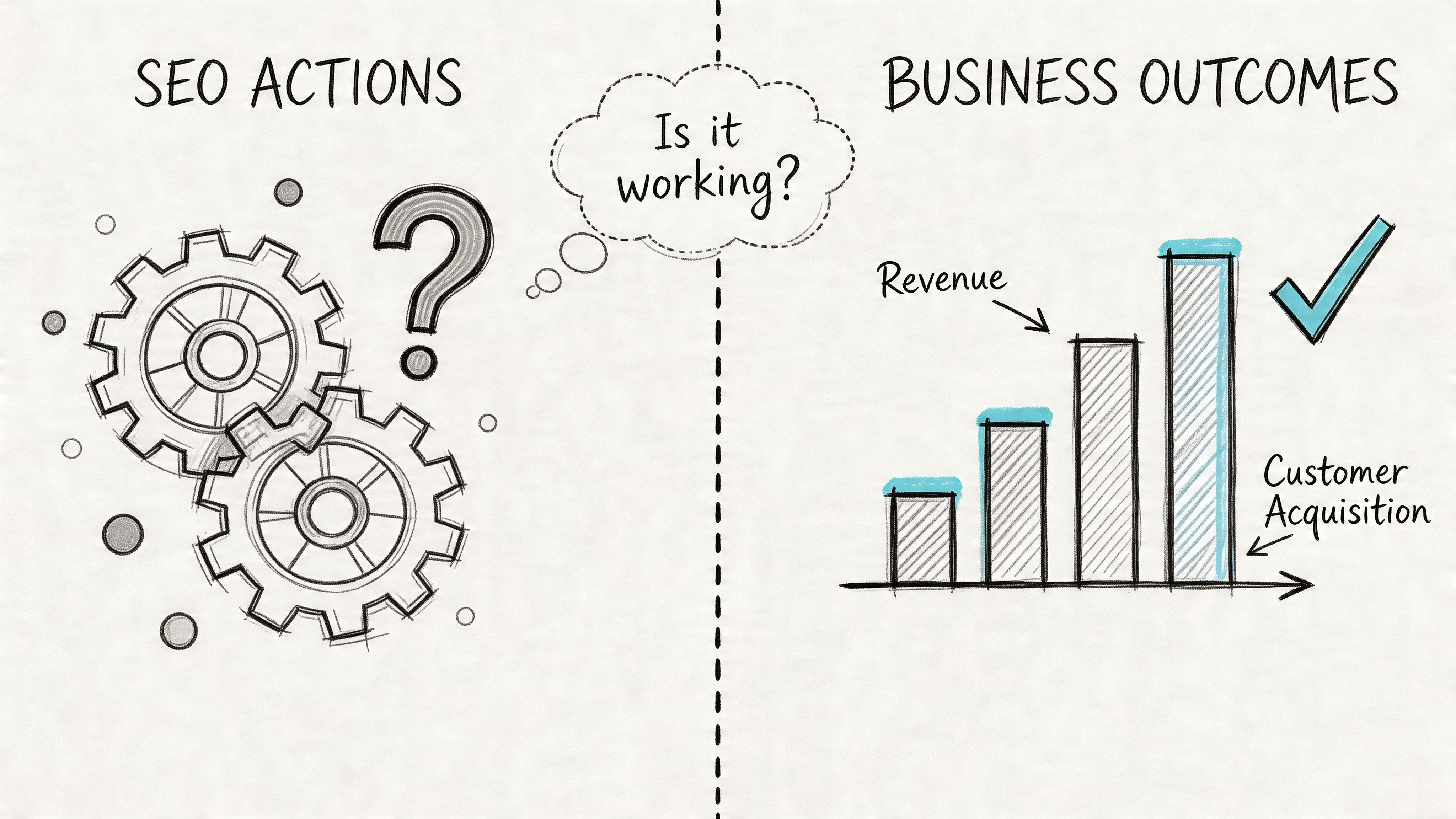
A SaaS founder in Omaha can open a monthly SEO report, see traffic up 40%, and still feel uneasy. That reaction is usually correct. More visits do not help much if free trials stall, demos come from poor-fit accounts, or new signups churn before the second billing cycle.
A good saas seo agency ties search performance to revenue mechanics. The fundamental question is whether organic search is bringing in buyers who activate, convert, and stay.
The KPIs worth paying attention to
SaaS SEO works best when the scorecard is short and commercial. In practice, these are the numbers that matter:
- MRR impact: Did organic search contribute to new recurring revenue?
- CAC efficiency: Is SEO helping lower the blended cost to acquire a customer compared with paid channels?
- Lead-to-trial quality: Are the visitors coming in the kind of users your team wants in the product?
- Trial-to-paid conversion: Do organic leads convert into customers at a healthy rate?
- Retention fit: Are those customers sticking around long enough to justify acquisition effort?
For business owners who want a plain-English primer on understanding Key Performance Indicators, that guide is useful before agency calls. It helps separate metrics that inform decisions from metrics that just fill slides.
The trade-off is straightforward. Rankings, impressions, and sessions can help diagnose progress, but they are supporting metrics. They are not the finish line.
Why ROI gets distorted so often
SEO for SaaS usually pays off over time, but the value shows up unevenly. A comparison page may influence demos. A feature page may bring in self-serve signups. An integration page may attract fewer visits but produce better-fit accounts with higher retention. If reporting treats all organic traffic the same, the channel gets judged by volume instead of contribution.
That is where smaller SaaS companies, especially outside large tech hubs, often get bad advice. An agency chases broad traffic terms because the graph looks good, while the founder needs a tighter mix of bottom-funnel pages that support pipeline this quarter and compounding acquisition next quarter.
The earlier section already covered industry benchmark data on SaaS SEO returns. The practical takeaway is simpler. SEO becomes easier to defend when it reduces customer acquisition costs and supports durable MRR, not just when it increases visits.
Ask which pages influenced revenue, which searches brought qualified buyers, and which organic cohorts turned into retained customers.
If leadership needs a shared framework, this guide on how to calculate marketing ROI is a useful starting point. It helps teams connect channel spend to outcomes they already track in finance and sales.
A short explainer can also help align leadership teams around what SEO should be accountable for:
What bad reporting looks like
Weak SEO reporting usually has clean charts and vague conclusions. It shows ranking improvements, total traffic growth, and a list of tasks completed. It avoids the harder questions about conversion quality and revenue contribution.
A useful report should answer questions like these:
- Which organic landing pages influenced trials, demos, or qualified signups?
- Which bottom-funnel pages improved visit-to-trial or demo-booked rates?
- Where do organic visitors drop out between first session, signup, activation, and payment?
- Which fixes should have the biggest business impact next, and why?
That standard matters more for SMB SaaS companies than it does for heavily funded teams that can afford waste. In a market like Omaha, budgets are tighter and each channel has to carry real weight. SEO should help the business grow users and recurring revenue with more efficiency. If a report cannot show that path clearly, it is reporting activity, not results.
SaaS SEO Agency Pricing and Engagement Models
Most businesses don’t struggle to understand that SEO matters. They struggle to understand what they’re buying.
The first useful benchmark is simple: Position Digital’s review of SaaS SEO agencies notes that top agencies typically charge $2,000 to $4,500 per month and often require a 3-month minimum contract. The same source says 70% of these agencies primarily target enterprise-level clients, which helps explain why many SMBs in places like Omaha feel ignored during the buying process.
The common ways agencies price work
Three models show up most often.
Monthly retainer is the standard for ongoing SEO. It fits best when the work includes content, technical fixes, internal linking, reporting, and iterative optimization over time. The upside is continuity. The downside is that some agencies hide low output behind the word “retainer.”
Project-based work is better for a specific need, like a technical audit, a site migration review, or a content strategy. It’s cleaner when your team can execute in-house after the strategy is delivered. It’s a poor fit if you need ongoing implementation help.
Performance-based pricing sounds appealing, but it gets messy fast. SEO outcomes depend on engineering, content quality, sales alignment, product-market fit, and time. If the model seems too simple, it usually is.
What SMBs should watch for
A smaller SaaS company shouldn’t assume a higher fee automatically means a better fit. In fact, many enterprise-focused agencies are built around larger accounts, slower processes, and broader teams than an SMB needs.
Use this quick screen before you sign:
- Scope clarity: Can the agency tell you exactly what happens in the first few months?
- Implementation reality: Who makes the fixes. Their team, your team, or a mix?
- Business fit: Do they understand demo-led, trial-led, or product-led funnels?
- Communication style: Will you get strategic insight, or just task updates?
- Market context: Can they work with a company outside a major tech hub without treating it like a second-tier account?
The right agency fit often has less to do with prestige and more to do with whether the team understands your growth constraints.
For SMBs, that usually means choosing a partner that can prioritize high-intent opportunities, avoid bloated retainers, and focus on the few moves most likely to affect revenue first.
Real Results Examples from Top SaaS Campaigns
Good SEO case studies don’t just show traffic curves. They show what changed in the business.
One documented example comes from Segment. According to Serpdojo’s SaaS SEO agency roundup, SimpleTiger helped the company achieve a 127% increase in organic traffic, along with a 1,320-point increase in rank positions and a 14% increase in site-wide organic traffic. That kind of result is useful because it suggests the work wasn’t isolated to one page or one lucky keyword.
Rezi is another strong illustration of why SaaS owners should care about SEO beyond visibility. The same source reports an 86% overall revenue increase and a 243% increase in organic signups. That’s the sort of case business owners should pay attention to because it ties organic growth to revenue and user acquisition, not vanity metrics.
Zapier shows what happens when content and authority building are executed at scale. Serpdojo notes that Siege Media drove 852% organic traffic growth, added $6.1 million in traffic value, and helped 126 pieces of content rank in the top ten. The specific figures are impressive, but the more important lesson is strategic: when a SaaS company earns authority around the problems its buyers actively research, search can become a serious growth lever.
What these examples actually mean for smaller SaaS companies
SMBs shouldn’t read enterprise case studies and assume the same scale will happen on the same timeline. That’s the wrong takeaway.
The useful takeaway is this:
- Traffic growth can be meaningful when it’s tied to intent
- SEO can influence signups and revenue, not just awareness
- Specialized execution tends to outperform generic content production
- Documented outcomes are a better evaluation tool than polished sales decks
A smaller SaaS company in Omaha or any secondary market doesn’t need Zapier-sized visibility to feel a strong business impact. It needs the right pages to rank, the right visitors to arrive, and the funnel to convert cleanly once they do.
Your Vetting Checklist for Hiring an Agency
Most agency sales calls sound competent. That’s the problem. It’s easy to confuse polished language with actual SaaS expertise.
The better approach is to interview agencies around failure points. Ask about the places SaaS sites usually break: rendering, indexation, duplicate URLs, feature pages with weak internal links, and reports that never connect to revenue.

Start with technical competence
Technical issues aren’t edge cases in SaaS. They’re often the reason content underperforms.
Briskon’s guide to SaaS technical SEO mistakes reports that technical misconfigurations can waste 30 to 50% of crawl budget and cause 20 to 40% lower rankings for key pages. The same source says a foundational audit can increase organic visibility by 25 to 35% in 3 months.
Ask questions like:
- Crawl efficiency: How would you identify duplicate or low-value URLs that are consuming crawl attention?
- Indexation: How do you determine whether product, feature, or integration pages are being indexed correctly?
- Rendering: What do you look for on JavaScript-heavy sites before recommending content expansion?
- Internal linking: How do you guide authority toward pricing, demo, and other evaluation pages?
If the answers stay vague, move on.
Then test whether they understand SaaS economics
A strong agency should be comfortable discussing MRR, CAC, conversion quality, and sales-assisted funnels. Not every engagement needs advanced attribution on day one, but they should know what success looks like in a subscription business.
Use this hiring filter:
| Question | Strong signal | Weak signal |
|---|---|---|
| How do you define success? | Talks about trials, demos, signups, and revenue influence | Talks mostly about rankings and traffic |
| What pages do you prioritize first? | Mentions bottom-funnel, feature, comparison, and conversion paths | Defaults to “start blogging consistently” |
| How do you report results? | Connects SEO work to business KPIs | Sends activity summaries and ranking snapshots |
If an agency can’t explain where revenue will likely come from before the work begins, it probably won’t be able to prove value after the work starts.
Look for implementation fit, not just strategic fit
An audit is only useful if the recommendations get shipped. That’s especially true for lean teams.
Ask who writes tickets, who reviews templates, who handles content briefs, and how the agency works with developers or internal marketers. If you want a practical second opinion on that evaluation process, this checklist on how to hire an SEO consultant is a useful companion during vendor review.
One option in this market is Up North Media, an Omaha-based agency that provides SEO, web app development, and AI consulting for software and SMB clients. The relevant point isn’t geography by itself. It’s that local-market firms often need a partner that understands leaner budgets, tighter execution cycles, and revenue accountability without enterprise overhead.
Partnering for Growth What to Expect Next
A good SaaS SEO engagement should lower uncertainty in the first few weeks, especially if you run a smaller software company outside places like San Francisco, New York, or Austin. Teams in Omaha and similar markets usually do not have spare headcount, long testing cycles, or budget for months of low-priority content. The agency needs to work within those limits from day one.
Early progress starts with diagnosis, but the useful kind. That means checking technical constraints, search intent gaps, existing pages, internal linking, tracking setup, and the paths that lead visitors toward trials, demos, or qualified leads. Then the agency needs to turn that review into a sequence of work that matches your resources.
What the early engagement should look like
A healthy first phase usually includes:
- Audit and baseline setup: technical findings, conversion path review, and KPI alignment
- Strategy and prioritization: choosing the pages, themes, and fixes most likely to affect pipeline and signups first
- Execution planning: assigning owners, timelines, and implementation steps that a lean team can ship
- Initial production and optimization: updating, publishing, and fixing the highest-impact areas before expanding scope
- Reporting cadence: reviewing what changed, what it influenced, and what comes next
The timeline should feel realistic. A small SaaS company with one marketer and a busy product team should not get the same roadmap as a venture-backed company with in-house writers, designers, and developers. Good agencies adjust the pace, narrow the focus, and protect effort from getting spread across too many low-return tasks.
Clarity matters more than spectacle.
The strongest agency relationships feel operational. You get clear priorities, honest trade-offs, and reporting that helps leadership decide where to keep spending and where to pull back. In practice, that can mean fixing crawl and indexation issues before publishing another article, building comparison pages before broad awareness content, or tightening analytics before reporting wins.
That approach matters for SMB SaaS companies in local markets because SEO has to earn its keep. Traffic alone does not pay salaries or fund product development. The work needs to support qualified acquisition, stronger conversion paths, and revenue outcomes the business can use.
If you’re evaluating whether a saas seo agency is the right move, Up North Media offers consultations for businesses that want a practical, data-driven view of SEO, web development, and AI opportunities. It’s a useful next step if you want to identify where organic growth can support more qualified traffic, stronger user acquisition, and measurable revenue impact without defaulting to an enterprise-style engagement.