

A lot of Omaha business owners arrive at the same moment the same way. The site looked solid a few years ago. It launched on time. It matched the brand then. Now it loads awkwardly on phones, the inquiry form barely gets used, sales pages feel thin, and every marketing campaign seems to work harder than it should.
That’s usually when the question changes from “Should we freshen up the site?” to “Do we need a website redesign agency?”
If you're asking that, you're already past the cosmetic stage. A redesign isn't about picking a nicer font and swapping in newer photos. It’s a business project tied to lead quality, sales efficiency, search visibility, and how much trust a customer gives you before they ever call or buy. Around Omaha, that matters even more because local businesses are often competing against national brands with stronger digital systems and faster sites.
What follows is the practical version of this decision. Not agency fluff. Not design trend talk. Just what to look for, what to avoid, and how to choose a website redesign agency that improves performance without creating a second problem after launch.
When Your Website Works Against You
A common pattern goes like this. A business owner checks their site after a customer mentions a broken page. On desktop, it looks passable. On mobile, the menu is clumsy, the text stack is awkward, and the call button is harder to find than it should be. Then they notice the forms are generating weak leads, or not many at all.
That’s not a branding problem. It’s an operations problem wearing a design mask.
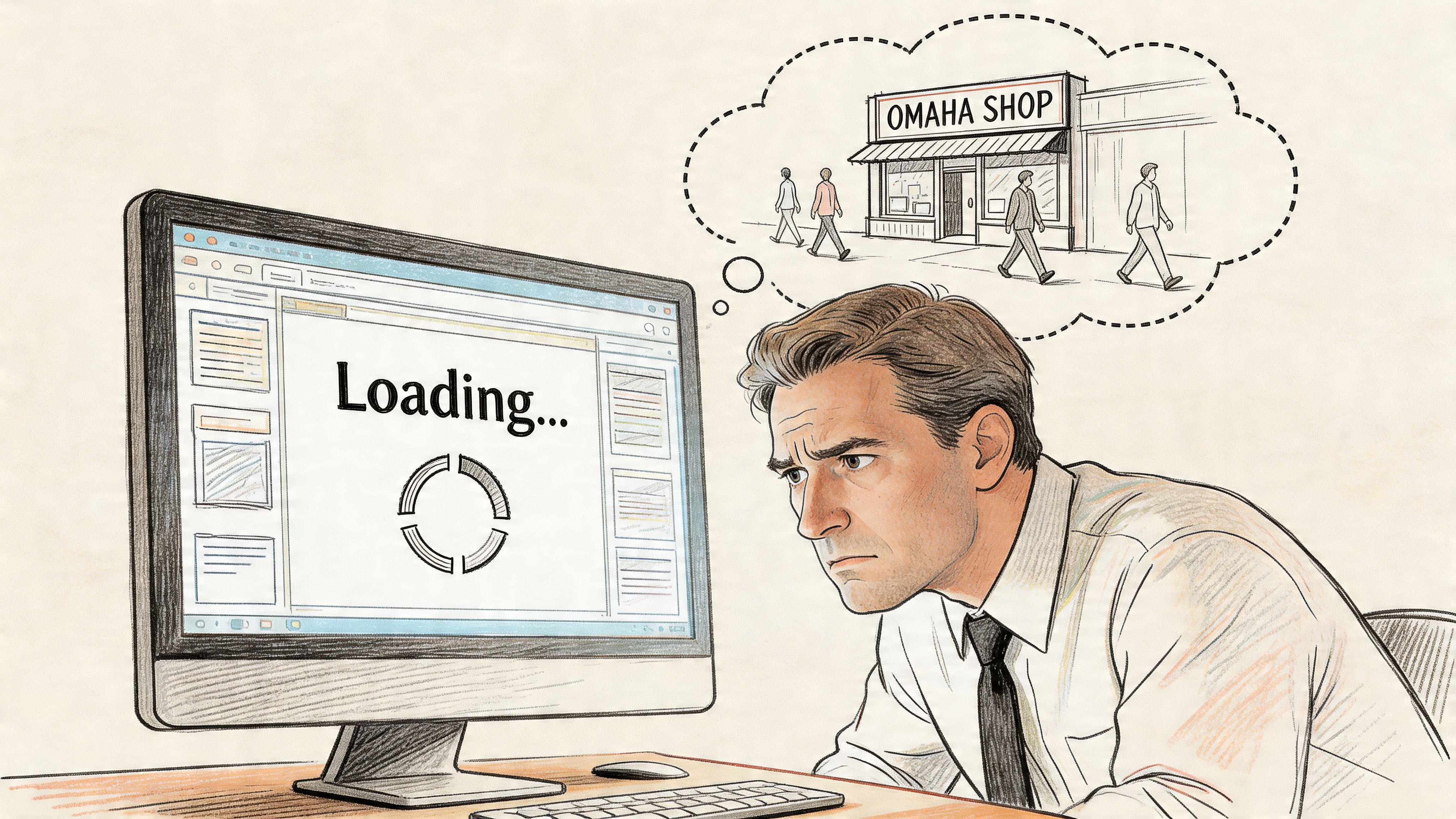
For local service companies, the damage often shows up as missed calls, low-quality form fills, or pages that never rank for the services that pay the bills. For e-commerce teams, it shows up in product pages that don’t guide a buyer forward. For publishers and SaaS companies, it’s usually weak information architecture, muddled messaging, and a site experience that asks users to work too hard.
The quiet cost of an outdated site
The hardest part is that a bad website rarely fails in dramatic fashion. It leaks opportunity slowly.
- Search visibility slips: Important pages lose momentum because the site structure, content hierarchy, or technical setup no longer supports them.
- Mobile users hesitate: Visitors can’t find what they need quickly, so they leave before they ever contact you.
- Conversion paths break: A site can still get traffic while failing to turn that attention into calls, quote requests, purchases, or booked demos.
If you're trying to effectively optimize website conversions, the redesign conversation has to start with user behavior, not mockups.
A redesign should fix friction customers already feel. It shouldn't create a prettier version of the same problems.
In Omaha, many small and mid-sized businesses don’t need a giant digital transformation. They need a site that works cleanly, ranks reliably, loads fast, and gives their team a platform they can maintain. That’s what a good website redesign agency should deliver.
Define Your Redesign Goals and Scope
Before you contact any agency, get specific about what’s broken and what success looks like. Vague requests create vague proposals. “We want something more modern” is how businesses end up paying for motion effects while the lead flow stays flat.
The stronger brief sounds more like this: we need better lead quality from service pages, a cleaner mobile experience, and a site structure that supports organic growth. That gives an agency something useful to solve.
According to VWO’s web design statistics, roughly 80.8% of website redesigns are kicked off because of low conversion rates, and a well-designed user experience can lead to conversion rates up to 400% higher than on poorly designed sites. That’s the right frame. Start with outcomes.
Audit what your current site is doing
Open the tools you already have. For most businesses, that means Google Analytics, Google Search Console, your CRM, and whatever form tracking or call tracking you use.
Look for patterns like these:
- High-exit pages: Pages that get traffic but fail to move visitors to the next step.
- Weak service pages: Pages that describe what you do without giving users a reason or path to act.
- Mobile friction: Navigation, forms, tables, or product details that become painful on smaller screens.
- Content dead weight: Old pages that attract the wrong visitors, confuse users, or dilute search relevance.
If your team doesn’t know which pages matter most, start with revenue-related pages first. Service pages, location pages, product collections, pricing pages, quote forms, booking pages. Those are the pages that should shape scope.
Turn complaints into measurable goals
Businesses usually describe website problems emotionally at first. “It feels old.” “It’s clunky.” “Nobody uses the form.” That’s fine. But an agency needs measurable targets.
A simple planning grid helps:
| Problem | Better project goal |
|---|---|
| Site feels outdated | Improve credibility and clarity on core pages |
| Mobile experience is frustrating | Reduce friction in mobile navigation and forms |
| Leads are weak | Improve conversion paths and qualifying steps |
| SEO traffic is inconsistent | Rebuild structure and preserve ranking-critical pages |
| Team can’t update the site | Choose a CMS and page system staff can manage |
You don’t need a giant requirements document. You do need a shortlist of business goals that can guide design, development, and content decisions.
Practical rule: If a goal can't influence a page layout, content decision, or technical requirement, it's probably too vague.
Set scope before agencies set it for you
Scope creep usually starts before the contract does. You ask for a redesign. The agency hears redesign plus copywriting plus SEO plus analytics cleanup plus CRM integration plus ongoing support. None of that is wrong. It just needs to be named.
Write down what the project includes and what it doesn’t. For example:
-
Included now
Core page redesign, development, analytics setup, SEO migration, form tracking. -
Possible phase two
Blog overhaul, email automation, landing page library, paid media support. -
Not part of this project
Rebrand, new logo system, full product catalog rewrite, custom app features.
This step saves money because it keeps proposals comparable. It also keeps internal stakeholders aligned. If one owner expects a fast refresh and another expects a full digital rebuild, the agency will end up managing your disagreement on the clock.
Finding and Vetting Your Omaha Agency Shortlist
The market for design and development is crowded. The U.S. web design services market reached $43.5 billion in 2024, and with over 1.1 billion active websites globally, 82% remain inactive or underperforming, according to Hostinger’s web design statistics. That creates two realities at once. There are many firms selling redesigns, and many sites still fail to produce results.
That’s why shortlisting agencies takes more than scanning homepages.
Start with fit, not flash
An Omaha business usually doesn’t need the agency with the loudest portfolio. It needs the one that understands the sales process behind the site.
If you're a local service company, ask whether the agency understands location intent, quote-driven conversion paths, and trust-building content. If you run e-commerce, ask how they think about collections, product detail pages, checkout friction, and merchandising logic. If you’re comparing platform options, this overview of Shopify web design services is useful for understanding what a specialized commerce engagement can look like.
A shortlist should include agencies that match your business model, not just your aesthetic preference.
What to inspect on an agency website
The agency’s own site won’t tell you everything, but it tells you plenty.
Check these areas:
- Messaging quality: Do they explain business outcomes clearly, or do they hide behind design jargon?
- Proof of process: Can you see how they work, not just what they made?
- Technical basics: Does their site load cleanly, work well on mobile, and make contacting them easy?
- Industry understanding: Do they speak to your kind of customer journey?
If you want a broader view of what a local strategic partner may cover beyond web design alone, this look at an Omaha digital marketing agency helps frame how redesign fits into a bigger growth system.
Read portfolios like a buyer, not a fan
A pretty homepage mockup is the least useful part of a portfolio. You’re trying to answer tougher questions.
Look for:
- Before-and-after thinking: Did the agency solve a business problem, or just refresh the visuals?
- Content structure: Can you tell how they handle navigation, page hierarchy, and conversion flow?
- Platform relevance: Have they worked on sites with similar complexity, such as service businesses, publishers, or stores?
- Operational maturity: Do their examples suggest they can manage migration, QA, integrations, and post-launch support?
What doesn’t help is a gallery of full-screen screenshots with no explanation.
Ask agencies to walk you through one project decision they made because of user behavior, search performance, or conversion issues. Their answer will tell you more than the finished design.
Questions that expose weak fits quickly
You can learn a lot in one call if you ask direct questions.
| Ask this | Listen for this |
|---|---|
| How do you define success for a redesign? | Specific KPIs, not “a modern look” |
| How do you handle SEO during migration? | Redirect planning, content mapping, launch checks |
| Who writes or revises content? | Clear ownership and workflow |
| What happens after launch? | Structured support, maintenance, reporting |
| Have you worked with businesses like ours? | Relevant examples and honest limits |
A good website redesign agency won’t pretend every project is the same. They’ll talk about trade-offs. They’ll tell you where a template approach is enough and where custom work matters. They’ll also be comfortable saying no to features that don’t support your goals.
That’s usually a good sign.
Decoding Proposals and Pricing Models
Once proposals arrive, many business owners make the same mistake. They compare totals before they compare thinking. One quote looks affordable. Another looks expensive. But if one agency priced a strategic rebuild and another priced a visual facelift, you’re not comparing the same thing.
Website redesign projects typically cost between $3,000 and $75,000, with large sites exceeding 150 pages averaging $36,000 to $75,000. Those figures come from the earlier cited industry data and help establish the range, but they don’t tell you whether a proposal is complete. Scope does that.
What a useful proposal includes
A serious proposal should show that the agency understood your business, not just your page count.
At minimum, it should cover:
- Business objectives tied to the redesign
- Defined scope including page templates, features, integrations, and content responsibilities
- Process with phases such as discovery, UX, design, development, QA, and launch
- Team roles so you know who’s doing strategy, design, development, and project management
- Post-launch expectations including support, warranty, training, and maintenance options
If a proposal is mostly mood boards, generic timelines, and broad promises, you’re looking at a sales document, not a working plan.
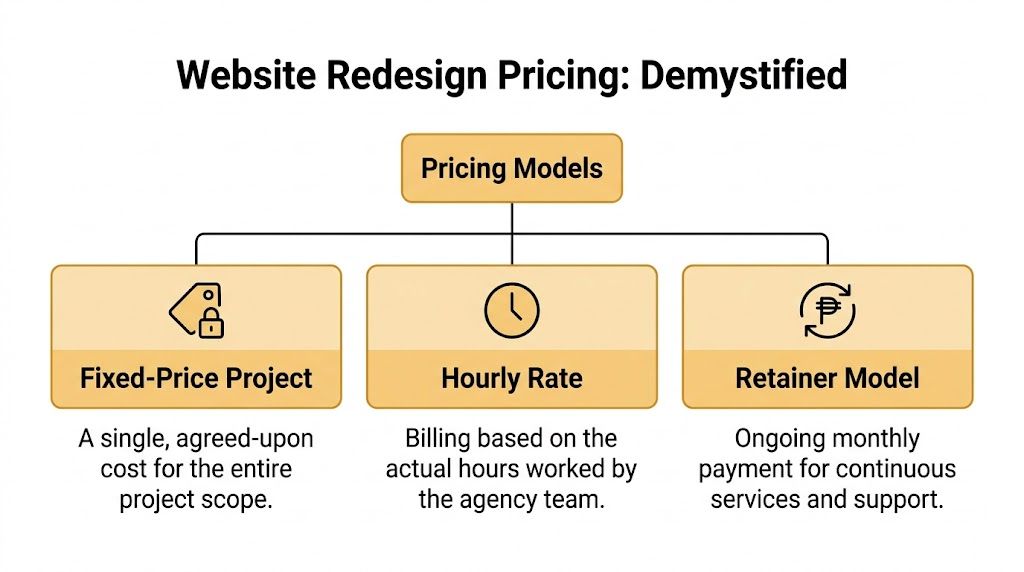
The three pricing models you’ll see most
Each model can work. Each can also go sideways if the scope is weak.
| Pricing model | Usually works best when | Main risk |
|---|---|---|
| Fixed project fee | Scope is clear and approvals are disciplined | Change requests pile up fast |
| Hourly billing | Discovery is still unfolding or complexity is uncertain | Budget predictability gets harder |
| Monthly retainer | Redesign and ongoing iteration are intentionally linked | Monthly work can drift without priorities |
Fixed fee is often the easiest for SMBs to budget. But it only works if both sides define deliverables carefully. Hourly can be fair when the project includes unknowns, especially on content cleanup or legacy technical issues. Retainers make sense when the redesign is one phase of a longer digital program.
Green flags in a proposal
You want evidence that the agency knows redesigns fail when teams skip strategy and rush to visuals.
Good signs include:
- Discovery is a paid phase: That means they value research, audits, and planning.
- Content is named directly: They know websites don’t launch on design alone.
- SEO migration appears in writing: They’re not treating rankings as an afterthought.
- QA and launch planning are explicit: They expect real testing, not a last-minute browser check.
- Support after launch is documented: They know the site needs stewardship, not just delivery.
A proposal should reduce ambiguity. If it leaves major questions open, the project will get more expensive later.
Red flags that cost businesses money
Some warnings are obvious. Others hide behind polished decks.
Watch for these:
-
No discovery line item
That often means the agency is guessing. -
Vague deliverables
“Website redesign” is not scope. Neither is “custom design.” -
No mention of ownership
If the contract doesn’t explain access, assets, code, and licensing, ask before signing. -
No maintenance conversation
This is one of the most common blind spots. A site can launch fine and become expensive later. -
Too much emphasis on homepage design
The homepage matters. It is not the project.
Compare proposals by decision quality
A helpful way to review bids is to score them on four non-price factors:
- Clarity of scope
- Alignment to goals
- Technical completeness
- Post-launch support structure
Then compare cost.
This changes the decision from “Who’s cheapest?” to “Who is least likely to create rework, delays, or hidden spend?” That’s usually the smarter question for a first major website redesign agency engagement.
Navigating the Redesign Process Milestones
A redesign feels mysterious when you’ve never been through one. Owners hand over files, answer some questions, approve a few screens, and wait for launch day. That black-box dynamic is one reason projects underperform.
According to SoftwareReviews research reported by PR Newswire, 80% of website redesigns fail to meet their full potential, largely because the final product drifts away from business goals. Process discipline fixes a lot of that.
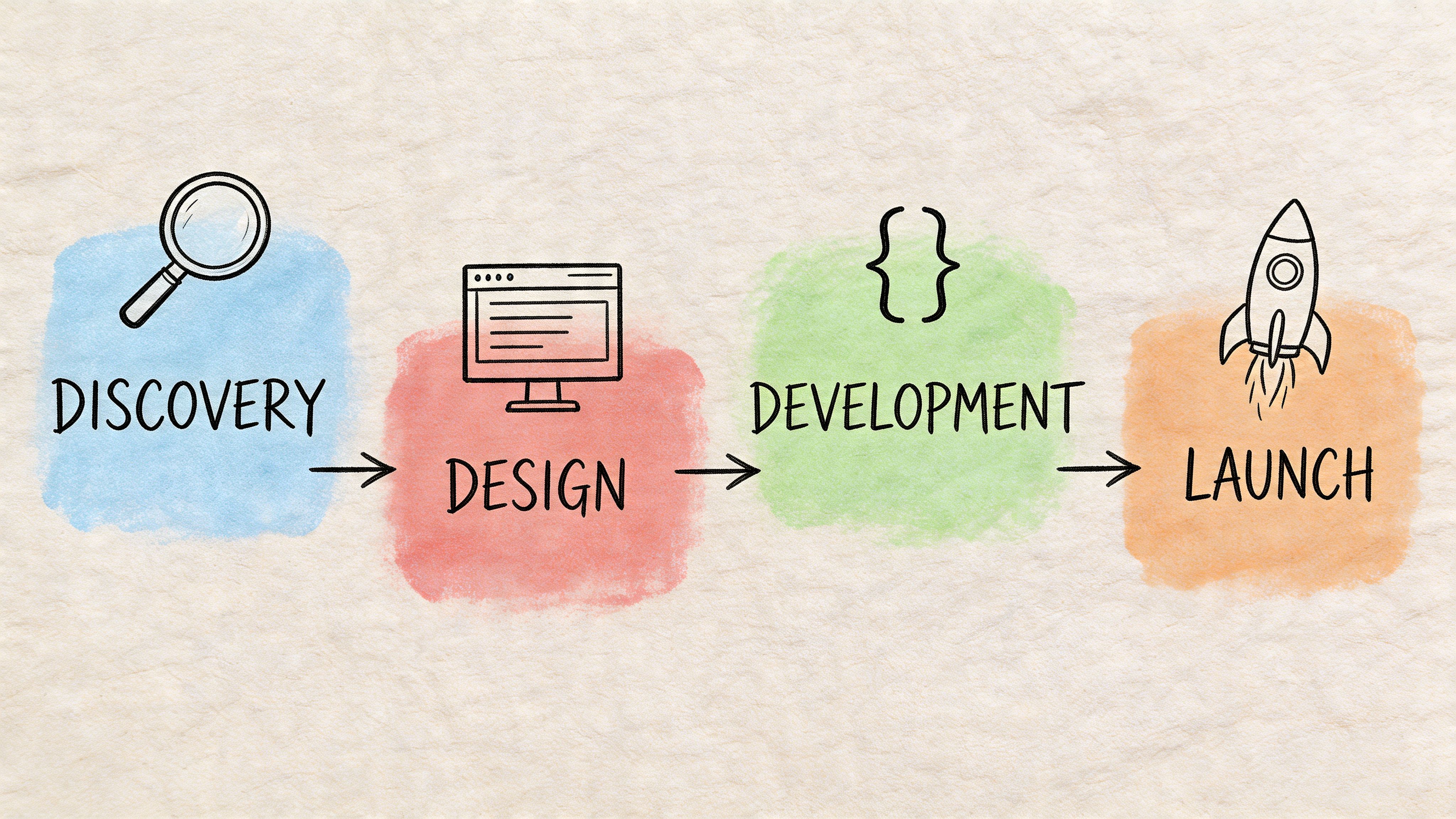
A detailed view of the process for website redesign is useful if you want to see how these phases connect. What matters here is knowing what your role should be at each stage.
Discovery is where the project is won or lost
This phase should feel less like a kickoff meeting and more like a business audit. The agency should ask about your customers, sales cycle, best leads, weak leads, search priorities, reporting setup, and internal constraints.
Your team’s job is to be candid. Not diplomatic. If your current site has political baggage, internal disagreements, or content owners who miss deadlines, say it early.
The most useful inputs at this stage are:
- access to analytics and search data
- examples of strong and weak leads
- sales objections your team hears repeatedly
- top-priority services or products
- known technical issues and integrations
UX and design should solve specific problems
Wireframes come next in mature projects. These are structure decisions before style decisions. During this stage, page hierarchy, navigation, CTA placement, and content flow are determined.
Feedback should focus on utility first:
- Can users find the next step?
- Is the page trying to do too much?
- Does the layout support the actual sales conversation?
- Are important trust signals visible soon enough?
A lot of clients get hung up on colors too early. That’s natural. It’s also expensive if it distracts from structure.
When reviewing wireframes, ask “Would this help a buyer decide?” before asking whether it looks exciting.
Once visual design starts, the agency should apply your brand in service of those earlier decisions. Good design reinforces clarity. It doesn’t compete with it.
Here’s a useful explainer if you want to see a redesign process discussed from a broader educational angle:
Development, content, and QA are where delays happen
This is usually the longest stretch, and the phase where client-side bottlenecks show up. Content approval slows down. Legal wants edits. Product photos are missing. Someone decides a new feature should be included after all.
That doesn’t mean the agency failed. It means the build phase exposes unresolved decisions.
A clean milestone sequence looks something like this:
| Milestone | What the agency should deliver | What you should provide |
|---|---|---|
| Content mapping | Page inventory and content plan | Final owners for each page |
| Development | Functional templates and integrations | Timely review of working pages |
| QA testing | Cross-device checks, form testing, bug logs | Consolidated feedback, not scattered notes |
| Launch prep | Redirects, tracking, backups, final checklist | Approval on go-live window and stakeholders |
Quality assurance deserves more respect than it usually gets. It involves validating forms, analytics events, mobile layouts, redirects, CMS roles, search indexing controls, and browser behavior before launch.
Launch is a beginning, not a finish line
A good launch is calm. The redirects work. The tracking works. The team knows where to edit content. The agency is monitoring for issues.
A bad launch happens when everyone treats go-live like the end of the movie. The smarter posture is to expect a stabilization period. The first few weeks should focus on issue resolution, behavioral review, and performance checks against the goals you defined before the project started.
Critical Technicals Your Agency Must Handle
Design gets attention because it’s visible. Technical quality matters more because customers feel it even when they can’t name it. They notice the site is slow. They notice pages disappear from search. They notice forms break, checkout gets clunky, or the mobile layout fights them.
That’s why technical execution is not the backend detail you leave for later. It’s part of the business case.
Your site’s design is judged in 0.05 seconds, with 94% of a user’s first impression being design-related and 75% of consumers judging a company’s credibility based on its website design, as noted earlier in the VWO data. Those numbers usually get used to justify visual polish. I’d argue they also justify technical rigor, because credibility drops the moment the polished design fails under real use.
SEO migration is not optional
If your current site has any organic visibility at all, the redesign needs a migration plan. That means URL mapping, redirects, retained metadata where appropriate, content preservation for ranking pages, and post-launch monitoring.
If an agency says “SEO can be added later,” be careful. Design changes and content restructuring can wipe out existing search equity if migration work isn’t built into the project.
Ask direct questions:
- Which URLs are changing, and why?
- Who maps redirects?
- How will you protect high-value pages?
- What gets checked after launch?
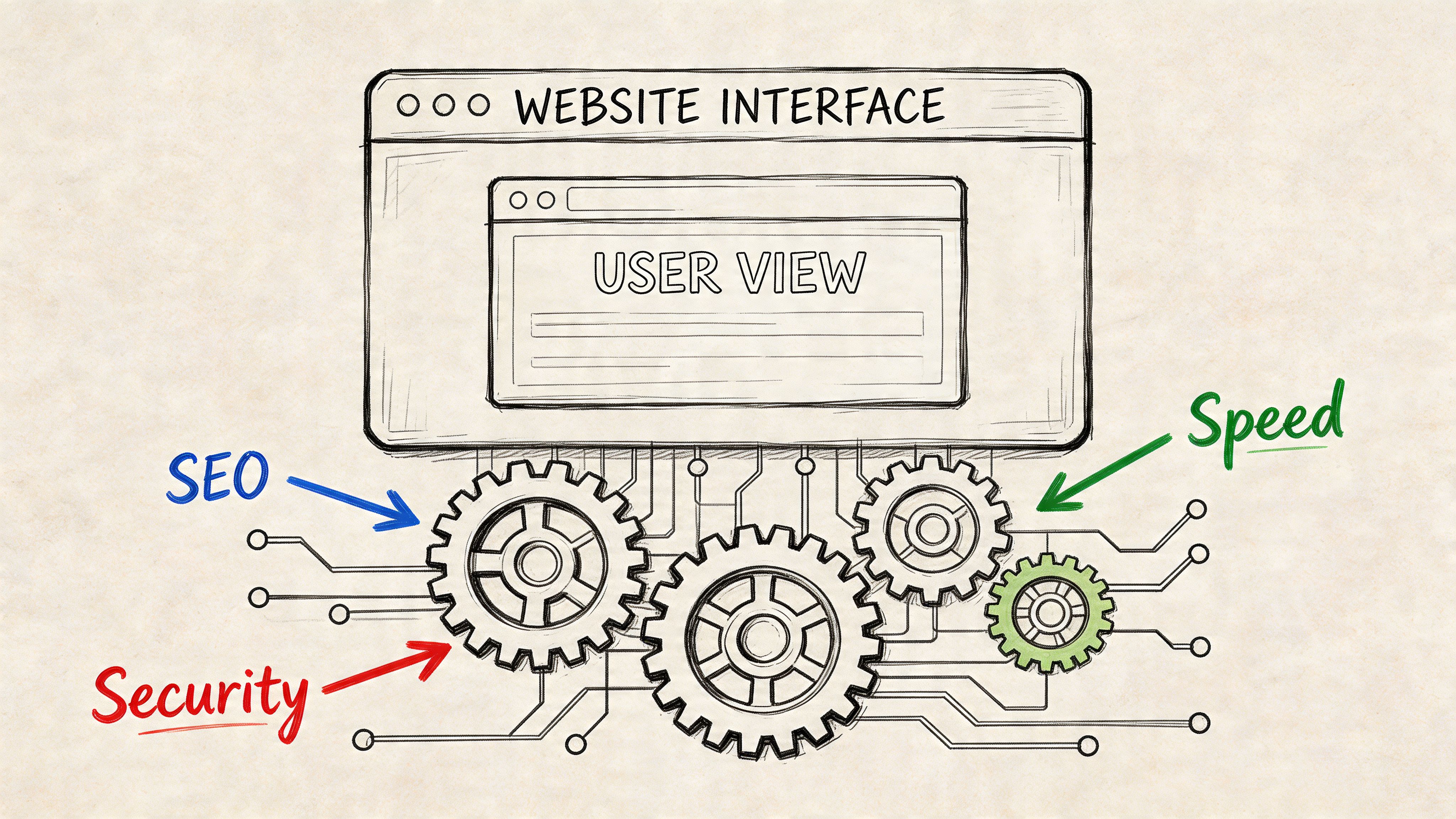
Speed, accessibility, and security protect revenue
Many agencies talk about performance in broad terms. Ask them how they build for it.
You want a team that addresses:
- Page speed: Asset handling, code discipline, image optimization, and lean template construction.
- Accessibility: Keyboard navigation, heading structure, color contrast, form usability, and sensible semantics.
- Security basics: Role controls, update processes, plugin discipline, form protection, and hosting guidance.
These aren’t “enterprise extras.” They affect every SMB site.
If your agency can explain a design system beautifully but gets vague on redirects, form handling, or accessibility, you're hearing only half the story.
Feedback systems matter after launch
Technical quality also depends on how quickly you learn what users are struggling with. Analytics tells you where users dropped. Feedback tools help you understand why. A practical roundup of the best website feedback tools can help you evaluate options for collecting post-launch insight without guessing.
If you want a plain-English checklist of redesign issues to raise with any vendor, this guide on how to redesign a website is a solid internal reference point.
Ask for answers in plain English
During agency interviews, you’re not testing whether they know jargon. You’re testing whether they can prevent avoidable business risk.
A strong website redesign agency should be able to explain technical choices like this:
| Technical area | What a strong answer sounds like |
|---|---|
| SEO migration | We map changing URLs, preserve key pages, and validate after launch |
| Speed | We control asset weight and test real user experience across devices |
| Accessibility | We build for usable navigation, readable structure, and form clarity |
| Security | We define update responsibility, access control, and maintenance processes |
That level of clarity is what turns technical work into business confidence.
Managing the Partnership and Measuring ROI
The redesign project ends. The website doesn't.
Many businesses often find themselves surprised. A major gap in the industry is transparency around post-launch costs. Many businesses are caught off guard because agencies don’t clearly explain who owns the website after launch, what support includes, or how maintenance fees work, as noted by Pixel Lighthouse. That’s not a minor contract detail. It shapes the total cost of ownership.
Lock down ownership and support terms
Before signing, make sure the agreement covers these points clearly:
- Who owns the website assets including design files, content, and code deliverables
- Who controls hosting and core accounts
- What the warranty period covers
- What support costs after launch
- How requests are handled for edits, bug fixes, updates, and future features
If those items stay fuzzy, the redesign can become expensive after the “project” is over.
Track outcomes the same way you approved the project
Go back to the goals you set before the redesign. If the site was meant to improve lead quality, review lead quality. If it was meant to help e-commerce conversion paths, review those paths. If the issue was operational friction for your team, check whether staff can update the site without opening support tickets every time.
Use a simple post-launch review rhythm:
-
First check
Confirm forms, tracking, search indexing, and key user paths are working. -
Next review
Look at behavior on top pages. Not vanity metrics. Real business pages. -
Ongoing cadence
Meet with your agency or internal team to prioritize improvements based on user behavior and business goals.
The smartest redesign partnerships don’t end at launch. They move into a more disciplined version of maintenance and iteration. That might mean monthly support, quarterly optimization, or a lighter advisory relationship. The right model depends on how often your site changes and how tightly it ties to revenue.
A website redesign agency is worth the investment when it doesn’t just deliver a better-looking website. It gives your Omaha business a stronger operating asset, a clear ownership model, and a realistic path to improving performance over time.
If you're evaluating a redesign and want a grounded conversation about scope, platform fit, SEO risk, and post-launch ownership, Up North Media is one Omaha-based option that works across custom websites, e-commerce builds, SEO marketing, and web app development. The useful first conversation isn’t “How much for a new site?” It’s “What does this site need to do better, and what will it cost to own and improve after launch?”