

Picture this: your website isn't just a static brochure that looks the same for everyone. Instead, imagine it as a smart, experienced salesperson who instantly knows how to connect with each person who walks through the door. That's the core idea behind dynamic content for website—it's content that changes based on who is visiting, creating a genuinely personal experience.
What Is Dynamic Content and Why Should You Care
At its heart, dynamic content is all about website personalization. Instead of showing every visitor the same exact headlines, images, and offers, your site serves up different versions based on what it knows about them. It's the complete opposite of a static website, which is like a printed sign—it never changes, no matter who's looking at it.
A dynamic website, on the other hand, is a bit of a digital chameleon. It intelligently shifts its messaging and appearance to resonate better with each individual. To get a deeper handle on the nuts and bolts of tailoring web experiences, this guide on What Is Website Personalization is a great resource.
This all happens in real-time, guided by a set of rules you create. These rules can be simple or incredibly detailed, using different data points to trigger the right content at the right moment.
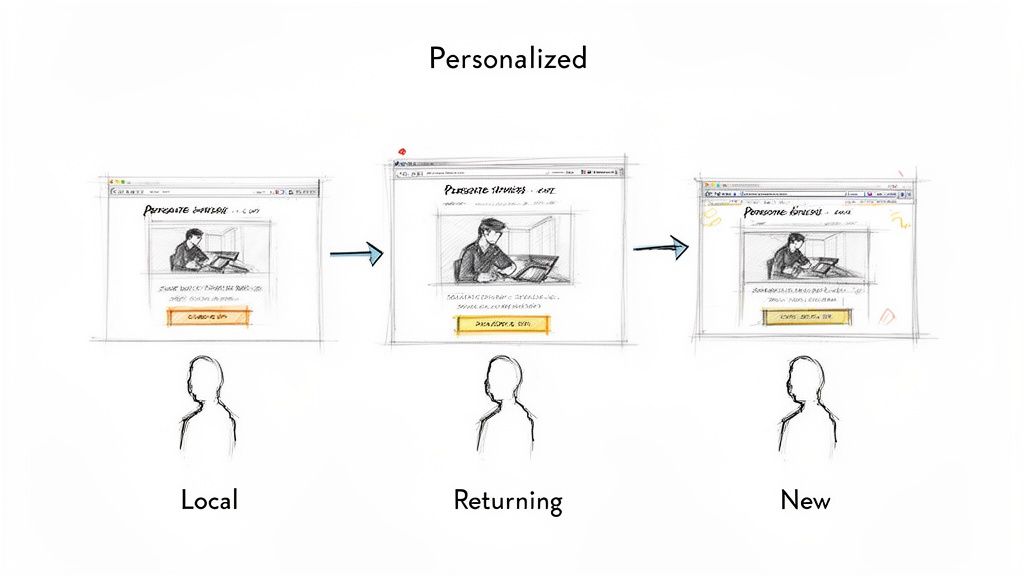
The Building Blocks of Personalization
So, how does a website know how to change? It's not magic. It’s a logical system that listens for signals from user data and behavior to serve up the most relevant content.
A few common signals include:
- Location: Showing a user in Omaha a promotion for a local event, while a visitor from Chicago sees a completely different offer.
- Past Behavior: Greeting a returning customer with a "Welcome back!" message and displaying products related to their previous purchases.
- Demographics: Swapping out imagery and tweaking messaging to better connect with different age groups or industries.
- Referral Source: Customizing the landing page headline for visitors who clicked through from a specific Facebook ad campaign versus a generic Google search.
Basically, you're creating multiple versions of a content block—a headline, an image, or even a call-to-action button—and telling your website which one to show based on these kinds of criteria.
The goal is simple: make every visitor feel like the website was designed specifically for them. This creates a more engaging and relevant experience, which is the first step toward building trust and driving action.
This approach is a big shift from the old way of thinking about web design. You move away from broadcasting a single, generic message to everyone and start having a two-way conversation. By responding to what users are telling you through their actions, dynamic content for website platforms can turn a passive browsing session into an active, engaging journey. It’s a subtle change, but it has a massive impact on how people see your brand and how likely they are to stick around.
The Real Business Impact of a Dynamic Strategy
Switching to a dynamic content strategy is way more than just a clever technical trick—it's a serious engine for business growth. When you ditch the one-size-fits-all approach for a more personal one, you start directly influencing the metrics that actually matter. The real magic is making each visitor feel like you see and understand them.
Think about it. Instead of landing on a generic homepage, a visitor might see a headline that speaks directly to their industry or product recommendations based on what they've clicked on before. That immediate relevance is everything. It answers the visitor’s unspoken question—"Is this for me?"—with a loud and clear "Yes," which goes a long way in keeping them around and dropping your bounce rate.
This isn't just about making people feel good, either. Deeper engagement has a clear, measurable return. By personalizing the user journey, you smooth out the bumps and guide people more efficiently toward taking action.
Driving Conversions and Boosting Revenue
The most direct impact of dynamic content is on your bottom line. It's simple: when you show people the most relevant information, offers, and calls-to-action, you significantly increase the chances they'll convert. A visitor who clicked a specific ad can land on a page that mirrors that ad's message, creating a seamless, persuasive experience.
An e-commerce site could show localized shipping offers or highlight products that are popular in the visitor's area. This level of personalization makes the path to purchase feel natural and almost effortless.
A well-executed dynamic content strategy shortens the sales cycle. It anticipates what users need and serves up solutions before they even have to look for them. This proactive approach builds trust and turns casual browsers into loyal customers.
This is especially true for mobile users, who have zero patience for slow, irrelevant experiences. In fact, dynamic and personalized landing pages have been shown to convert approximately 25.2% more mobile users compared to static ones.
Enhancing User Engagement and SEO
For content-heavy sites like blogs or news portals, the name of the game is keeping people reading. Dynamic content is a champ here, basically creating a "choose your own adventure" for every visitor. It can suggest related articles based on what someone is reading right now, pulling them deeper into your site.
All that extra time on site sends powerful positive signals to search engines. When users hang around longer and click through more pages, it tells Google that your content is valuable and high-quality.
These positive user behavior signals can lead to:
- Improved Organic Rankings: Search engines absolutely reward websites that deliver a great user experience.
- Increased Session Duration: Relevant content recommendations keep users engaged and on your site for longer.
- Lower Bounce Rates: When what a visitor sees is instantly relevant, they're far less likely to hit the back button.
Ultimately, dynamic content isn't just a feature—it's a foundational strategy for building a more effective digital presence. It powers a cycle where better user experiences lead to better engagement, which in turn drives higher conversions and stronger SEO. The key is to start with a crystal-clear understanding of your audience and what you want to achieve.
For a deeper dive into turning website traffic into tangible results, check out our guide on how to generate more leads and conversions. This approach helps you build a system that delivers real, measurable business growth.
Choosing Your Path to Dynamic Content
Jumping into dynamic content for your website isn't a one-size-fits-all decision. The right way to do it really boils down to your team's technical skills, your business goals, and just how deep you want to go with personalization. It’s like picking a vehicle: a bike is great for a spin around the neighborhood, but you'll need something with a lot more horsepower for a cross-country road race.
The tech you choose has to match your ambition. Let's walk through the most common routes, from simple built-in tools to powerful, dedicated platforms, so you can find the perfect fit. This decision tree really sums up the core choice: go dynamic and chase higher conversions, or stick with static content and risk your engagement flatlining.
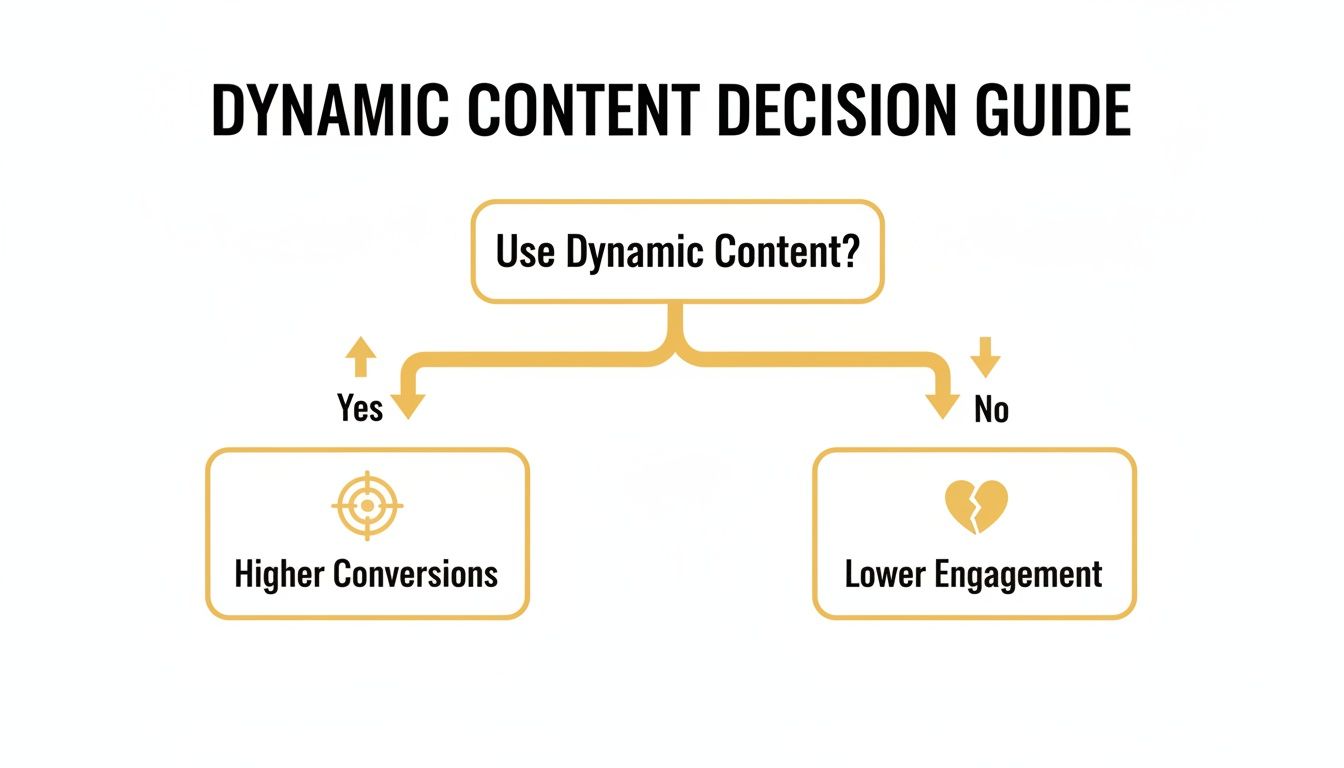
As you can see, a dynamic strategy is a direct line to better results, while ignoring it often leads to users who just don't stick around.
To help you navigate these choices, here’s a quick comparison of the main implementation methods.
Comparing Methods for Implementing Dynamic Content
This table compares the primary methods for implementing dynamic content, outlining their key characteristics, best use cases, and typical complexity levels to help businesses choose the right approach.
| Method | Best For | Complexity | Key Advantage |
|---|---|---|---|
| CMS Features | Businesses new to personalization; simple rule-based content swaps. | Low | Easy to start, often included with existing software. |
| Server-Side Rendering (SSR) | SEO-critical content; personalization based on deep user data. | Medium | Fast initial page load and great for search engine visibility. |
| Client-Side Rendering (CSR) | Highly interactive web apps; dynamic updates after the page loads. | Medium | Feels very responsive after the initial load. |
| Personalization Engines/AI | E-commerce, large-scale sites; creating one-to-one user experiences. | High | Automated, predictive, and can self-optimize for best results. |
Each path has its own set of trade-offs, so the best approach is the one that aligns with your resources and goals.
Starting With Your Content Management System
For a lot of businesses, the easiest on-ramp is the Content Management System (CMS) they already use. Platforms like HubSpot, or WordPress with the right plugins, often come with basic personalization features baked right in.
These tools let you set up simple rules to show or hide different content blocks. For example:
- Contact List Membership: Show a special discount only to visitors on your "VIP customers" list.
- Lifecycle Stage: Display a "Book a Demo" button to qualified leads, while brand new visitors see a "Learn More" call-to-action instead.
- Referral Source: Tweak a headline for visitors coming from a specific Google Ads campaign to keep the messaging consistent.
This is the ideal starting point if you're just dipping your toes in. It's usually included in your existing software subscription, doesn't require a ton of technical work, and lets you test out personalization concepts without a huge investment. The main trade-off? You're generally limited to simpler rules.
Server-Side vs. Client-Side Rendering
Once you get into more advanced territory, you'll run into two core technical approaches: server-side and client-side rendering. Getting the difference between them is key to striking the right balance between performance and personalization power.
Server-Side Rendering (SSR): With this method, your web server does all the heavy lifting upfront. It figures out who the user is, grabs the right content from a database, and builds the personalized page before sending it over to the user's browser. What they get is a fully-formed, customized HTML file that loads nice and fast.
SSR is generally better for SEO because search engine crawlers can easily see and index the complete content right away. It's a solid choice for personalization that depends on rich user data you have stored on your server.
Client-Side Rendering (CSR): In this model, the server sends a generic, almost empty page to the browser. Then, JavaScript code runs on the user's device (the "client") to request personalized data and swap out the content in real time.
This can feel incredibly zippy after the initial page load and is fantastic for highly interactive web applications. The catch is that the initial personalized content can sometimes be slower to appear, and it can create headaches for SEO if it’s not set up carefully.
Advanced Personalization Engines and AI
When you're ready to create true one-to-one experiences, it’s time to look at dedicated personalization engines and AI platforms. These are specialized tools that plug into your website and use machine learning to automate and optimize dynamic content at a massive scale.
These platforms chew through huge amounts of behavioral data in real time to make smart decisions on the fly.
- Predictive Recommendations: An e-commerce site using AI can analyze a user’s clicks, past purchases, and what similar shoppers have done to recommend products they are almost certain to love.
- Automated Segmentation: AI can uncover new audience segments you never would have thought of, grouping users based on subtle patterns in their behavior.
- Self-Optimizing Content: Some systems can automatically A/B test different headlines, images, and offers, learning over time which versions work best for which types of users.
While these tools offer incredible power and can deliver a serious return on investment, they're a bigger commitment in both cost and setup. They're best for businesses that already have a good handle on their data and clear personalization goals, ready to take their efforts to the next level.
Dynamic Content Examples That Drive Results
Theory is one thing, but seeing dynamic content for a website in action is what really shows off its power. These practical examples highlight how different businesses use it to create more relevant, compelling experiences that actually move the needle.
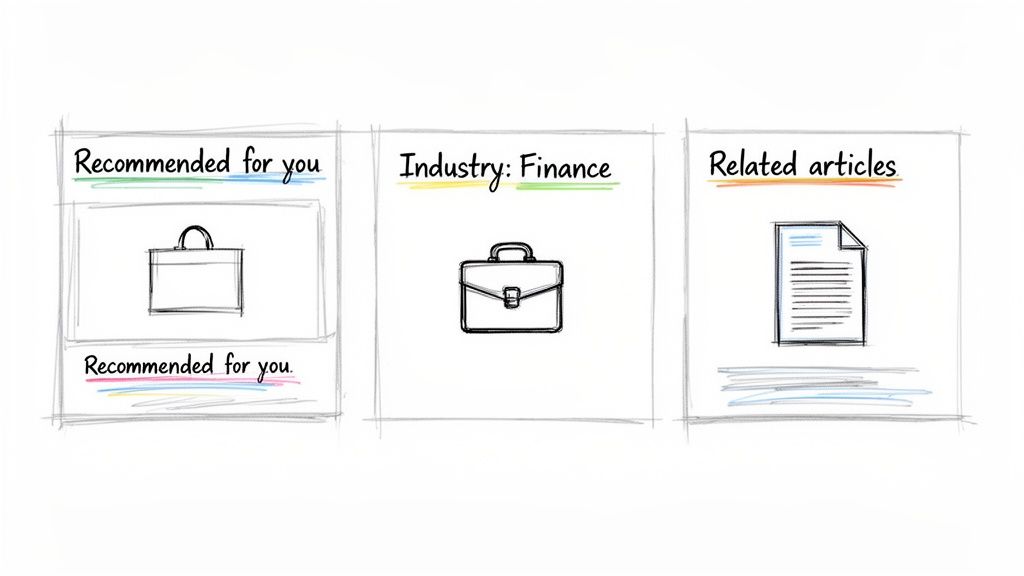
Let's dive into a few common—yet powerful—examples across different industries. Hopefully, they’ll spark some ideas for your own site.
E-Commerce Personalization for Returning Visitors
For any online store, repeat customers are gold. Dynamic content is the perfect way to acknowledge their loyalty and make their next shopping trip feel a lot more personal. Instead of treating them like strangers, you can roll out the digital red carpet.
Here’s how an e-commerce site can use dynamic rules for returning shoppers:
- Personalized Welcome Message: A simple "Welcome back, [First Name]!" in the header makes an immediate, friendly connection.
- 'Recently Viewed' Bar: A dynamic section showing items they previously clicked on keeps potential purchases right in front of them.
- Targeted Recommendations: Instead of showing generic bestsellers, the homepage can feature a "You Might Also Like" section filled with products related to their past purchases or browsing history.
This approach makes visitors feel understood. It guides them directly to products they’re most likely interested in and smoothes out their path to checkout.
B2B Content Tailored to Visitor Industry
In the B2B world, relevance is everything. A software company selling to both healthcare and finance needs to speak the right language to be effective. Dynamic content lets a B2B website shift its messaging to match a visitor's professional context.
For instance, if someone visits from an IP address known to belong to a financial services company, they could see:
- A homepage headline that reads, "Secure Data Solutions for the Financial Sector."
- Case studies and testimonials from other banking clients featured front and center.
- A call-to-action that offers a whitepaper on "Fintech Compliance Trends."
Meanwhile, a visitor from a hospital network would see content focused on HIPAA compliance and patient data security. This targeted messaging instantly communicates value and positions the company as an expert in that specific field.
Dynamic content transforms a generic B2B site into a series of highly specific, industry-focused microsites, all without needing to build separate pages. It ensures every prospect sees the most compelling proof points for their unique needs.
Media and Publishing Engagement Boosters
For media sites and blogs, the name of the game is keeping readers on the site longer. Dynamic content is a powerful engine for increasing session duration by constantly surfacing relevant articles and videos based on what a reader is doing right now.
A classic example of this done right is Netflix's ML recommendations for personalized views, which is responsible for a huge portion of all content watched. In the same way, a news site can dynamically adjust its sidebar or "Up Next" suggestions based on the topics a user has been reading during their current session.
Adding dynamic video is another smart play. Research shows that websites using video content hit an average conversion rate of 4.8%, which is nearly double the 2.9% rate of sites that don't. That difference is exactly why dynamic video suggestions have become such a priority for content-heavy sites.
How to Prepare for a Dynamic Content Strategy
Jumping into dynamic content without a plan is like setting sail without a map. The technology is exciting, sure, but the real wins come from the groundwork you lay before you even write a single line of personalized copy. A thoughtful approach is what separates a gimmick from a strategy that’s effective, scalable, and doesn’t create a mess down the road.
Before you start looking at software, you need to zoom out and focus on your goals and your audience. What business outcome are you actually trying to drive? Are you trying to bump up e-commerce sales, get better leads for your sales team, or just keep people on your site longer? Define what success looks like in clear, measurable terms.
Once you know what you want to achieve, the next step is figuring out who you're trying to reach.
Define Your Audience Segments
Dynamic content is only as smart as the audience segments that power it. You can't personalize anything if you don't know who you're personalizing for. So, start by identifying the most meaningful ways to group your visitors.
Common ways to slice up your audience include:
- Geographic Location: Showing content specific to visitors from different cities, states, or countries.
- Behavioral Data: Grouping users based on the pages they've visited, content they've downloaded, or products they've bought in the past.
- Demographics and Firmographics: Segmenting by job title, industry, or company size is a game-changer for B2B.
- Referral Source: Creating a unique welcome for visitors coming from a specific ad campaign, social media post, or email newsletter.
Building out detailed profiles for these groups is a critical first step. If you need a hand structuring this, our guide on how to create buyer personas offers a solid framework. Getting this clarity will guide every decision you make, from the content you create to the tech you choose.
Prioritize Data Quality and Integrity
Your dynamic content engine runs on data. If that data is inaccurate, incomplete, or just plain messy, your personalization efforts will fall flat on their face. Before you launch anything, it’s time to audit your data sources—your CRM, analytics platform, and any other customer databases you're pulling from.
Make sure the information is clean, consistent, and reliable. A simple error, like having multiple records for the same customer, can lead to a disjointed and confusing experience for them. Spending time on data hygiene upfront is one of the smartest investments you can make.
Think of it this way: high-quality data is the fuel for your personalization engine. Trying to run a high-performance machine on contaminated fuel will only lead to breakdowns and poor performance.
Assess Your Technical Foundation
Implementing dynamic content for a website adds a layer of complexity to your site's backend, and that can sometimes slow things down. Slow-loading pages are a known conversion killer, so it’s vital to make sure your technical foundation is rock-solid.
Even a tiny delay can have a massive financial impact. When a page loads in just 1 second, the average conversion rate is nearly 40%, but that number nosedives with every passing moment. Worse, for every extra second of load time, e-commerce conversion rates fall by 0.3%. That small number adds up fast over thousands of transactions. You can find more insights on how web design impacts user behavior on designrush.com.
Talk to your development team and confirm your site is optimized for speed. This means clean code, optimized images, and a hosting environment that can handle the demands of serving personalized content without breaking a sweat. By shoring up these fundamentals—clear goals, defined audiences, clean data, and a speedy website—you’re setting your dynamic content strategy up for real, measurable success.
Measuring the Success of Your Dynamic Content
Rolling out a dynamic content for website strategy is a big move. But a brilliant strategy is just an idea until you can prove it's actually working. To justify the effort and fine-tune your approach, you have to track the right key performance indicators (KPIs) that tie those personalized experiences back to real business growth.
Your focus should be on the numbers that directly reflect revenue and customer value. These are the metrics that scream ROI and get everyone from marketing to the C-suite excited about what you're doing.
Key Business and Revenue Metrics
Sure, seeing engagement numbers go up is nice, but the data that really moves the needle is tied to your bottom line. Tracking these KPIs gives you undeniable proof of how personalization is boosting sales and bringing in better leads.
Here's what to keep a close eye on:
- Conversion Rate Lift: This is the big one. It's a straight-up comparison between the conversion rate of your personalized content and the generic, static version. A positive lift is the clearest signal that you're on the right track.
- Average Order Value (AOV): Are you using dynamic content to show relevant product recommendations or smart upsells? If so, you should see customers spending more with each purchase.
- Lead Quality: For B2B folks, this is crucial. Track whether leads coming from personalized pages are more qualified or zip through your sales pipeline faster than others.
- Customer Lifetime Value (CLV): A great personalized experience isn't a one-and-done deal. It builds loyalty over time, encouraging repeat business and turning one-time buyers into long-term fans.
The real goal here is to get past fuzzy engagement metrics and connect your dynamic content directly to dollars and cents. When you can confidently say, "This personalization campaign increased our conversion rate by 15%," you're speaking a language every stakeholder understands.
This data-driven mindset is non-negotiable for any modern marketing effort. For a deeper dive into this, you can learn more about how to measure digital marketing success in our detailed guide.
Analyzing User Engagement Signals
Beyond the money, you need to understand how people are interacting with your personalized content. These engagement metrics offer clues about what's resonating and where you might need to make some tweaks.
Think of better engagement as a leading indicator of future conversions. The key signals to watch are a lower bounce rate—which means visitors find the content relevant enough to stick around—and an increased time on page, showing they're actually digging into the personalized info you're serving up.
The Power of A/B and Multivariate Testing
You should never have to guess what works best. The only way to truly optimize your dynamic content is through systematic testing. This is where A/B and multivariate testing become your best friends.
- A/B Testing: This is the classic head-to-head matchup. You test two versions of a single dynamic element—like two different headlines for a specific audience segment—to see which one performs better. It’s simple, direct, and gives you clear winners.
- Multivariate Testing: This is the more advanced version. It lets you test multiple combinations of elements all at once (e.g., three headlines and two images) to find the absolute best-performing combination for a specific audience.
By constantly testing and iterating, you can systematically improve your results. This cycle of testing, learning, and refining is what turns a good dynamic content strategy into a great one, ensuring you're always discovering what clicks with each segment of your audience.
Frequently Asked Questions
Jumping into a new strategy like dynamic content always brings up a few questions. We get it. Here are some clear, no-nonsense answers to the most common things people ask, covering the practical side of getting started, how it plays with SEO, and whether it’s a good fit for your business.
How Much Data Do I Need to Get Started?
You can get going with a lot less data than you think. You don't need a massive data warehouse to see results.
Simple details like a visitor's location (pulled from their IP address), where they came from (like a specific Google Ad), or how they're clicking around your site are more than enough to start personalizing their experience. The trick is to start with a clear, simple goal and use the data you already have to build a couple of effective audience segments.
Starting small with what you already know about your audience is the fastest way to learn and prove the value of personalization before you decide to scale things up.
As your data gets richer, you can build out more sophisticated rules for your dynamic content for website strategy. This "start small, prove it, then grow" approach lets you test the waters and show a real return on investment without a huge upfront commitment.
Will Dynamic Content Hurt My Website SEO?
When it's done right, dynamic content can actually give your SEO a nice boost. This is a common worry, but here’s how it works: search engine crawlers like Googlebot are usually shown a default, static version of your page. This ensures all your core content is fully visible and indexable, so you're not hiding anything from them.
The real magic happens with your human visitors. The personalized experience you show them leads to much better engagement signals—things like lower bounce rates, longer time on page, and more conversions. Search engines love seeing these positive user interactions, and they can absolutely contribute to better rankings over time.
The one thing to watch out for is a practice called "cloaking," which is showing crawlers something completely different from what users see. As long as you work with a team that knows what they're doing, this is easy to avoid.
Is Dynamic Content Only for Large E-Commerce Companies?
Not at all—that’s one of the biggest myths out there. Businesses of every shape and size can get huge value from a dynamic approach. The core idea of making content more relevant is universal, and modern tools have made this tech accessible for just about everyone.
Think about these examples:
- A local plumber can dynamically show testimonials from clients in the visitor's specific city.
- A B2B software company can change its homepage headline to match the visitor's industry.
- A publisher or blogger can recommend related articles based on what a reader has already browsed.
No matter your industry, making your website feel like it was built just for the person visiting is a powerful way to build trust and get them to take action.
Ready to transform your website from a static brochure into a dynamic, revenue-generating tool? The experts at Up North Media specialize in custom web development and data-driven marketing strategies that deliver measurable results. Schedule your free consultation today!