You’re probably looking at a few agency decks right now and noticing they all sound the same. They promise more traffic, better rankings, and a polished monthly report. What they usually don’t show is how their work connects to the parts of a Shopify store that move revenue: collection page structure, variant handling, schema, app conflicts, mobile speed, and checkout-adjacent UX.
That’s where most hiring mistakes happen. Store owners buy “SEO” as a generic service, then realize six months later they hired a content team for a platform problem, or a technical team that never touched conversion paths. A good shopify seo agency should know how Shopify behaves in practice, not just how search works in theory.
Why Your Store Needs a Specialist Shopify SEO Agency
A common Shopify scenario looks like this. Traffic is up, paid search is getting expensive, and the store still is not getting enough revenue from organic search. The problem usually is not “SEO” in the abstract. It is that the store’s money pages are underbuilt for how Shopify works.
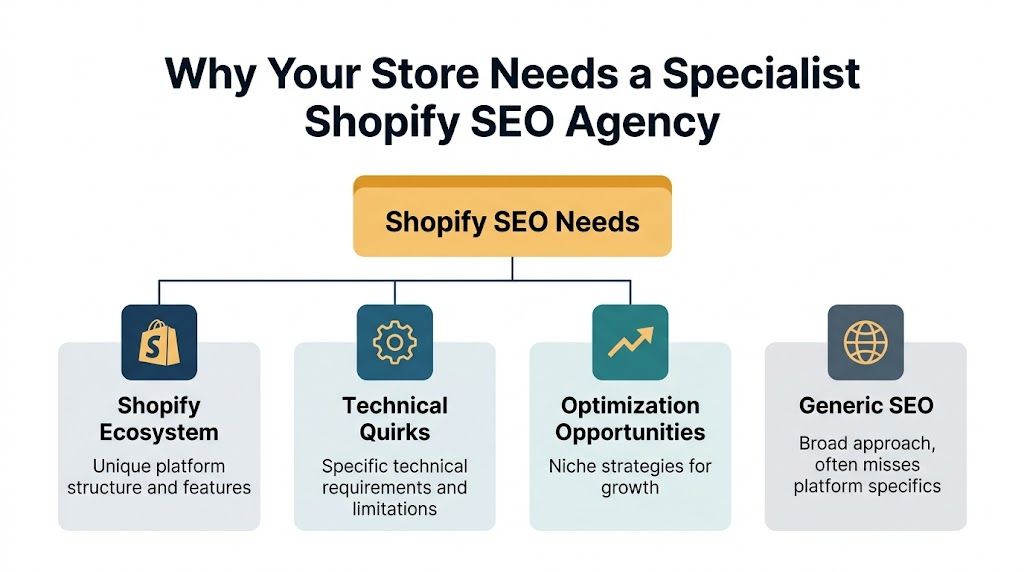
Shopify runs millions of merchant sites, and mobile usage dominates store traffic, as noted by BuiltWith's Shopify usage data and Statista's reporting on mobile retail ecommerce traffic. That matters because the margin between a page that ranks and a page that sells is often a mobile issue on Shopify. Slow app scripts, weak collection templates, cramped filter UX, and missing product schema all show up fast on a phone.
Specialist agencies work on the pages that make money
A general SEO agency can give you keyword targets and blog ideas. A specialist Shopify SEO agency should be able to improve the parts of the store tied directly to revenue.
That usually means work on:
- Collection pages that target category and subcategory terms with buying intent
- Product templates that clarify variants, availability, reviews, and entity signals for search engines and shoppers
- Internal linking paths that move authority from content into collections and from collections into priority products
- Schema output for products, reviews, breadcrumbs, and organizational details
- App and theme conflicts that create code bloat, duplicate metadata, or broken structured data
This work sounds technical because it is. It is also commercial. A stronger collection page often lifts rankings for non-brand terms and improves conversion because users can sort, filter, and compare products without friction.
Shopify SEO is part merchandising, part technical execution
The agencies worth hiring do not treat SEO as a channel sitting beside the store. They treat it as a layer built into the theme, navigation, merchandising, and app stack.
In practice, I want an agency to explain what happens if a color variant creates duplicate URLs, whether a filter system should be crawlable, how collection copy can support rankings without pushing products below the fold, and which apps are slowing down render time on mobile. If they cannot answer those questions clearly, they are selling generic SEO to a platform-specific problem.
For a solid baseline, these ecommerce SEO best practices match the way strong Shopify teams evaluate site structure, on-page execution, and commercial intent.
Revenue is the right scorecard
The best reason to hire a specialist is measurement. Shopify SEO should be tied to revenue levers, not only ranking charts.
A useful framework looks like this:
- Track organic revenue by collection, product, and content page type
- Measure conversion rate from organic landing pages, especially top collections
- Separate brand vs. non-brand organic performance
- Watch assisted conversions from educational content into collection and product visits
- Tie technical fixes to outcomes such as improved indexed pages, richer SERP appearance, and higher mobile conversion rate
For Omaha-based businesses, this gets even more practical. Local demand patterns, shipping expectations, in-store pickup considerations, and regional product interest can change which collections deserve SEO priority first. A specialist agency should know how to balance local intent with broader ecommerce demand, especially if the store serves both Omaha customers and national buyers.
If you are comparing providers, reviewing examples from the Top 7 Shopify SEO Experts can help you spot the difference between surface-level SEO services and teams that know how Shopify stores grow revenue.
The expensive mistake is hiring for activity instead of impact
I have seen stores spend months on content production while their highest-margin collections stayed thin, poorly linked, and invisible for commercial searches. I have also seen technical audits sit untouched because the agency had no one who could work inside Shopify themes or coordinate with a developer who understood Liquid.
A specialist Shopify SEO agency closes that gap. It connects search visibility to collection architecture, product discoverability, app performance, and mobile conversion. That is what turns SEO from a reporting line item into a revenue channel.
The Vetting Framework for Choosing Your Partner
Most agency evaluations fall apart because the questions are too soft. “How do you approach SEO?” invites a polished speech. “Show me how you mapped keywords across collections, products, and supporting content on a Shopify store” forces a real answer.
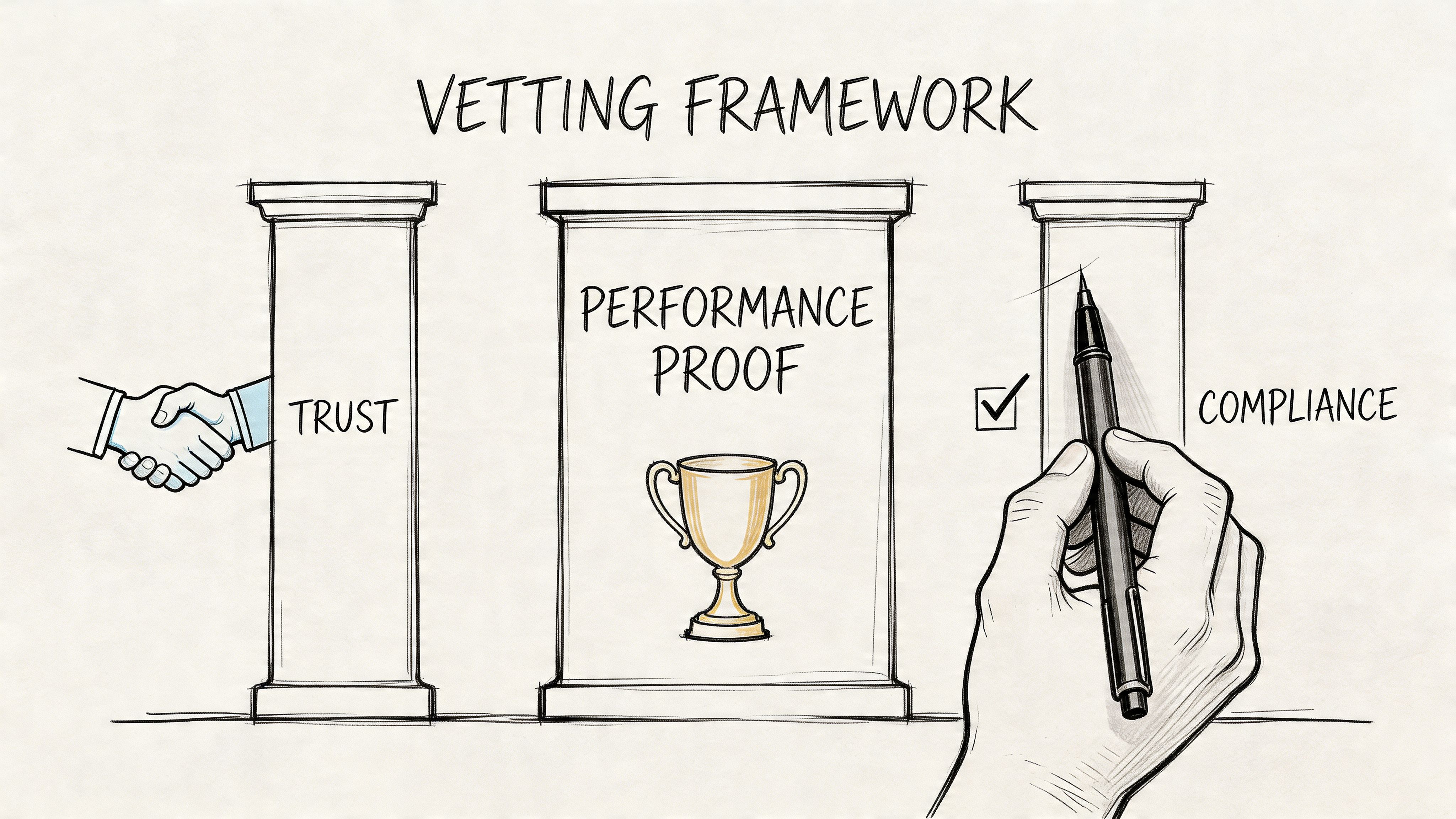
A reliable vetting process comes down to three checks: performance proof, process, and people.
Performance proof
Start with evidence, but ask for the right kind. You’re not looking for screenshots of ranking graphs with brand terms circled in green. You want proof that the agency improved pages tied to buying intent.
Ask them to show:
- Before-and-after work on collection or product templates
- Reporting tied to organic revenue, not just sessions
- Examples of keyword coverage across homepage, collections, products, and blog content
- What changed on-page, not just what was “recommended”
One useful benchmark here is methodological rigor. A strong Shopify SEO agency should be able to explain a keyword mapping process that prevents cannibalization, uses exactly one H1 per page, and tracks organic performance in GA4. That approach is tied to outcomes such as a 22% uplift in conversion rates from optimized landing pages, as outlined in this Shopify SEO agency methodology breakdown.
If you want a comparison list before shortlisting calls, this roundup of Top 7 Shopify SEO Experts is a practical place to scan positioning and see which firms emphasize platform-specific expertise.
Process and strategy
Weak agencies often reveal their limitations. Anyone can say “technical SEO” or “content strategy.” Fewer can explain how they handle Shopify’s operational details.
Use questions like these in discovery calls:
| What to ask | What a good answer sounds like | What a weak answer sounds like |
|---|---|---|
| How do you map keywords across page types? | They separate homepage, collections, products, pages, and blog roles | They target the same term across multiple URLs |
| How do you handle heading structure in Shopify themes? | They mention one H1, template checks, and theme overrides if needed | They say headings “aren’t a big deal” |
| How do you measure SEO impact? | They reference GA4, Search Console, revenue attribution, and micro-conversions | They focus on rankings only |
| What do you do first on a Shopify audit? | They mention crawl issues, index control, templates, schema, internal links, and speed | They jump straight to backlinks |
The more specific the process, the less likely you’re paying for recycled SEO packaged as strategy.
A good agency should also explain what it won’t do. For example, they should push back on publishing content that has no commercial role, or on indexing filter combinations that dilute category strength.
If you need a broader hiring lens beyond Shopify, this guide on how to hire an SEO company is useful for pressure-testing proposals and contracts.
People and communication
This part gets underestimated. The strategy can be solid and still fail if the wrong people are on the account.
Ask who performs the work. Not who closes the deal. Not who joins the kickoff. Who audits the store, who writes recommendations, who touches templates, who owns reporting, and who answers when an app update breaks something.
Look for:
- A clear point of contact who understands both SEO and ecommerce
- Access to specialists when technical implementation is needed
- Decision-making cadence that fits your team’s speed
- Direct communication about trade-offs, not polished ambiguity
If every answer sounds “proprietary,” you’re not hearing expertise. You’re hearing a shield.
Decoding Agency Pricing Models and Deliverables
A $1,500 retainer can be cheap or expensive. It depends on whether the agency is fixing revenue pages in Shopify, or sending a monthly PDF with rank screenshots and generic recommendations.
That’s why pricing by itself is a poor filter. Two agencies can quote the same monthly fee and deliver completely different business value. One may spend the month improving collection templates, cleaning up duplicate product signals from apps, tightening internal links, and validating product schema. Another may spend it writing a blog post, updating title tags, and holding a status call.
How the common models differ
Here’s the practical split:
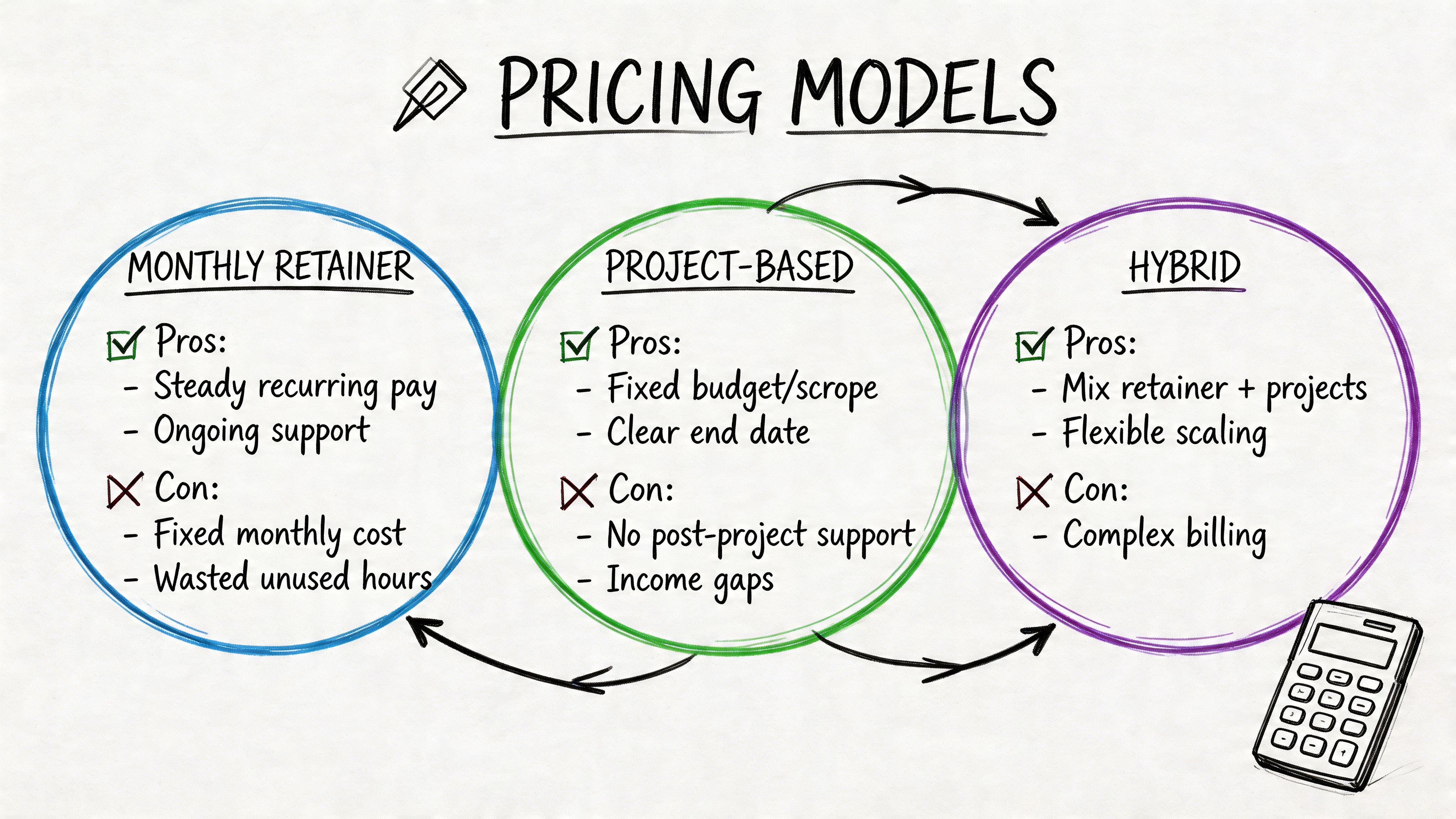
| Pricing model | Best for | Main upside | Main limitation |
|---|---|---|---|
| Monthly retainer | Stores that need ongoing growth work on collections, products, content, and tracking | Steady iteration on pages that can increase revenue over time | Easy to misunderstand if implementation and priorities are not spelled out |
| Project-based | Migrations, technical cleanup, theme changes, schema repair, or a one-time audit | Clear scope and easier budgeting | Gains often stall if nobody owns follow-through after delivery |
| Hybrid | Stores that need a heavy first phase, then lighter monthly support | Good fit for stores with backlog plus growth targets | Works only when ownership between agency, developer, and in-house team is clear |
For Shopify, retainers make sense when the store needs repeated work on collection page optimization, product page improvements, faceted navigation control, app impact reviews, and measurement setup. Project work fits a specific event, such as a redesign, a migration to Shopify, or cleanup after years of app bloat. Hybrid models are often the best buy for mid-market stores that need a reset before settling into a lighter operating rhythm.
What deliverables should actually be included
The proposal should show what gets done, who does it, and how the work connects to sales.
A useful monthly scope usually includes:
- Technical SEO work inside Shopify such as indexation checks, crawl waste review, canonicals, redirects, and template-level fixes
- Collection page optimization tied to category demand, internal linking, copy blocks, filters, and merchandising signals
- Product page support for title structure, unique copy where it matters, schema validation, and variant handling
- App and theme impact reviews to catch script bloat, duplicate content issues, or rendering problems introduced by third-party tools
- Structured data checks for products, reviews, availability, price, and supporting content
- GA4 and Search Console reporting mapped to landing pages, assisted conversions, and revenue, not just clicks
- Content planning for pages with commercial purpose, such as buying guides, comparison pages, gift intent pages, and FAQ support for category demand
For Omaha-based businesses, there’s one more layer. The agency should know whether local intent matters to the store’s economics. A brand with a warehouse, showroom, regional delivery footprint, or strong Midwest customer base may need location signals and local collection support. A national DTC brand usually does not. Good agencies separate those cases instead of forcing local SEO deliverables into every proposal.
Cheap SEO usually means the agency avoids the work that changes revenue.
What pricing should make you ask harder questions
Lower-priced proposals often leave out implementation, developer coordination, schema work, or conversion-focused analysis of collection and product pages. Those omissions matter because Shopify growth usually comes from improving the pages already closest to purchase, not from producing more activity around the edges.
Higher-priced proposals can be justified. I’ve seen stores earn it. Large catalogs, multilingual setups, multiple storefronts, subscription apps, custom themes, and feed complexity all create real workload. But expensive only makes sense when the agency can show where the hours go and what business lever each task affects.
Ask for a simple ROI model before signing. Which page types are they trying to improve first? What baseline organic revenue do those pages generate now? How will success be measured beyond traffic, such as collection-page conversion rate, product-page assisted revenue, or lift in non-brand clicks that reach checkout? If they cannot answer that clearly, the pricing is still abstract.
The right spend is the one tied to work that improves the Shopify elements most likely to drive more orders and margin.
Critical Red Flags to Avoid When Hiring
The obvious red flags are easy. Guaranteed rankings. Link packages. Vague promises about “AI SEO domination.” Those are still bad, but the more expensive mistakes usually look professional on the surface.
One of the biggest current risks is hiring an agency that treats AI search visibility like noise. A documented warning sign is failure to integrate structured data for LLM visibility, especially as 40% of search is expected to shift to AI by 2025, based on this discussion of ecommerce visibility mistakes. If an agency can’t explain structured data in plain language, it’s behind.
Subtle warning signs that matter
Here are the ones I’d take seriously:
- They skip the store audit. If they pitch a package before reviewing your theme, apps, indexation, and collection structure, they’re selling a process, not solving your store.
- They report on traffic without revenue context. More sessions mean very little if commercial pages aren’t improving and assisted conversions aren’t tracked.
- They avoid implementation details. Good Shopify SEO often needs template edits, schema checks, and coordination with developers. If they only “advise,” expect slow progress.
- They use the same playbook for every store. A skincare brand, a parts catalog, and a digital publisher should not get the same SEO roadmap.
- They treat category pages like placeholders. On Shopify, collection pages often carry serious buying intent. Agencies that ignore them usually overproduce low-value content.
A few real-world bad-fit scenarios
An agency says it will publish blog posts every month, but it never audits your collection pages. Rankings rise for informational terms, while your revenue-driving categories stay flat.
Another team promises technical SEO, then installs more apps, adds more scripts, and makes the storefront heavier. Nobody owns the side effects.
If the agency can’t tell you what it will stop doing, it probably doesn’t have a sharp strategy.
A third agency gives you a polished dashboard and no usable insight. Plenty of color. No explanation of which landing pages are producing customers, where internal links are weak, or which templates are holding back indexation.
That’s not strategy. It’s packaging.
Onboarding, ROI, and Finding a Local Omaha Partner
The first month with a new SEO partner should create clarity fast. Not rankings. Not miracles. Clarity.
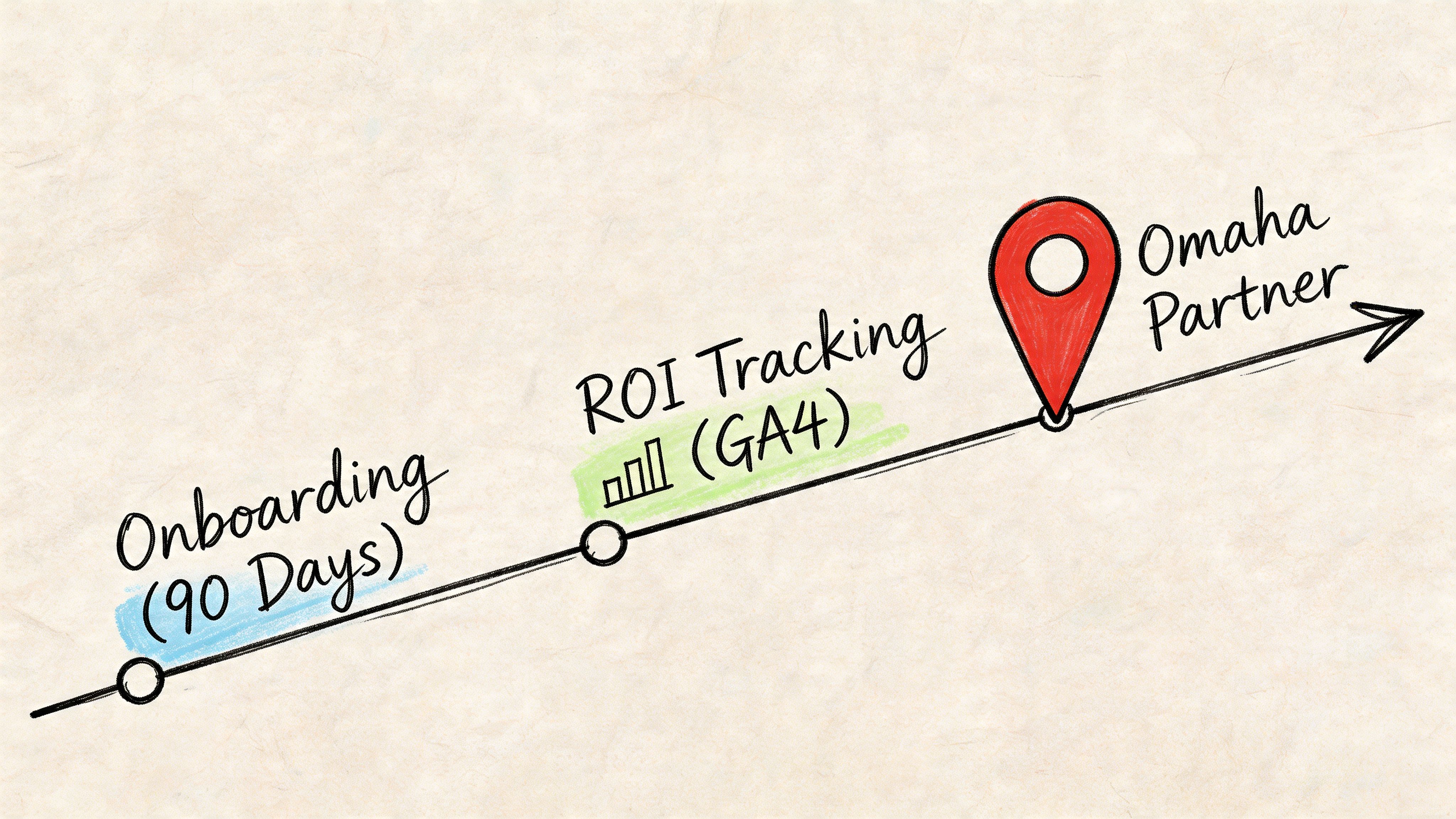
A strong onboarding process usually starts with access, measurement, and prioritization. The agency should connect or verify GA4, Google Search Console, merchant data, and your existing theme and app stack. Then it should identify which pages deserve attention first based on revenue potential, not just ranking opportunity.
What good onboarding looks like
The best teams don’t drown you in a giant audit deck and disappear. They establish a working plan.
That usually includes:
- Tracking setup for organic sessions, landing pages, add-to-cart activity, checkout behavior, and purchases
- Page segmentation across homepage, collections, products, support pages, and editorial content
- Technical triage so major crawl, schema, mobile, or theme issues don’t stall the account
- Prioritization based on margin, demand, and page types closest to conversion
For Shopify stores, I want the agency to tell me which collections are strategic, which product templates need cleanup, what apps may be interfering, and what success will look like in the next reporting cycles.
Measuring ROI the right way
Traffic is an input. ROI is the output. That sounds obvious, but a lot of SEO reporting still stops at sessions and rankings.
What matters more is whether the agency can connect organic performance to business outcomes:
- Organic revenue
- Conversion rate on organic landing pages
- Add-to-cart and checkout progression from organic sessions
- Revenue contribution by collection and product page
- Customer acquisition efficiency compared with paid channels
If your team still defaults to ad metrics, this explanation of ROAS vs ROI is worth reviewing. It helps frame why SEO should be judged over a broader financial horizon than paid media.
The upside can be substantial when the work is focused. Real-world Shopify SEO optimizations have produced 200-500% organic traffic growth in 7-12 months, with one store reaching 847 daily Google visitors worth over $15,000 in monthly ad spend equivalent, according to this 2025 Shopify SEO guide. The lesson isn’t that every store will replicate that outcome. It’s that serious gains come from targeted optimization tied to high-intent pages.
Here’s a useful walkthrough to watch if you want a visual sense of how strategy and performance tie together over time:
Why a local Omaha partner can be the better fit
For Omaha-based businesses, local fit can matter more than brand-name agency polish. A nearby partner can sit in the room with your marketing lead, ecommerce manager, or founder and make faster decisions around merchandising, content priorities, and implementation trade-offs.
That matters for:
- Retailers balancing regional demand with national search visibility
- Digital publishers who need cleaner analytics and stronger content monetization paths
- Startups where SEO needs to coordinate with product, dev, and growth decisions
- Lean teams that need hands-on support, not another layer of agency process
There’s also a practical trust advantage. A local team is easier to hold accountable because communication tends to be tighter and context is shared. If that matters to your business, this overview of an Omaha digital marketing agency gives a useful lens on what regional partnership can look like.
Good onboarding should answer one question quickly. Which SEO activities are most likely to create revenue for this specific store?
Your Final Decision Checklist
Before you sign anything, run through this list. It catches most bad-fit agencies before they become expensive lessons.
- Confirm Shopify-specific experience. They should speak clearly about collections, product templates, schema, app conflicts, internal linking, and theme limitations.
- Ask for platform-relevant proof. Look for examples tied to ecommerce outcomes, not generic traffic screenshots.
- Review the keyword strategy. They should map terms by page type and explain how they avoid cannibalization.
- Inspect measurement early. If GA4, Search Console, and conversion tracking aren’t central to the engagement, ROI will stay blurry.
- Check deliverables, not just price. A lower proposal often leaves out implementation support or meaningful reporting.
- Test their communication. You should know who runs the account, who does the technical work, and how decisions get made.
- Pressure-test modern readiness. They should understand structured data, AI visibility, and how Shopify apps can affect search performance.
- Ask what they won’t do. Strong agencies make trade-offs. Weak ones agree to everything.
- Make revenue the scoreboard. Rankings, impressions, and traffic matter only if they improve the pages that generate sales.
- Choose for fit, not flash. The best partner is usually the one with the clearest thinking, not the slickest presentation.
If you want a second opinion before hiring a shopify seo agency, Up North Media is a strong place to start. Their team works with Omaha businesses on data-driven SEO, ecommerce growth, web apps, and AI consulting, with a track record of generating over $10 million in revenue for clients. A consultation is a practical way to compare your current shortlist against the standards in this guide and see what a revenue-focused SEO plan should look like.