
Most search results for personal questions to ask people stay stuck on icebreakers. Favorite food. Dream vacation. Pet peeves. Those prompts can warm up a room, but they rarely help a business make a better decision, qualify a lead, fix a funnel, or shape a smarter offer.
In a business setting, the best personal questions do something more useful. They reveal how a person thinks, what pressures they're under, what outcomes matter to them, and what keeps them from moving. That's the kind of “personal” that ultimately changes strategy. It turns a polite conversation into a productive one.
That matters because personal questions have expanded far beyond social small talk. Team-building prompts now include hobbies, passions, collections, and prized possessions, while large public lists have become much more specific. TeamBuilding's question ideas show how broadly organizations now use personal prompts to improve engagement, and that same logic applies in client discovery, sales, and consulting.
The playbook is simple. Ask questions that help you understand goals, audience, systems, constraints, and buying behavior. In practice, behavioral questions tend to be more useful than hypothetical ones because they tell you what someone did, not what they imagine they might do. That's a better input for strategy, proposals, and prioritization.
If you want a founder-focused example of better business questions, Founder Connects' insights for founders are a useful reminder that the right questions can change a major decision.
1. Discovery Questions About Business Goals and Challenges
The first personal question worth asking in business isn't “What do you do?” It's “What are you trying to change?”
That shifts the conversation from identity to intent. You stop collecting surface facts and start finding the underlying job behind the engagement. A retailer might say they need SEO, but the true issue could be weak product-page conversion. A publisher might ask for a redesign, but the actual pain could be stagnant qualified traffic or low reader loyalty.
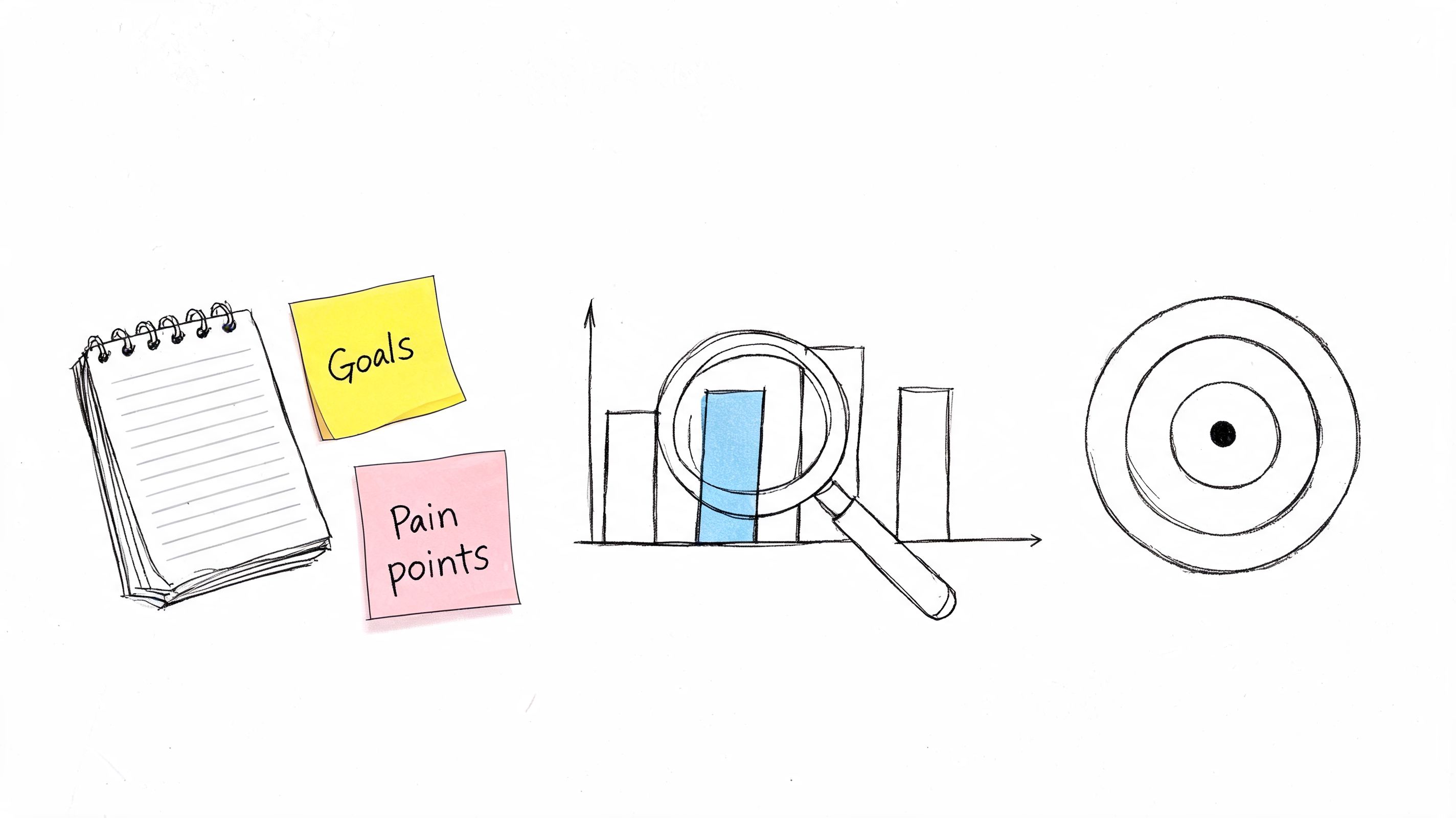
Questions that reveal the real problem
Ask these early:
- Outcome first: What would success look like in the next 6 to 12 months?
- Constraint next: What's prevented you from getting there so far?
- Evidence check: What data do you already have that supports the problem?
- Ownership: Who feels this problem most inside the business?
- Urgency: Why does this matter now instead of later?
These questions work because they force specifics. They also expose whether you're talking to someone with a strategic mandate or someone collecting quotes without internal alignment.
Practical rule: If a prospect can't define success in plain language, don't rush to recommend tactics.
In my experience, weak discovery usually creates bloated proposals. Strong discovery narrows scope fast. If someone says they need AI, but can't name the workflow, team bottleneck, or customer experience problem they want to improve, the next step isn't implementation. It's clarification. That's why a structured AI consulting approach for small businesses starts with operational questions, not tools.
What works and what doesn't
What works is asking for examples from the recent past. Ask about the last campaign that underperformed, the last launch that stalled, or the last quarter that missed expectations. Those answers are grounded in reality.
What doesn't work is asking broad abstract questions like “Where do you see the company going?” too early. You'll get vague ambition instead of useful direction. Start with current friction, then move to future plans.
2. Customer Persona and Target Audience Questions
A lot of teams think they know their audience because they can describe a customer in one sentence. That's not enough. Good personal questions to ask people in business need to uncover who buys, who influences, who hesitates, and who comes back.
The best audience conversations separate demographic, behavioral, and psychographic signals. Qualtrics' guidance on market research questions recommends asking about age, gender, income, education, location, purchase frequency, media habits, values, motivations, and decision criteria. That's a useful reminder that a persona isn't one trait. It's a combination of who someone is, what they do, and why they choose.

Better questions than Who is your customer
Try a tighter sequence:
- Best-fit buyer: Who are your most profitable customers?
- Buying trigger: What usually happens right before they start looking for a solution?
- Decision path: How do they research options?
- Trust factors: What makes them confident enough to move forward?
- Objections: What usually stops them from buying?
These answers are more useful than broad labels like “small businesses” or “busy professionals.” A B2B software company may think IT leaders are the buyer, but the practical evaluator might be an operations manager. A local business may think referrals drive leads, while actual demand starts on mobile search.
Why this matters operationally
Once you have clean audience answers, your targeting improves everywhere. Your landing pages get sharper. Your sales calls sound less generic. Your content speaks to a real decision process instead of a made-up ideal customer.
If your team needs a framework to turn these answers into something usable, this guide on how to create buyer personas is the right next step.
One caution matters here. Sensitive personal questions can reduce response rates in research settings, especially when they touch topics like income or sexual orientation, as noted in the earlier survey guidance. Ask only what's necessary, and make the reason clear.
3. Current Technology Stack and Integration Questions
A surprising number of business problems are really system problems. Teams talk about lead quality, reporting gaps, or campaign inefficiency when the actual issue is that Shopify, HubSpot, GA4, Stripe, Zapier, and the CRM aren't connected in a clean way.
That's why some of the most valuable personal questions to ask people are operational. You're learning how they work every day, where they lose time, and which tools create friction.
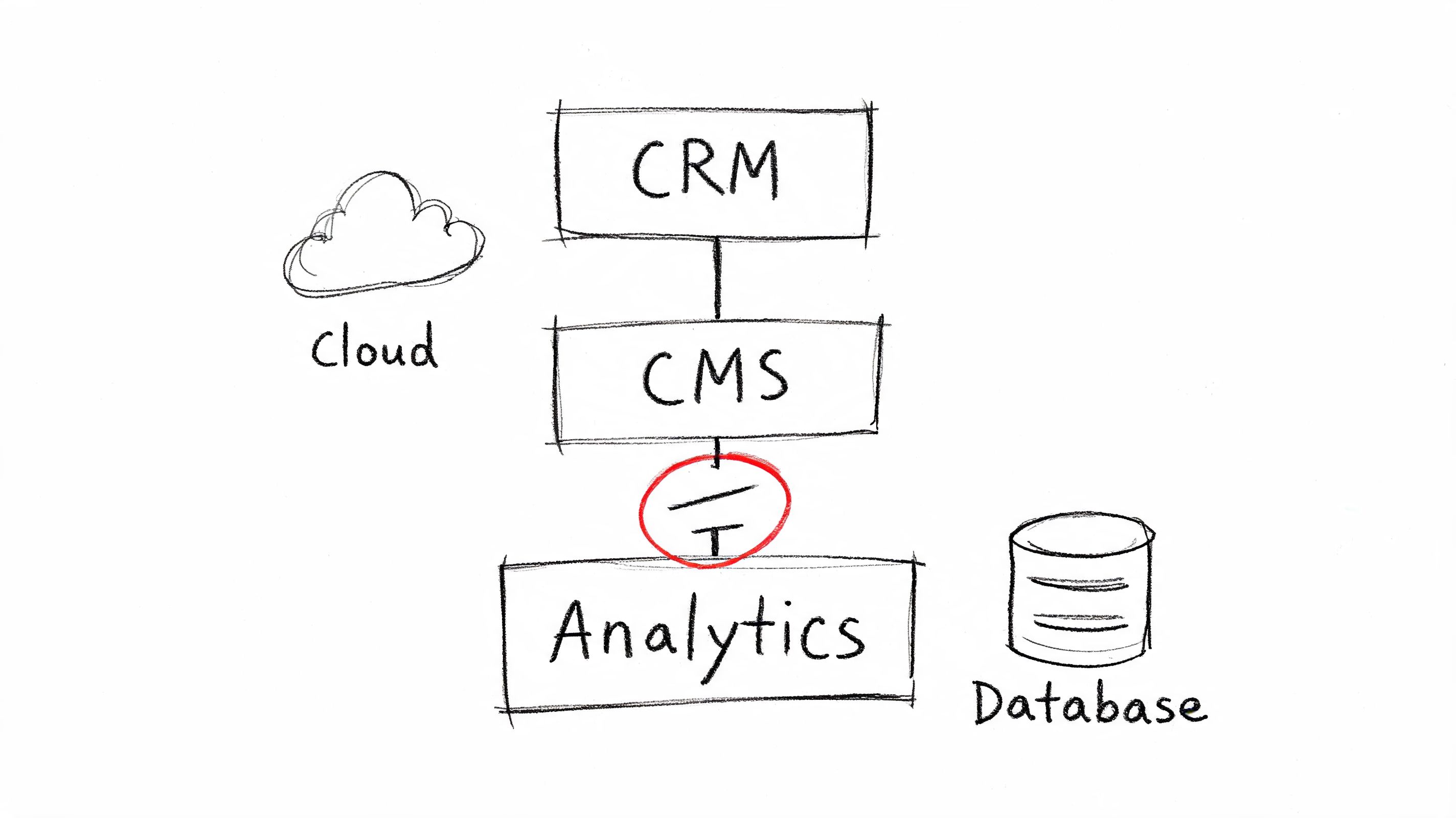
A simple visual helps stakeholders map the conversation:
The stack audit questions
Start with a walkthrough, not a wishlist.
- System inventory: Walk me through your current tech stack.
- Manual friction: Which tasks still happen in spreadsheets, email, or copy-paste workflows?
- Integration reality: Which tools talk to each other, and which don't?
- Reporting trust: Where do your teams get numbers today?
- Technical ownership: Who internally can manage changes, integrations, and QA?
These questions tell you whether the business has a channel problem or a plumbing problem. An outdated CMS can block testing. A disconnected CRM can make attribution useless. A team with no event tracking can't diagnose funnel problems because they can't see them.
Most “marketing” problems become easier to solve once the data moves cleanly between systems.
Here's a practical explainer that can help clients think through the moving parts before a larger build:
What to look for in the answers
Listen for workarounds. If someone says, “We export that manually every Friday,” or “Only one person knows how that dashboard works,” you've found risk.
What works is documenting the stack in plain English. What doesn't is assuming named tools mean mature implementation. A company can have HubSpot, Salesforce, GA4, and Looker Studio and still operate with weak data hygiene and no reliable handoff between teams.
4. Budget, Timeline, and Resource Availability Questions
Many otherwise good discovery calls get awkward during this phase. People avoid budget because they don't want to seem pushy. Then everyone wastes time building a plan the client can't fund, staff, or approve.
Budget questions aren't rude when they're tied to scope. They're responsible. If a startup has limited funds and a hard launch date, the right answer may be a phased rollout instead of a full custom build.
Ask the hard questions early
Use direct language:
- Investment range: What budget has been approved for this initiative?
- Timeline driver: What's behind the deadline?
- Internal support: Who on your team can participate during the project?
- Approval path: Who signs off on spend and scope changes?
- Phasing flexibility: If the ideal version isn't feasible now, are you open to phases?
These questions uncover feasibility, not just affordability. A business may have the money but no bandwidth. Another may have urgency but no decision-maker available to review key milestones.
Where projects usually go wrong
The biggest mistake is treating timeline as a preference instead of a constraint. If a local services company wants a new site live during its busiest season, internal review cycles often slow the build more than development does. If a publisher wants a content migration fast, editorial cleanup can become the primary blocker.
A deadline without a reason is usually soft. A deadline tied to a launch, renewal, event, or peak season is usually real.
What works is matching ambition to capacity. What doesn't is forcing a polished proposal before you've tested whether the budget, timeline, and staffing model can support it.
5. Competitive Landscape and Market Positioning Questions
Most businesses can name competitors. Fewer can explain why customers choose one option over another. That gap matters because strategy gets expensive when positioning is fuzzy.
Competitive questions aren't about copying rivals. They help you identify where the market is crowded, where the buyer is confused, and where your client can be meaningfully different. For agencies and consultants, in these situations, discovery shifts from diagnostics to effective application.
Questions that sharpen positioning
Ask for specifics, not opinions.
- Known alternatives: Who do customers compare you against most often?
- Perceived strengths: What do those competitors do well online?
- Blind spots: Where do they under-serve customers?
- Customer choice: Why would someone choose you instead?
- Category expectation: What does your market assume every provider offers?
A fitness app might discover every competitor talks about tracking while nobody owns coaching, accountability, or guided progress. A local service company may see that competitors rank well but provide a poor mobile experience. A publisher may find the field is search-optimized but difficult to explore.
How to use the answers
The goal isn't to sound more unique in a brand workshop. The goal is to make practical decisions about product pages, landing pages, offers, and sales language. If the market is full of generic claims, specificity becomes the advantage.
One useful habit is asking for competitor examples live on the call. Have the client pull up sites, ads, email flows, or booking experiences. That usually reveals more than any abstract summary.
What works is finding a gap tied to buyer frustration. What doesn't is trying to out-message a competitor without changing the experience behind the message.
6. Conversion, Revenue, Data, and Measurement Questions
If the earlier questions define the business problem, these questions tell you whether anyone can measure progress. Without that, “growth” becomes opinion.
This is one of the few places where precision matters more than diplomacy. You need to know how leads become customers, where people drop off, which channels drive action, and what the business can track. If a team can't connect traffic, conversion events, and revenue outcomes, strategy stays speculative.
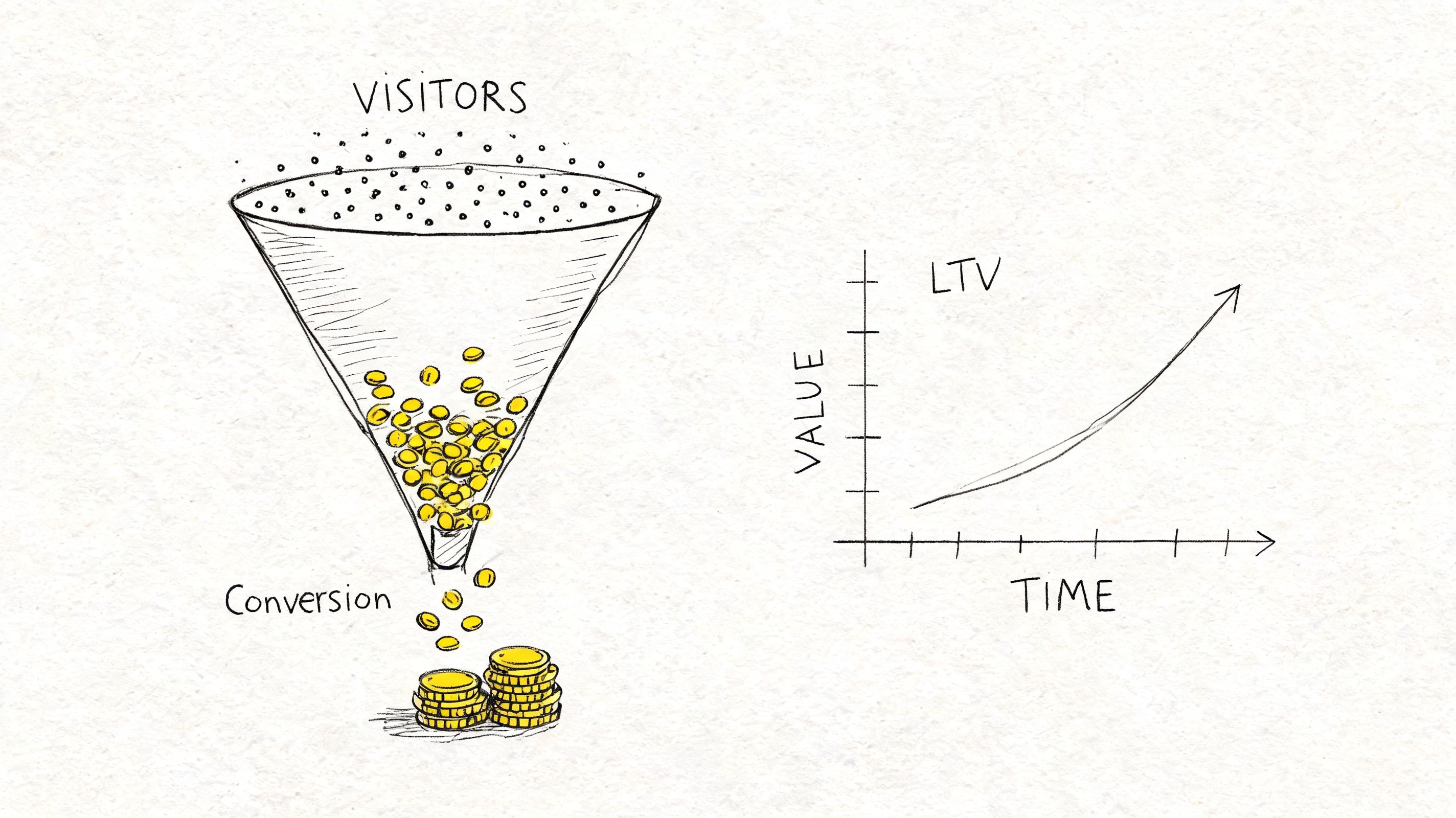
The questions that make ROI visible
Ask these in sequence:
- Primary action: What conversion matters most on the site today?
- Funnel visibility: Where do prospects drop off?
- Revenue link: Which conversions can you tie back to actual sales?
- Measurement cadence: How often does your team review performance?
- Confidence level: Which numbers do you trust, and which numbers feel shaky?
Behavioral questions are especially useful here. Formbricks' market research guidance notes that asking “What did you do?” is more reliable than asking “What would you do?” That principle applies to customer interviews, sales discovery, and post-purchase research. Real past behavior is stronger than future intent.
What useful answers sound like
Strong answers mention actual funnel behavior. Weak answers stay broad. “We get traffic but not enough leads” isn't enough. “People visit pricing, then disappear,” or “Booked demos rarely become qualified opportunities,” gives you something to investigate.
If you want a better framework for connecting channels to outcomes, this guide on measuring marketing campaign effectiveness is a practical starting point.
If a team can't name the conversion event that matters most, they usually optimize for activity instead of impact.
7. Content, Messaging, and Brand Voice Questions
A lot of businesses don't have a traffic problem. They have a clarity problem. The offer is muddy, the value proposition sounds like everyone else, and the content reads like it was written for internal approval instead of buyer understanding.
That makes messaging questions some of the most important personal questions to ask people in a professional context. You're not asking about personality for fun. You're asking how they describe value, what language they avoid, and where customer confusion starts.
Questions that expose messaging gaps
Use a mix of strategic and practical prompts:
- Core distinction: What makes your business different in one sentence?
- Proof: What evidence supports that claim?
- Content reality: Which pages, posts, or assets consistently help close business?
- Tone: What words should people associate with your brand?
- Misunderstanding: What do prospects get wrong about you most often?
These questions usually reveal one of two problems. Either the business has a strong offer and weak articulation, or it has weak differentiation and polished copy trying to hide that fact.
What strong messaging work looks like
Start with customer language, not internal jargon. Sales call transcripts, email replies, support questions, and objection notes usually provide better wording than a brainstorming session.
A useful check comes from comparing homepage language, ad copy, proposals, and sales calls. If each one describes the company differently, the brand doesn't have a voice problem alone. It has a strategic consistency problem.
What works is building a message hierarchy. Start with the problem, then the outcome, then the proof. What doesn't work is loading every page with broad claims about innovation, quality, passion, or service. Buyers skip those words because everyone uses them.
8. Organizational Culture and Change Management Questions
Plenty of strong projects fail after launch because the organization wasn't ready to adopt them. The website is better. The automation works. The dashboard is clean. Then nobody uses the new process consistently.
That's why change management questions belong in discovery, not just implementation. You're trying to understand how people inside the company react to new tools, who supports the shift, and where resistance might slow the rollout.
Ask about people, not just platforms
These prompts work well:
- Adoption history: How has your team handled new tools or process changes in the past?
- Internal champion: Who is most excited about this project?
- Resistance risk: Who may be skeptical, and why?
- Training need: Where will people need support?
- Operational reality: Do teams have the bandwidth to learn a new system right now?
A franchised business may have uneven adoption across locations. A founder-led startup may move quickly but depend too heavily on one person. A publisher may have leadership buy-in while editors worry about workflow changes.
What to do with the answers
Use them to shape rollout, not just scope. If internal resistance is high, you may need more documentation, training, or phased implementation. If one department owns the pain but another approves the spend, stakeholder alignment becomes part of the project.
The best technical solution still fails if the people using it don't trust it, understand it, or have time for it.
What works is identifying one or two internal champions early. What doesn't is assuming executive approval guarantees team adoption.
9. Customer Feedback, Satisfaction, and Retention Questions
Acquisition gets attention. Retention tells you whether the business is delivering value.
Some of the best personal questions to ask people are about customer disappointment. That's uncomfortable territory, but it's where you find checkout friction, onboarding breakdowns, support gaps, and product confusion. If clients only talk about lead volume and never about churn, repeat purchase, or loyalty, the picture is incomplete.
Questions that surface the truth
Ask plainly:
- Recurring complaint: What do customers complain about most often?
- Loyalty driver: Why do your best customers stay?
- Churn pattern: When people leave, what usually happened before that?
- Feedback collection: How do you gather and review customer feedback today?
- Highest-impact fix: If you could remove one point of friction for customers this quarter, what would it be?
These answers often reveal an experience problem hidden inside a marketing request. A business may ask for more traffic when the actual issue is weak onboarding. Another may want better SEO while existing customers still struggle to book, buy, or get help.
How to ask without making people defensive
Stay focused on patterns, not blame. “What do customers say is frustrating?” works better than “Why are customers unhappy?” The first invites diagnosis. The second can trigger defensiveness.
This is also where privacy and boundaries matter. For a practical benchmark, Your Teen Magazine's categorized list of 160 “How Well Do You Know Me” questions shows how basic personal prompts often begin with identity and preference because they lower social distance quickly. In business, the same principle applies. Start with safe, experience-based questions before moving toward more sensitive topics like dissatisfaction, churn reasons, or internal service failures.
10. Future Vision and Growth Strategy Questions
Short-term wins matter, but discovery shouldn't stop at the current pain point. A system, site, or campaign that solves today's problem and blocks tomorrow's growth is a bad investment.
Future-focused questions help you design for scale. They also expose whether the business has a clear direction or only a vague hope to “grow.” The difference affects architecture, content planning, analytics, staffing, and platform choice.
Questions that future-proof the work
Use direct prompts:
- Business horizon: What should this company look like in the next few years?
- Expansion path: Are you planning to add locations, products, services, or markets?
- Capability gap: What can your current setup not support?
- Strategic risk: What could slow growth if demand increases?
- Decision trigger: What needs to be true before you make the next big move?
A local company planning multi-location expansion needs a different web and data model than a single-market business. A publisher moving into courses or memberships needs platform decisions that support that future model. A startup preparing for larger partnerships may need better reporting and cleaner systems long before volume arrives.
A note on modern etiquette
Future-planning questions are useful, but digital context matters. Many teams now ask these questions through forms, DMs, chat tools, or AI-assisted workflows. That's where relevance and consent matter just as much as the question itself.
An underserved part of this topic is digital etiquette. Recent regulation and platform policy shifts have increased attention on sensitive inference, manipulative AI use, and user control. This discussion of coverage gaps and trust-sensitive questioning points to a broader issue that applies here too. People respond better when they understand why you're asking and how the information will be used.
10-Point Personal Questions Comparison
| Item | Implementation Complexity 🔄 | Resource Requirements ⚡ | Expected Outcomes ⭐📊 | Ideal Use Cases | Key Advantages 💡 |
|---|---|---|---|---|---|
| Discovery Questions About Business Goals and Challenges | Moderate–High, multi‑stakeholder interviews and analysis | Time, access to metrics, executive input | ⭐ Aligns solutions to business goals; 📊 KPI baseline for ROI | New engagements, proposal scoping, strategy alignment | 💡 Enables tailored proposals and measurable success criteria |
| Customer Persona and Target Audience Questions | Moderate, research + validation cycles | Analytics, surveys, customer interviews | ⭐ Improved targeting; 📊 higher conversion relevance | SEO/paid campaigns, UX design, content strategy | 💡 Reduces wasted spend and sharpens messaging |
| Current Technology Stack and Integration Questions | High, technical inventory and integration mapping | System access, API docs, developer time | ⭐ Prevents duplication; 📊 smoother integrations and realistic timelines | Web app builds, AI integrations, migrations | 💡 Reveals automation opportunities and hidden costs |
| Budget, Timeline, and Resource Availability Questions | Low–Moderate, administrative but sensitive | Financial details, decision‑maker availability | ⭐ Feasible scope; 📊 prevents scope creep and missed deadlines | Proposal alignment, project planning, phased rollouts | 💡 Aligns expectations and enables phased MVPs |
| Competitive Landscape and Market Positioning Questions | Moderate, market and competitor analysis | Market research tools, benchmarking data | ⭐ Identifies differentiation; 📊 directs high‑impact investments | Go‑to‑market, product positioning, SEO strategy | 💡 Reveals white space and avoids "me‑too" approaches |
| Conversion, Revenue, Data, and Measurement Questions | Moderate–High, analytics setup and attribution work | Analytics tools, revenue data, technical setup | ⭐ Precise ROI estimates; 📊 prioritizes high‑impact optimizations | CRO, growth initiatives, revenue‑driven projects | 💡 Justifies investment with measurable payback scenarios |
| Content, Messaging, and Brand Voice Questions | Moderate, audits and editorial alignment | Content audit, writers, brand guidelines | ⭐ Clearer messaging; 📊 better engagement and SEO performance | Content strategy, rebranding, product pages | 💡 Ensures brand consistency and increases conversion |
| Organizational Culture and Change Management Questions | High, assess adoption and training needs | Stakeholder interviews, training resources, change plans | ⭐ Higher adoption; 📊 realistic timelines for rollout | Digital transformation, tool rollouts, large redesigns | 💡 Prevents failed implementations and identifies champions |
| Customer Feedback, Satisfaction, and Retention Questions | Moderate, ongoing collection and analysis | Surveys, NPS, analytics, support logs | ⭐ Improved retention; 📊 identifies churn drivers and UX fixes | CX improvements, product roadmap, retention programs | 💡 Prioritizes changes that increase lifetime value |
| Future Vision and Growth Strategy Questions | Moderate, strategic forecasting and alignment | Leadership input, growth plans, capacity forecasts | ⭐ Scalable, future‑proof solutions; 📊 long‑term alignment | Scaling, fundraising, multi‑location planning | 💡 Guides investments to support 2–3x growth scenarios |
From Questions to Growth Your Action Plan
Generic discovery creates generic work. Better questions create better revenue decisions.
That is the core use of personal questions in a B2B setting. Agencies, consultants, and sales teams are not looking for casual rapport. They are trying to learn what is driving the buyer, what is blocking progress, and what will make a recommendation stick inside the client's business.
The best questions produce three outputs at once. They clarify what the stakeholder cares about professionally. They surface operational limits, internal friction, and decision pressure. They give your team material you can use in positioning, solution design, measurement plans, and scope control. That is how a discovery call starts influencing win rate, delivery quality, and client retention.
Good operators also know that timing affects answer quality. Ask for budget, political constraints, or churn problems too early, and you get guarded answers. Start with goals, current pain points, and what success needs to look like. Then move into audience, systems, data, and ownership. Once the conversation has context and trust, ask about resources, approval paths, and the trade-offs the client is willing to make.
This sequencing is important. Not all personal questions carry the same weight. Some are easy to answer and help the conversation open up. Others expose weak performance, team conflict, lack of budget control, or customer dissatisfaction. In survey design, “about you” questions often include sensitive demographic fields, and the Kirklees Council notes that around 100 or more respondents is a rule of thumb for statistically robust demographic breakdowns in research contexts. The business takeaway is simple. Structure the conversation around purpose, relationship stage, and sensitivity.
It also helps to separate the types of information you are collecting. Demographic questions identify who someone is. Behavioral questions show what they do. Psychographic questions explain priorities, motivations, and preferences. In client discovery, behavioral and situational answers usually carry the most commercial value because they connect directly to buying process, channel performance, workflow issues, and adoption risk.
Set clear boundaries.
Personal does not mean invasive, and experienced teams treat that line carefully. Sensitive questions can hurt completion rates, slow deals, or create privacy concerns if there is no clear reason for asking. Ask only for information your team will use. Explain the business purpose. Leave room for a prospect or client to decline. That approach protects trust, and trust is what turns a hard question into a productive one.
The easiest way to apply this is to narrow your focus. Do not run through all ten categories in one sitting unless the engagement clearly demands it. Pick the category tied to the business problem in front of you and go further than your competitors usually do. If proposals sound interchangeable, ask sharper questions about goals, obstacles, and buying criteria. If campaigns miss revenue targets, spend more time on audience behavior, conversion flow, and measurement gaps. If projects stall after kickoff, ask who owns adoption, what internal resistance looks like, and what training burden the client can realistically handle.
That is the shift from order-taker to advisor. Strong discovery does not just collect facts. It helps clients make decisions, align stakeholders, and commit to work that can produce a measurable result.
If you're ready to turn better discovery into better growth, Up North Media can help you build the strategy, systems, and execution plan behind it. From SEO and custom web apps to AI consulting and conversion-focused digital strategy, the team works with businesses that want sharper questions, clearer priorities, and measurable outcomes.