
Most rankings are lost before content is ever written. A page Google can't crawl, can't render on a phone, or can't match to the searcher's actual goal won't rank no matter how polished the prose is. That's why most lists of SEO ranking factors get priorities backwards. They treat every signal as equal, so owners chase schema and meta tweaks while key pages sit excluded from the index or target the wrong intent entirely.
The ten factors below are ordered the way I'd work through them for an Omaha small business or a publisher. Crawlability and intent come first, content depth next, polish last. Each item gives you what the factor is, a concrete example, and the action that moves it.
I've also included a measurement framework at the end. You'll be able to tell which fix caused a change, instead of guessing after traffic moves for some other reason.
1. Content Quality and E-E-A-T

E-E-A-T means Experience, Expertise, Authoritativeness, and Trustworthiness. Google added the first E for Experience in December 2022, and its quality guidance rewards original, people-first content over thin pages mass-produced to fill a calendar. Thin content doesn't just sit idle. It drags down how users and search systems judge the rest of your site.
Wirecutter earns top product rankings because it shows hands-on testing and documents its methodology. Healthline does the same for health topics with named medical reviewers and cited sources. Say an Omaha home services company publishes project case studies with original photos, pricing ranges, and neighborhood-specific advice. That first-hand proof is exactly what a generic service page lacks.
What to do first
- Name the author: Add a bio with relevant qualifications to every expert article.
- Show the work: Use original photos, test results, or client outcomes.
- Prune the weak pages: Consolidate, improve, or remove thin and duplicate content.
- Cite primary sources: Link directly to them, and follow advice to improve keyword use in your writing without stuffing.
- Keep it current: Update key pages on a schedule and show the last-updated date.
2. Search Intent Alignment
A page with strong links can still fail if it answers the wrong job. Informational searchers want to learn, navigational searchers want a specific site, commercial investigation searchers compare options, and transactional searchers want to buy or book. Google ranks the format that fits the dominant intent, so intent mismatch is a relevance problem you can't link-build your way out of.

A retailer should rank category pages for transactional queries and build separate buying guides for comparison queries. A software company needs a feature page for the commercial term and a tutorial for the how-to query, even for the same product. The same split works locally. Build a service page to capture the booking query, then a blog post that answers the questions Omaha customers ask before they book.
How to check intent before you write
Search your target keyword and review the top results for dominant format, depth, and angle. Put the direct answer in the first few paragraphs, map each keyword to one primary page to avoid cannibalization, and mirror real sub-questions in your headings. Our guide to search intent analysis walks through that mapping process step by step.
Practical rule: If a page gets impressions but few clicks or short engaged sessions, check intent fit before you rewrite a single paragraph.
3. Core Web Vitals and Page Experience
Start by checking how your real visitors experience speed, not just a lab score.

Core Web Vitals measure loading, responsiveness, and stability. According to the Advanced Web Ranking Core Web Vitals study, in a study of approximately 3 million pages, only 39% passed all Core Web Vitals thresholds. The practical targets at the 75th percentile are LCP within 2.5 seconds, INP within 200 milliseconds, and CLS at or below 0.1. Treat passing as a tie-breaker between comparable pages, not as a substitute for relevance.
An e-commerce site cuts LCP by properly sizing hero images. A web app improves INP by breaking up long JavaScript tasks. A publisher reduces CLS by reserving space for ads and embeds. Read what Core Web Vitals measure if you need the plain-English definitions, then check field data in Search Console and PageSpeed Insights.
This short walkthrough shows how to read those reports in practice.
Compress and lazy-load images, set width and height, remove unused third-party scripts, and test on a mid-range phone. That's where most Omaha customers will judge you.
4. Mobile-Friendliness and Mobile-First Indexing
Google primarily crawls and indexes the mobile version of your content. It began moving sites to mobile-first indexing in 2016 and completed the transition for all sites in 2023. If text, links, or structured data disappear on mobile, you're asking Google to rank a weaker page than the one desktop visitors see.
A local restaurant is a clean test case. Its menu page needs readable text, tap-friendly buttons, click-to-call, and directions, all without pinching or horizontal scrolling. A retailer faces the same test at checkout, where multi-column forms that work on desktop often break on a phone. A fitness app that keeps workout content and schema identical across screen sizes avoids that gap entirely.
Mobile checks that catch real problems
- Compare versions: Confirm mobile has the same key text, links, and structured data as desktop.
- Use responsive design: Add the viewport meta tag and responsive CSS instead of separate mobile URLs.
- Unblock resources: Check images and videos aren't blocked by robots.txt on mobile.
- Test transactions: Run forms and checkout on real iOS and Android devices, not only in an emulator.
If your best content only exists on desktop, it effectively doesn't exist for indexing.
5. Backlinks and Link Authority
Links have influenced rankings since the beginning. According to Google's ranking systems guide, PageRank was included among Google's core ranking systems when Google launched in 1998 and evaluates relationships between pages through their links. Google stated in 2011 that PageRank remained in use but had become part of a much larger ranking system. That's the right mental model today. Links are evidence of authority, not a standalone target.
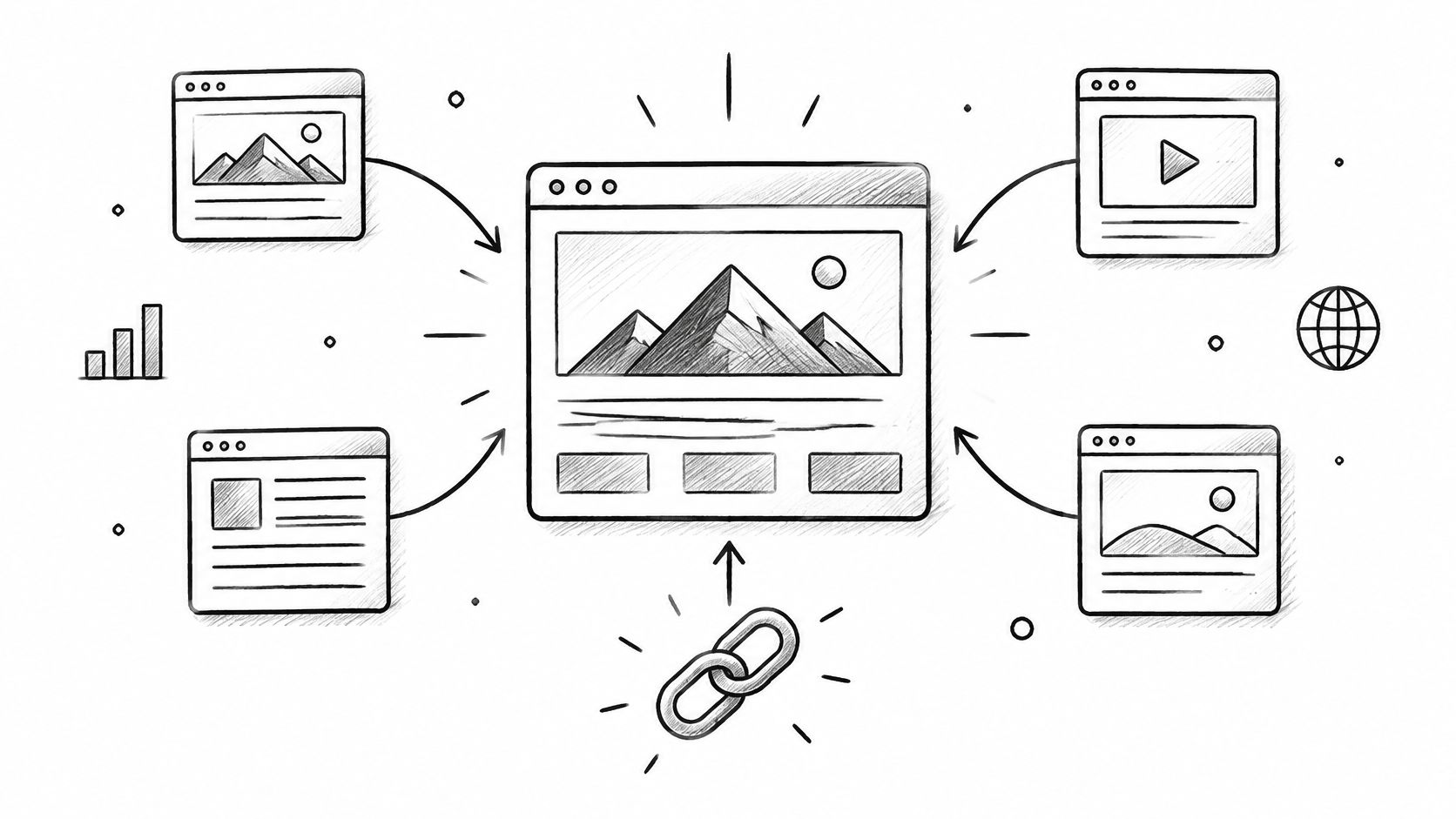
Relevant, trustworthy sources carry weight. Manipulative links get discounted. An original local data study that Omaha publications cite will outperform a pile of unrelated directory links every time. A nonprofit or chamber partnership can deliver the same quality at local scale.
Where good links actually come from
- Original assets: Research, calculators, and tools other sites naturally cite.
- Local relevance: Chambers, sponsorships, and community events in your service area.
- Expert contribution: Quotes for journalists and guest pieces for respected industry publications.
- Competitor review: Check referring domains in Search Console and pursue realistic gaps, not every link a national brand has.
6. Internal Linking and Site Architecture
Your internal links tell Google what's important and how topics relate. They also determine whether crawlers and customers can find a page at all. Bury a money page six clicks deep with no descriptive links pointing to it, and you've signaled it doesn't matter.
A publisher solves this with topic hubs. A pillar guide links down to supporting articles, and those articles link back up and across to siblings. An e-commerce store does it with category pages and breadcrumbs so products stay reachable within a few clicks. A SaaS company links feature pages to use-case articles and case studies, so commercial and informational pages reinforce each other.
A fast architecture audit
- Check depth: Keep important pages within three to four clicks of the homepage.
- Fix anchor text: Replace generic phrases like click here with descriptive text.
- Find orphans: Crawl the site for pages with no internal links and either link or remove them.
- Clean the paths: Repair broken internal links and redirect chains that waste crawl time.
I'd do this before buying any external link work. It's free, it's fully in your control, and it often lifts pages you already own.
7. Title Tags, Headings, and On-Page Optimization
Your title tag is still one of the clearest relevance signals you control. It's also the headline a searcher judges in the results. When titles are unclear, stuffed, or mismatched to the page, Google may rewrite them, and you'll lose both relevance and clicks.
Position complicates how you read the results. An academic eye-tracking and clickstream study found that result position significantly affected both whether users viewed an abstract and whether they clicked it. So don't compare click-through rate for a page in position two with one in position nine and call the first title better. Compare pages in similar position bands, then check whether those clicks turn into engaged sessions and leads.
Titles that work for both systems
- Stay concise: Keep titles typically under about 60 characters to reduce truncation.
- Be specific and local where it fits: Roof Repair in Omaha, NE tells a searcher and Google exactly what the page offers.
- Use one H1: Organize the rest with logical subheadings that match the page structure.
- Write honest meta descriptions: They don't directly rank you, but they earn or lose the click.
8. Structured Data and Schema Markup
Structured data, usually JSON-LD using Schema.org vocabulary, describes your content in a format search engines can parse reliably. It doesn't guarantee higher rankings. It makes pages eligible for rich results, such as star ratings, price and availability, or recipe details, which can improve visibility and clicks.
That eligibility is why schema is polish, not foundation. A recipe site can show cooking time and ratings, a retailer can show product details, and an Omaha business can clarify address, hours, and phone with LocalBusiness markup. None of that rescues a page that fails on intent or indexation.
Implement it narrowly and correctly
- Use JSON-LD: Validate with Google's Rich Results Test and the Schema Markup Validator.
- Mark up only visible content: Markup that misrepresents the page creates risk, not advantage.
- Start sitewide, then go specific: Organization and LocalBusiness first, then Product or Article where they apply.
- Monitor Enhancements reports: Fix errors in Search Console before they spread across templates.
Our detailed guide to schema markup for SEO covers selection and validation. If you're comparing research tools while you plan, note the keyword database differences between Ahrefs and Moz before you trust any single volume estimate.
9. Local SEO and Google Business Profile
For an Omaha business, the Local Pack and Maps can matter more than position one in the blue links. Google weighs relevance to the search, distance from the searcher or the location in the query, and prominence from reviews, links, and brand recognition. You can't move your building closer to every searcher. You can control the other two.
Say an Omaha dental practice completes every profile field, adds real photos, lists services accurately, and posts updates. A contractor publishes unique project pages for specific neighborhoods and asks for reviews after finished jobs. A restaurant responds to every review and promotes specials through Google Posts. Those are relevance and prominence signals a competitor with a stale listing can't match.
The local sequence I'd follow
Our local SEO process has four steps. Local SEO Audit, Profile & Website Optimization, Reputation & Link Building, and Ongoing Tracking & Growth. That order matters because reviews and links amplify a complete profile, they don't replace one.
- Claim and complete: Verify your Google Business Profile and fill every field.
- Keep NAP consistent: Use identical name, address, and phone across directories.
- Earn and answer reviews: Request them after service and respond to every one.
- Write unique location pages: Don't duplicate one template and swap the city name.
10. Crawlability and Indexation
This is listed tenth, but you should fix it first. If Googlebot can't crawl a page, or the page is blocked, duplicated, or marked noindex, it cannot rank. No amount of content work changes that. Crawlability is the gate every other factor sits behind.
An e-commerce site illustrates the failure mode. Filtered category URLs create hundreds of near-duplicates, crawlers waste time on parameters, and the canonical category page loses signals. Canonical tags consolidate those variants. A publisher faces a different version when JavaScript renders key content only in the browser. Server-side rendering makes that content indexable without relying on client-side execution.
Your first technical pass
- Submit a clean sitemap: Include canonical URLs only and keep it updated in Search Console.
- Read the Page indexing report: Investigate excluded and errored URLs by template, not one by one.
- Manage duplicates: Use canonicals for parameters, filters, and print versions.
- Don't block rendering: Keep CSS and JavaScript Google needs accessible.
- Fix chains and dead ends: Repair redirect chains and broken internal links.
For larger sites where crawl waste is the bottleneck, our guide to crawl budget optimization explains how to prioritize what Google crawls first.
10 SEO Ranking Factors at a Glance
| Ranking Factor | Effort to Improve | Time to See Impact | Priority for Omaha SMBs |
|---|---|---|---|
| Content Quality and E-E-A-T | High; requires expertise and editorial work | Gradual; often months | High for building trust and organic visibility |
| Search Intent Alignment | Medium; requires search-result analysis and page updates | Short to medium term | High for attracting relevant local customers |
| Core Web Vitals and Page Experience | Medium to high; may require developer work | Variable; after fixes and recrawling | Medium; prioritize major mobile usability issues |
| Mobile-Friendliness and Mobile-First Indexing | Medium to high; legacy sites may need redesign | Medium term; after implementation and recrawling | High because many local searches happen on phones |
| Backlinks and Link Authority | High; outreach and link-worthy resources take time | Gradual; often months | Medium to high; focus on relevant local links |
| Internal Linking and Site Architecture | Low to medium; depends on site size | Short to medium term | High; improves discovery of important pages |
| Title Tags, Headings, and On-Page Optimization | Low; edits are usually straightforward | Short to medium term | High; a practical, quick improvement |
| Structured Data and Schema Markup | Low to medium; implementation and validation required | Variable; eligibility does not guarantee enhanced results | Medium; useful for clarifying local business details |
| Local SEO and Google Business Profile | Low to medium; requires ongoing management | Short to medium term | Very high; directly supports local calls and visits |
| Crawlability and Indexation | Medium; technical review may be needed | Variable; after fixes and recrawling | High; essential for pages to appear in search |
How to Measure Impact and Where to Start
Fixing ten factors at once feels productive and proves nothing. Change one meaningful thing, note the date, and measure the pages you changed against similar pages you didn't. That's how you attribute a gain to crawlability, intent, content, or links instead of to seasonality or an algorithm update.
We track organic traffic, keyword rankings, conversion rates, and ROI in our SEO reports, and I'd recommend you do the same in Google Search Console and your analytics platform. Segment by query intent, device, geography, page type, and position band. A sitewide traffic chart hides exactly the movement you need to see. A page group chart shows whether your service pages, category pages, or guides actually responded.
Match the metric to the factor you fixed
- Crawlability fixes: Watch indexed pages, crawl stats, and impressions for previously excluded URLs.
- Intent and content fixes: Watch impressions, position, engaged sessions, and conversions for the mapped query cluster.
- Title fixes: Compare click-through rate only within the same position band, then confirm clicks convert.
- Core Web Vitals fixes: Compare field data at the 75th percentile by template and device before expecting any ranking change.
- Local fixes: Track profile views, calls, direction requests, and Local Pack visibility by location.
Timelines differ by factor, and planning around that prevents bad decisions. Local SEO improvements can be seen within 2 to 4 weeks for Google Business Profile optimization, with fuller results in 3 to 6 months. Indexation fixes can show impressions quickly once Google recrawls. Content depth and link authority take months, because Google has to recrawl, re-evaluate, and test your pages against competitors that aren't standing still.
You also need a broader definition of visibility now. According to Google's guide to ranking systems, Search uses many systems and signals to determine relevance and usefulness, rather than one fixed ranking formula. AI-generated answers can satisfy a search without a click, so track branded searches, impressions, assisted conversions, and appearances in answer features alongside classic rankings. Don't abandon traditional SEO because of that volatility. The pages cited in answers still need to be crawlable, relevant, and trusted.
Start where the gate is closed. Confirm your important pages are indexed, confirm they match intent, then improve depth and proof, then earn links and reviews, then polish titles, schema, and speed. That sequence gives an Omaha SMB or publisher the fastest wins first and keeps expensive work from being spent on pages Google can't use.
If you want that sequence applied to your own site, we start with an SEO audit and analysis of your current performance, competitors, and improvement opportunities, then build a customized roadmap from your goals and target audience. That's a more reliable route than copying a generic checklist in the wrong order.
Up North Media offers data-driven SEO, AI SEO, and website optimization for Omaha businesses that need more qualified traffic and measurable conversions, starting with an audit of where your site stands against these ten factors. We offer a free consultation to map your fastest crawlability, intent, and local wins before you invest in a larger build. Visit Up North Media to request your consultation and get a clear, prioritized plan.