

You've got solid pages, decent content, and a steady stream of impressions, but the results still feel capped. The missing piece is often schema markup for SEO, the layer that helps search engines understand what a page means, not just what words it contains. When that context is clear, your content is easier to qualify for richer search presentation, and that can change how often the right searchers choose your result.
Giving Your Website a Voice Search Engines Understand
A lot of business owners hit the same wall. The page is indexed, the keywords are in place, and the content is better than what's ranking above it, yet the listing still blends into the crowd. Schema markup is the translator that gives search engines a cleaner read on the page, so they don't have to guess whether a block of text is a service page, a product detail, or a news story.
That matters because schema has moved far beyond a niche tactic. One industry compilation reports that Schema.org is implemented on over 10 million websites worldwide, 44% of websites use schema markup globally, and JSON-LD accounts for 83.2% of schema implementations source. In other words, this is no longer an edge-case advantage, it's part of the common technical language the web uses to describe content.
Why that matters for modern search
Search systems are built to interpret meaning at scale. The more explicitly a page describes itself, the easier it is for crawlers to connect that page to a query, a business entity, or a content category. Google's own documentation frames structured data as a way to help search engines understand content and qualify pages for enhanced search features Google structured data guidance.
For local businesses, that can mean clearer signals about location and service details. For e-commerce, it can mean cleaner product understanding. For publishers, it can mean article context that's easier for machines to parse.
Practical rule: schema doesn't replace good SEO, it adds a layer of machine-readable context on top of it.
Voice search fits into that same logic. Pages that already speak clearly in structured data are easier for search systems to interpret when users ask short, specific, conversational questions. If you're building for that use case, this internal guide on voice search optimization is a useful companion.
What Schema Markup Is and What It Is Not
A product page can look polished and still be hard for search engines to read. Schema markup gives those systems a clean label set, so they can identify the business name, product type, service area, author, or price without relying on page design alone.

What it does for machines
Schema markup is code placed on the page for search engines to read. It helps Google and other systems understand which part of the page is the headline, which part is the author, which part is the address, and which part is the price. That clarity can qualify a page for richer search presentation, which is why agencies use it on pages where the payoff is clear.
For a quick plain-English reference, see Keyword Kick's schema markup explanations, which is useful when you want the core idea without implementation noise.
For local businesses, that usually means location and service details are easier for search engines to parse. For e-commerce, it helps product pages communicate availability and pricing. For publishers, it gives article metadata a clearer structure, which makes the page easier for machines to classify.
What it does not do
Schema does not change what visitors see on the page. It also is not a direct ranking factor in the usual sense. Google's own guidance, as summarized in schema guidance overview, explains that structured data can make pages eligible for rich results, but it does not act like a magic ranking lever.
That distinction matters in client work. A local service page with weak content still struggles, even if the markup is perfect. An e-commerce category page with poor intent match still underperforms. Schema supports the result, it does not fix the underlying page.
For teams working on answer engines and AI-driven search, the same principle applies. Structured data helps machines identify entities and page purpose, which is one reason it belongs in a broader answer engine optimization strategy.
The cleanest way to use schema is as a labeling system for pages that already have clear value. It helps search engines understand why the page deserves attention, without changing the page itself.
Why Schema Is a Game Changer for Your SEO Strategy
Schema pays off in three practical ways. First, it can make a result more compelling on the search page by helping qualify the page for richer presentation. Second, it can strengthen the way Google understands your brand entity and page relationships. Third, it gives search engines cleaner semantic context, which matters when queries are conversational, specific, or tied to a business type rather than just a keyword.
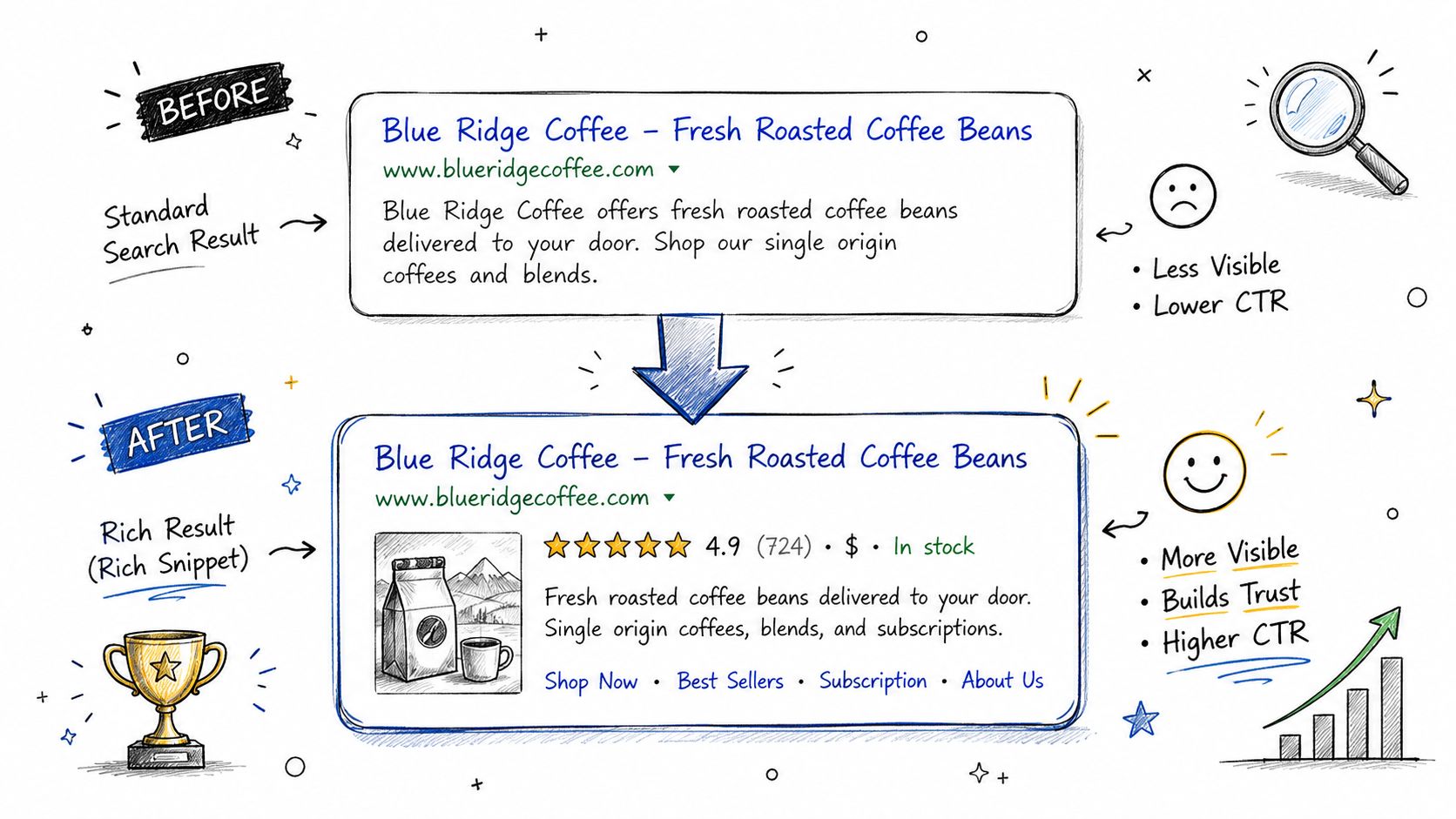
Rich results make listings harder to ignore
Schema markup is valuable because it can qualify pages for rich results, the enhanced listings that may show extra details like prices, ratings, dates, or FAQs. That doesn't guarantee the feature will appear, but it does create the opportunity for a more informative result. In competitive search pages, more visible context often matters as much as rank position.
For e-commerce, that means a product can communicate more than a title and a short description. For publishers, an article result can surface metadata that helps users decide whether to click. For local businesses, the search result can better reflect the actual business details searchers want.
It helps search systems connect the dots
Schema also helps search engines understand entities and relationships. A page about a local service isn't just “a page with keywords,” it's a business, an address, a service area, a phone number, and perhaps an author or organization behind it. That kind of semantic structure is especially useful for systems that have to parse messy, conversational, or voice-style queries.
If you're already thinking in terms of answer-first search, the internal guide on answer engine optimization pairs naturally with schema because both are about making content easier to interpret.
It supports trust signals, not just visibility
Search engines use structure to reduce ambiguity. Clear markup can make it easier for systems to identify the right page type, the right business details, and the right content relationship. That's why schema is often strongest when the page already has strong content and a clear business purpose. It doesn't create relevance from nothing, it makes existing relevance easier to read.
Essential Schema Types for Your Business
Most businesses do not need a wide schema program. They need the few types that match how they make money and how customers search for them. For local businesses, that usually means LocalBusiness. For e-commerce, it is Product and Offer. For publishers, it is Article, NewsArticle, or BlogPosting. Anything beyond that should earn its place on the page.
| Business Type | Schema Type | Primary SEO Benefit | Essential Properties |
|---|---|---|---|
| Local business or service provider | LocalBusiness | Clarifies location, service details, and eligibility for local search presentation | address, telephone, openingHours, priceRange, serviceArea |
| E-commerce retailer | Product and Offer | Helps search engines understand the item, price, and availability | name, image, description, price, availability, brand |
| Publisher or blog | Article, NewsArticle, BlogPosting | Adds context around authorship and publication details | headline, author, dateModified, image |
LocalBusiness for service firms and storefronts
A plumber, dentist, restaurant, or showroom should use schema that reflects the details a nearby searcher checks first. That means address, opening hours, phone number, and service area. If the business has multiple locations, each location page should describe one place clearly instead of forcing every branch into a single generic markup block.
Specificity matters here. Use the most accurate subtype available when it fits the page, because a restaurant page should not read like a broad company profile. Search systems need to see the actual entity on the page, and that ties directly to broader technical SEO fundamentals such as how clearly your site presents location and service information.
Product and Offer for online stores
For e-commerce, Product schema describes the item itself, while Offer describes the commercial details around it. That split matters because a search system needs to know what the product is and whether it can be bought. If you sell a physical item, make sure the schema matches the item, the price, and the availability status users see on the page.
This is the format that usually pays off fastest for store owners. Clear product data can make it easier for search engines to show a listing that matches buyer intent before the click. It also reduces confusion when catalog pages change often, which is common for retailers with active inventory.
Article, NewsArticle, and BlogPosting for publishers
Publishers should keep the markup tight and consistent. Supported article types include Article, NewsArticle, and BlogPosting, with properties such as author, dateModified, and headline carrying the most practical weight for search features. Google's own guidance on article structured data also highlights these fields as the ones worth getting right for editorial pages. If the page is editorial content, do not complicate it with unrelated business schema.
For publishers, consistency matters more than quantity. A clean article schema setup helps search engines connect the content, the byline, and the publication details without guessing, which is also why a careful Google's rich results validation check belongs in any launch process.
Agency rule of thumb: one page, one primary schema purpose. Clear intent makes it easier to validate, maintain, and use across local listings, product pages, and editorial content.
How to Implement and Validate Your Schema Markup
A local business launching schema for the first time does not need every possible property or schema type. It needs the page structured in a way search engines can read without confusion, then it needs proof that the markup matches what visitors see. JSON-LD is the format that fits that workflow best, because it keeps the structured data separate from the page markup and is easier to maintain than older approaches, as covered in this schema format guidance. For agency work, the practical order is simple. Choose the page type, write the JSON-LD, then validate it before it goes live.
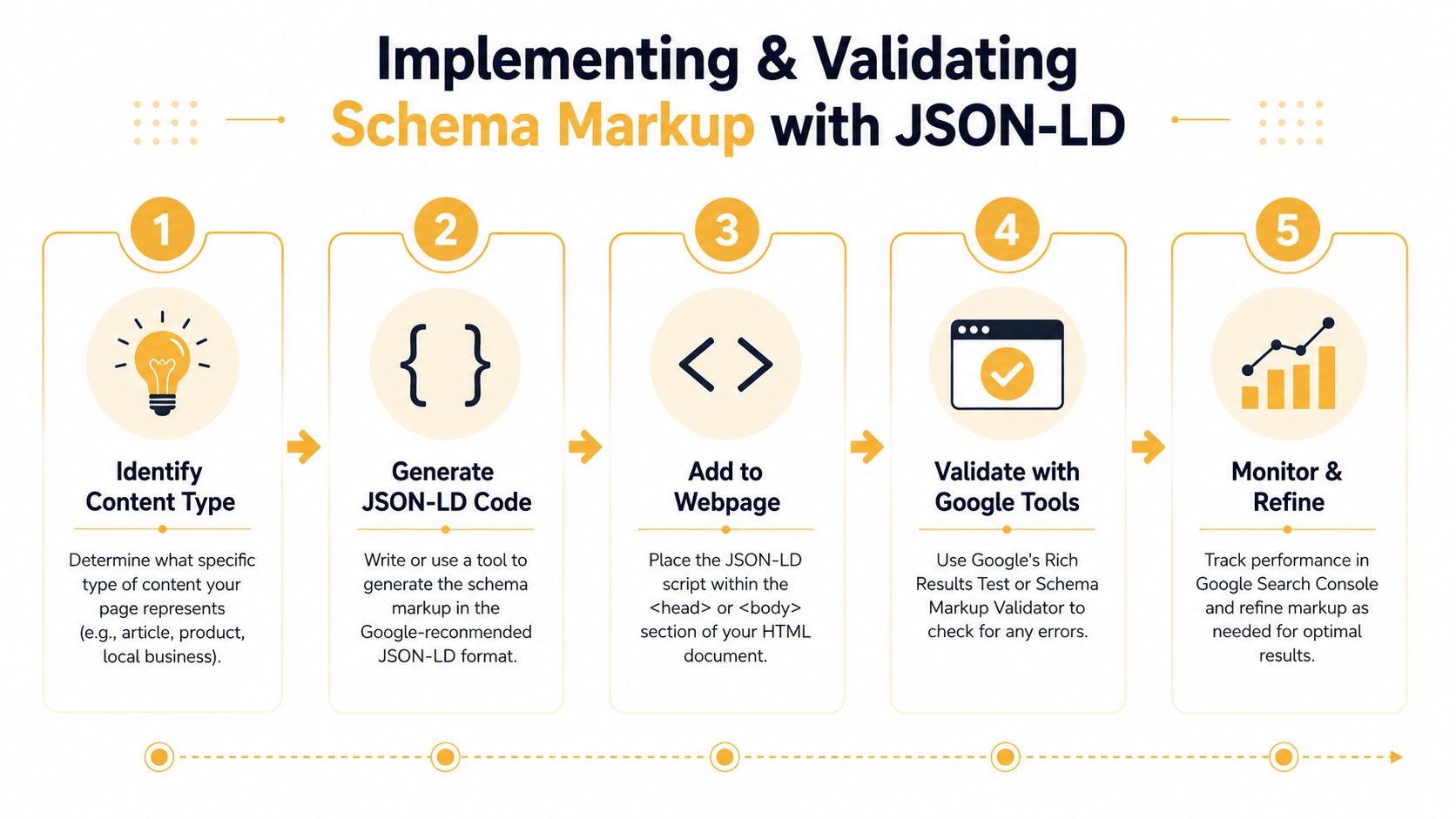
JSON-LD examples you can adapt
For a local business, the markup should match the details a customer would use to contact or visit the business.
{
  "@context": "https://schema.org",
  "@type": "LocalBusiness",
  "name": "Your Business Name",
  "address": {
    "@type": "PostalAddress",
    "streetAddress": "123 Main Street",
    "addressLocality": "Omaha",
    "addressRegion": "NE",
    "postalCode": "68102",
    "addressCountry": "US"
  },
  "telephone": "+1-402-555-0100",
  "openingHours": "Mo-Fr 09:00-17:00"
}
For a product page, the item details and the commercial offer should stay together.
{
  "@context": "https://schema.org",
  "@type": "Product",
  "name": "Product Name",
  "description": "Short product description.",
  "brand": {
    "@type": "Brand",
    "name": "Brand Name"
  },
  "offers": {
    "@type": "Offer",
    "priceCurrency": "USD",
    "price": "99.00",
    "availability": "https://schema.org/InStock",
    "url": "https://example.com/product-page"
  }
}
For a blog post or article, keep the headline and author visible in the markup so the page is easy to classify.
{
  "@context": "https://schema.org",
  "@type": "BlogPosting",
  "headline": "Article Title",
  "author": {
    "@type": "Person",
    "name": "Author Name"
  },
  "dateModified": "2026-01-15"
}
How to validate before you publish
Google's own Google structured data guidance recommends validating the markup and checking Search Console after implementation so you can confirm Google found and processed the page. That matters because schema work should be measured against actual crawl and indexing behavior, not assumptions.
For the external check, use Google's rich results validation. Paste the live URL or the JSON-LD snippet, review the detected item types, and fix any syntax or eligibility problems before publishing. If the tool flags a missing property or a malformed field, treat it as a release issue, not a small cleanup task.
A practical workflow looks like this:
- Identify the page type. Match the page to the schema type that describes it best.
- Write the JSON-LD. Keep the markup aligned with the visible page content.
- Insert the script. Place it in the page template or CMS field.
- Run validation. Check for syntax errors and eligibility issues.
- Review in Search Console. Confirm that Google has found the page and recognized the structured data.
If your team needs a broader foundation for this work, the internal guide on technical SEO is a useful companion to the implementation process.
Common Schema Mistakes and Best Practices
The most expensive schema mistakes are usually the boring ones. A missing comma, the wrong page type, or markup that describes content users can't see can make the whole thing less useful. Search engines are strict here because schema is supposed to reduce ambiguity, not add more of it.
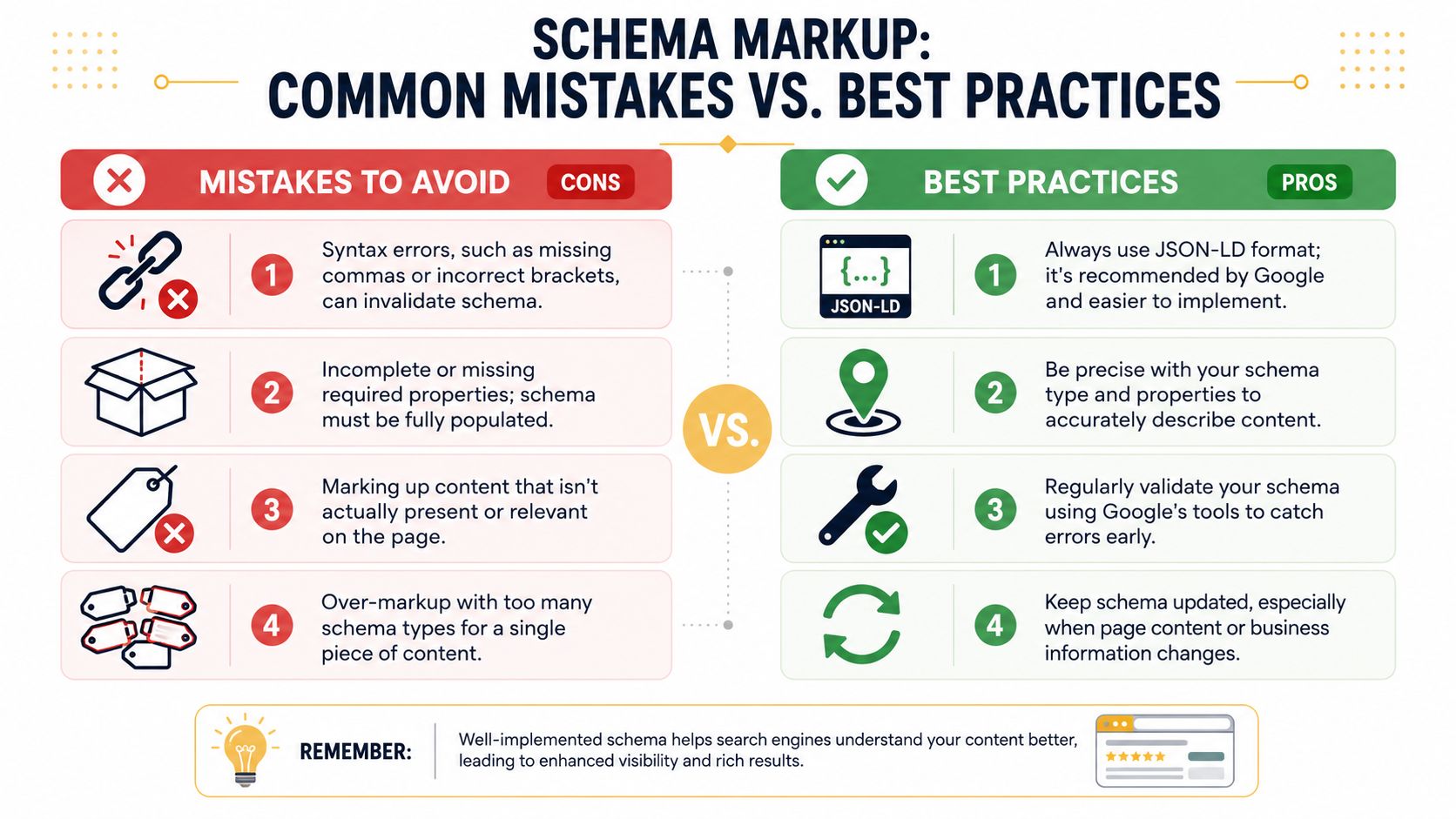
Mistakes that break value fast
A syntax error can invalidate the markup entirely. So can incomplete properties, especially on pages where the schema type expects core details like name, price, author, or address. Another common issue is over-marking a page, where one article gets treated like a product, a business listing, and an event all at once.
Irrelevant markup is just as risky. If the code says something exists on the page but users can't find it, the implementation is probably wrong. Schema should mirror the visible content, not describe an ideal version of it.
Best practices that hold up over time
Use the most specific schema type that fits the page. Fill out the properties that matter for that type, especially the ones that support how users search and how search engines qualify the page. Then keep the markup in sync with the page, because stale business hours or outdated price data create avoidable problems.
For agencies and in-house teams alike, the discipline is simple.
- Use JSON-LD by default. It's the format Google prefers and the easiest to maintain.
- Match markup to page reality. If the visible page doesn't support the field, don't add it.
- Validate every deployment. Catch errors before they reach production.
- Update schema when content changes. Business details, product availability, and publication data should stay current.
If you want schema to support SEO instead of creating cleanup work later, treat validation and maintenance as part of the publishing process, not as optional extras.
Measuring the Impact of Schema Markup
A clean way to judge structured data is to compare several months of Search Console data before and after the change, then look for movement in impressions and clicks that lines up with the rollout. That matters because schema usually does not show its effect overnight. The signal tends to appear after Google has had time to crawl the updated pages and process the markup.
How to check the impact
Start in Google Search Console and use the Performance report for the page or page set where schema was added. Compare the pre-change window with the post-change window, then review impressions, clicks, and click behavior for those URLs. If the pages became eligible for rich results, the clearest shift often shows up in how searchers respond to the listing, not only in rank position.
The cleanest read comes from pages that changed in one main way. If the content, internal links, and title tags changed at the same time, it becomes harder to separate schema from everything else. That is why careful implementation matters.
What success usually looks like
Schema's effect is usually indirect. The markup helps search engines interpret the page more clearly, and that can support a more appealing search listing. For a local business, e-commerce brand, or publisher, the practical question is simple, did the page become easier to notice and easier to choose?
If the numbers do not move, schema may not be the problem. The page could need better content alignment, stronger intent match, or a schema type that fits the page more closely. Structured data belongs in a mature SEO program because it sharpens interpretation, and that clarity matters most when the rest of the page already supports the search demand.
For teams that want a broader measurement workflow, the Google structured data guidance also points to Search Console as the place to monitor how structured data is reflected in search performance.
If you want a practical implementation plan for your own site, Up North Media can map the right schema types to your local business, e-commerce catalog, or publisher workflow, then validate the markup against your pages. Visit Up North Media to start a conversation about structured data, technical SEO, and the page-level changes that can make your search listings more useful to real buyers.