
What are you looking for when you search for cornflower ice cream, a floral dessert made with the blue cornflower blossom, a shop name, or just sweet corn ice cream wearing the wrong label? That confusion is real, and it's why so many results feel off-topic before you even reach the recipe. The good news is that once you separate the meanings, you can make a flower-forward ice cream that tastes deliberate, looks beautiful, and behaves well in the freezer.
Cornflower ice cream sits inside a much older culinary habit than most people realize. Historians of ice cream note that early frozen desserts often used flowers, and the first book devoted entirely to ice cream and ices appeared in 1768 by M. Emy. Broader ice cream history stretches back to an ice-cream-like frozen milk product in China's Tang period, and the first English-language recipe appeared in 1718 (Daily JSTOR history of unusual ice cream flavors). That long timeline matters because floral ice creams aren't a gimmick, they're part of a durable dessert lineage.
What Cornflower Ice Cream Actually Means
The phrase cornflower ice cream gets used in more than one way, and if you don't sort that out first, you can end up buying the wrong ingredient or expecting the wrong flavor. In practice, people usually mean one of three things, a petal-infused floral ice cream, a brand or shop reference, or a mistaken stand-in for sweet corn ice cream. The safest way to think about it is to ask, “Is this about the flower, the creamery name, or corn kernels?”
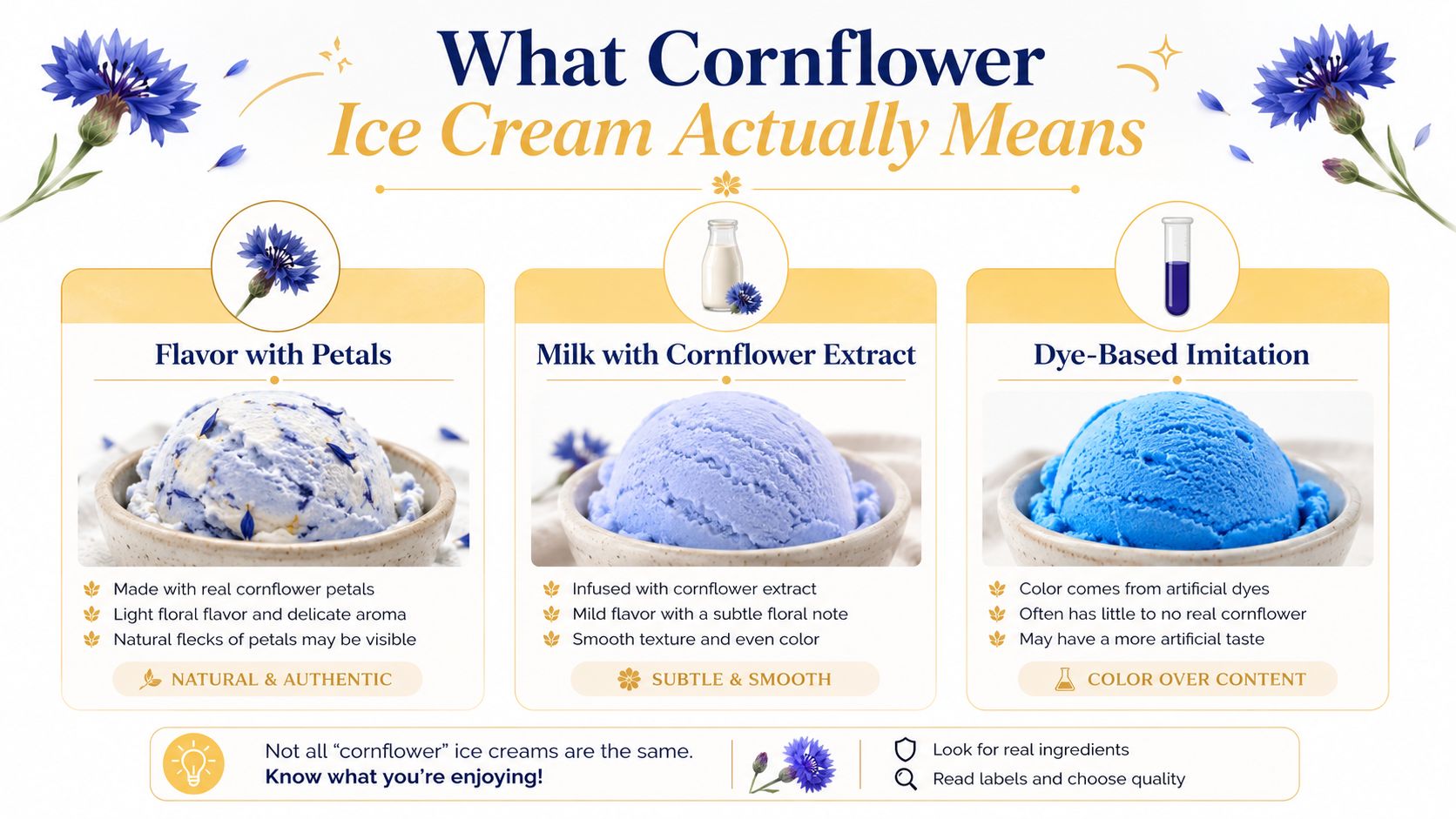
For a home cook, that distinction changes everything. If you want the floral version, you need edible-grade cornflower petals, not sweet corn, not a random blue-colored dairy dessert, and not a shop's signature flavor name. If you're researching whether a batch is safe for guests with allergies or dietary needs, you also need to know whether the “cornflower” in front of you is a plant ingredient or just a branding choice. A small naming error can turn into a sourcing error fast.
Cornflower Ice Cream Three Different Meanings
| Meaning | What It Is | Key Identifier | This Guide Covers It? |
|---|---|---|---|
| Flavor with petals | Ice cream flavored with edible cornflower blossoms | Floral note, blue petal infusion | Yes |
| Creamery name | A business name, such as regional creamery branding | Store or menu context | No |
| Sweet corn ice cream | Ice cream made from corn kernels, husks, silk, or cob | Corn flavor, not floral | No |
Cornflowers belong to a much older floral-dessert tradition than modern internet search results suggest. Ice creams and ices have a long history of being flavored with flowers, which is why a petal-based version feels natural in artisan kitchens rather than strange or novelty-driven. That historical thread is why the term deserves a precise definition before you start cooking, especially if your goal is a recipe you can repeat.
For anyone testing whether a floral product has a real audience, it helps to validate the idea before spending time on packaging, photography, and sourcing. A practical framework for that kind of early check is laid out in this guide on how to validate a business idea, and the same logic applies to a specialty ice cream flavor. If people can't tell what the product is, they can't reliably buy it.
Ingredients, Edible Flower Sourcing, and Safety
The safest cornflower ice cream starts with the flower itself, and that means petals only. Skip the calyx and leaves, since they're not the part you want for a clean floral flavor or a polished look. If you're buying dried petals, look for food-grade or organic sourcing, a certificate of analysis, and a supplier who clearly states the product is intended for consumption, not just craft use.
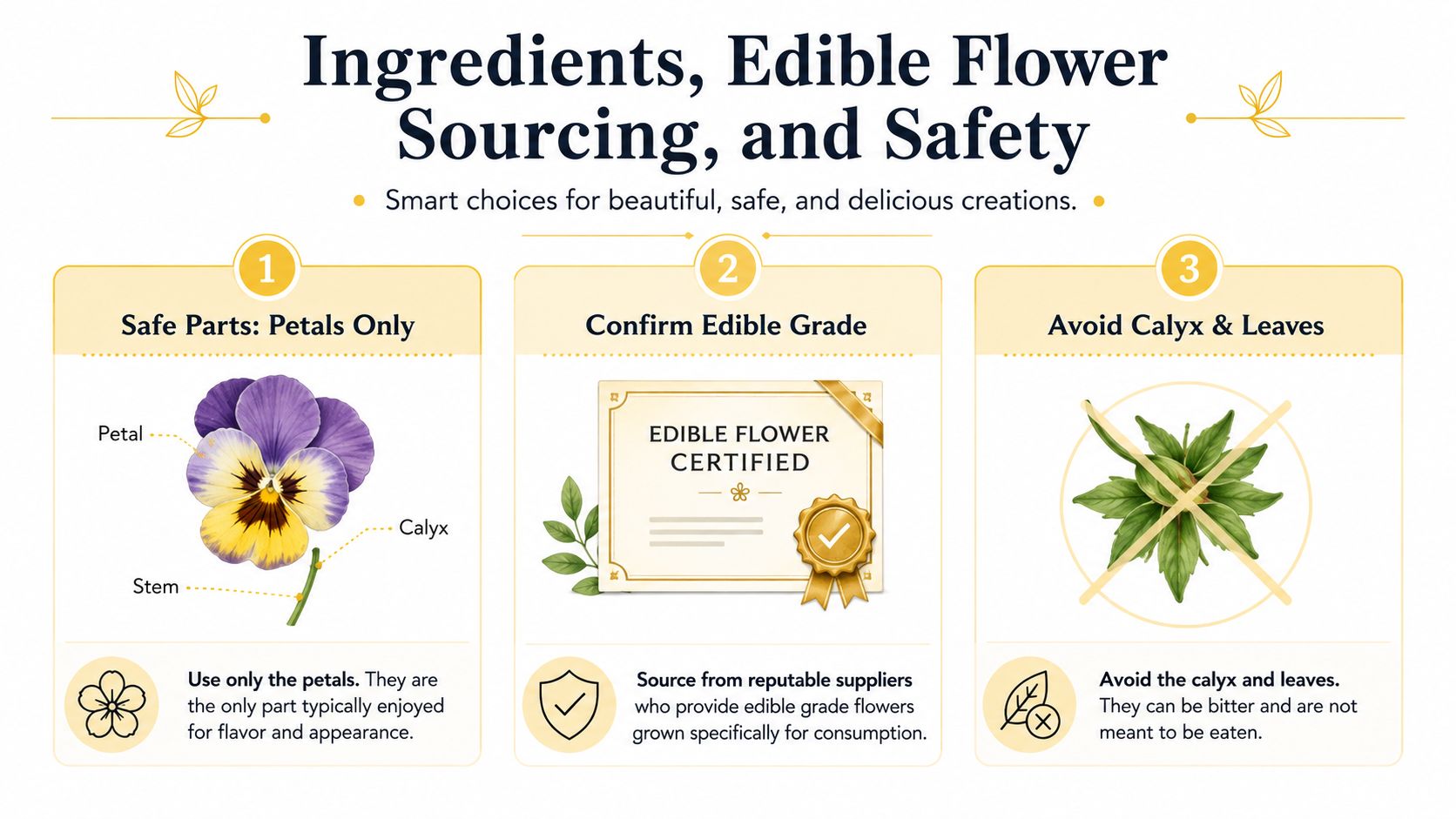
A good rule for home kitchens is simple. Use 8 to 12 grams of dried petals or 20 to 30 grams of fresh petals per liter of base, then adjust in the next batch if you want a stronger floral finish. Wash fresh petals very gently, dry them on clean towels, and avoid bruising them, because crushed petals lose both color and fragrance quickly. Store surplus blossoms properly, and they can hold for up to six months when dried and kept away from light and moisture.
Ingredients For A Standard Dairy Batch
- Heavy cream, milk, and egg yolks for body and richness.
- Sugar for sweetness and softness.
- Edible cornflower petals for color and aroma.
- Salt to sharpen the floral profile.
- Optional stabilizer if you want a little extra insurance against iciness.
The flower-to-milk balance matters more than one might think. Too little, and the ice cream tastes like plain cream with blue specks. Too much, and the floral note can drift into tea-like bitterness, especially if the petals sit too long in hot liquid. If you want a useful benchmark for floral beverages and blending ideas, the ingredient pairing in Ceylon OP Earl Grey 3 oz is a good reference point because it shows how cornflower is often used as a visual and aromatic botanical accent, not as a heavy-handed flavor base.
Safety matters here because flower sourcing is less standardized than dairy sourcing. Ask whether the petals were grown without pesticide residue, whether the food-contact handling line is shared with non-food botanicals, and whether the product is packed to avoid cross-contamination. If a seller can't answer those questions clearly, don't put the petals in your freezer.
Practical rule: if the supplier can't confirm edible grade in plain language, buy from someone else.
The Classic Custard Method Step by Step
The classic version gives you the richest texture and the cleanest way to carry a delicate floral aroma. Start by warming the cream and milk until they're hot but not boiling, then whisk the yolks with sugar until the mixture lightens. Temper the hot dairy slowly into the eggs so you don't scramble them, then return everything to the pan and cook it gently while stirring constantly.
Use the nappe stage as your visual cue. That's the point where the custard coats the back of a spoon and holds a clean line when you draw a finger through it. For many ice cream bases, processing references place pasteurization at 155°F for 30 minutes or 174°F for 25 seconds, and the key home-cook lesson is the same no matter which temperature path you follow, don't let the base boil (IFT ice cream processing guide). Boiling tightens the eggs too fast and flattens the floral note.
Strain the custard through a fine sieve into a clean bowl. That removes any tiny curds or undissolved flower bits and gives you a smoother freeze. Cool the bowl quickly over an ice bath, then let the base age in the refrigerator for the same reason professional mixes do, the resting period hydrates proteins and stabilizers, and it improves body before freezing.
Never let the base boil. If you miss the exact temperature, stop by texture and steam, not by waiting for a rolling bubble.
A reliable workflow
- Heat dairy gently until steam appears.
- Whisk yolks and sugar until pale.
- Temper slowly to protect the eggs.
- Cook just until thickened and spoon-coating.
- Strain and chill fast to preserve aroma.
- Age before churning so the mix freezes cleanly.
That sequence keeps the cornflower note from getting lost under overcooked custard. It also gives you a base that churns into smaller ice crystals, which is the difference between a spoonable dessert and one that eats like cold pudding.
Once the base is strained and chilled, the flower addition should stay gentle. Delicate botanical notes are easiest to lose during heat, so keep the cornflower infusion out of the hottest part of the process whenever you can. A steady hand in the final minutes matters more than aggressive whisking.
A No-Cook Version and a Full Dairy-Free Swap
If you want a faster path, the no-cook version is the easiest place to start. Use heavy cream, whole milk, sweetened condensed milk, and a small amount of cornflour as the stabilizer, then chill the base cold before churning. For the flower, steep petals overnight in the dairy so the mixture picks up aroma without any heat damage.
The dairy-free route works too, but it needs a slightly different logic. Replace the cream with full-fat coconut milk, swap in oat milk for dairy milk, and use a cornstarch plus aquafaba blend to mimic the body of a custard. If you're cooking the base first, steep the petals after pasteurization and cooling, not in the hottest stage. That keeps the floral note brighter and helps the color stay cleaner.
| Method | Active Time | Equipment | Best For | Texture Result |
|---|---|---|---|---|
| Custard | Medium | Saucepan, whisk, thermometer, churner | Richest flavor and body | Dense and creamy |
| No-Cook | Low | Bowl, whisk, churner | Fast home batches | Light, smooth, slightly softer |
| Vegan | Medium | Saucepan, whisk, strainer, churner | Dairy-free service | Creamy with a softer finish |
The no-cook version depends on good chilling, because there's no egg network to lean on. The vegan version depends on careful heat control and the right starch balance, because coconut milk can separate if it's treated too aggressively. In both cases, the infusion should be complete before the churn if you want even color.
A small practical note helps here. If you're making the no-cook base in advance, keep it cold and churn it the next day rather than letting it sit at room temperature. If you're making the vegan base, whisk the starch thoroughly so you don't end up with tiny cooked lumps that show up after freezing.
Infusion Techniques That Actually Preserve Flavor and Color
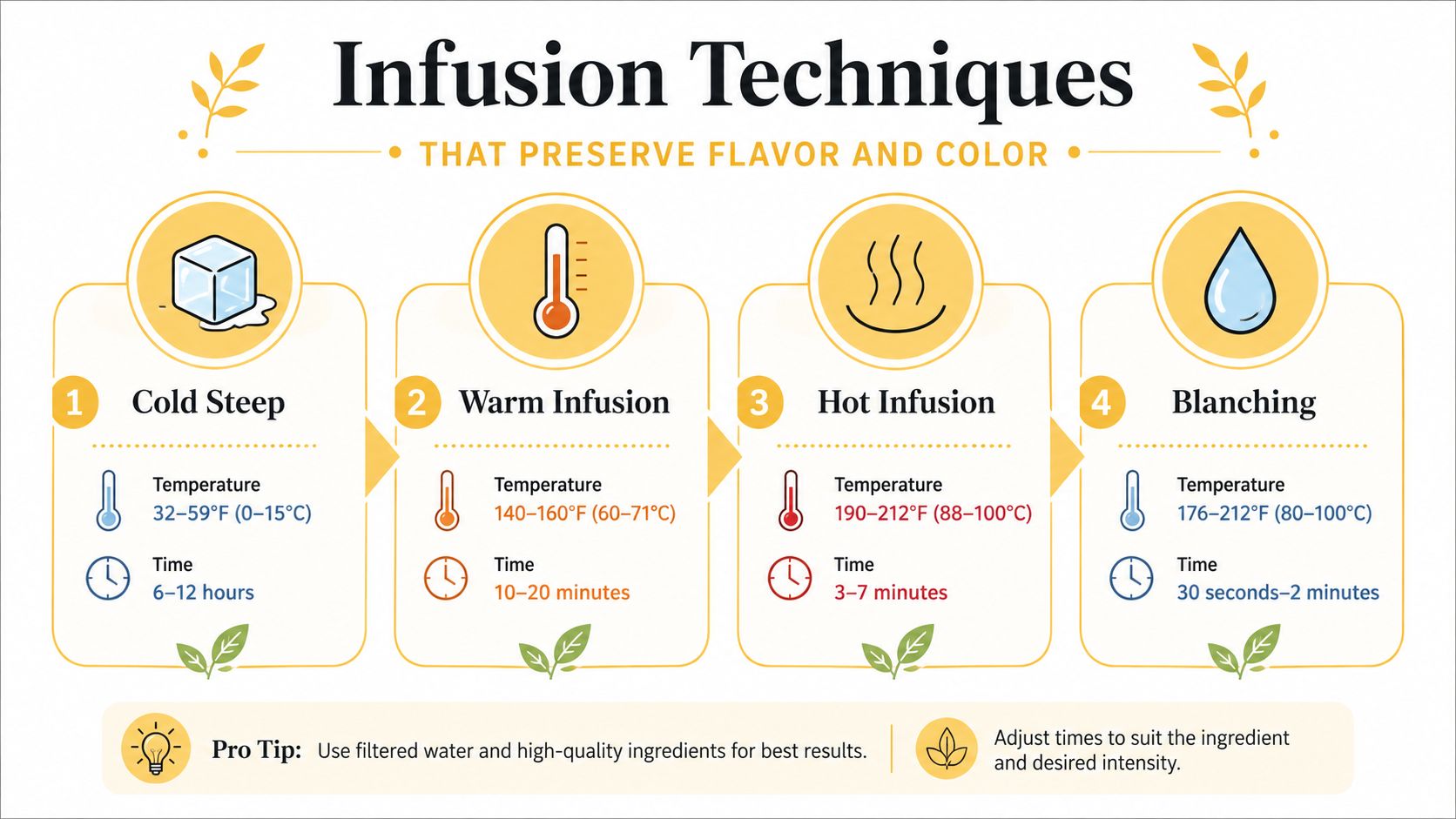
Cornflowers are subtle, so the infusion method matters as much as the ingredient itself. A warm steep gives the most rounded aroma, a cold overnight steep protects the brightest floral character, a direct puree gives color but risks texture issues, and a simple syrup infusion is the easiest way to dose flavor without straining a milky base twice. If you want the cleanest finish, keep the petals in a mesh bag or strain them fully before churning.
Color is the tricky part. A tiny pinch of citric acid can help keep the blue more vivid, because high pH tends to push the color duller and grayer. Use it sparingly, though, since too much acid can make the ice cream taste sharp rather than floral. Alcohol-based extracts are a poor fit here, because they can strip away the fresh petal character and leave you with perfume instead of flower.
Choosing The Right Infusion
- Cold steep for the freshest aroma and the least color damage.
- Warm infusion for a fuller but still delicate floral note.
- Hot infusion only when you need speed, since it can flatten the bouquet.
- Syrup infusion when you want a controlled, repeatable flavor dose.
If a batch turns muddy, the most likely cause is over-heating or over-steeping. Pull the petals earlier next time, lower the temperature, and avoid blending them too finely if you're chasing a brighter blue. If the flavor reads like tea, the petals stayed in contact with the liquid too long.
The best decision rule is simple. Use cold infusion for elegance, warm infusion for balance, and direct puree only if you accept a less refined texture. That approach gives you control without forcing every batch through the same method.
Texture, Storage, and Troubleshooting
Ice cream that tastes great on day one can still fail in the freezer if the texture isn't managed well. The mix should age before churning, then freeze until it reaches a scoopable holding range around -10 to -12°C. After churning, pack it into a shallow container, press parchment directly onto the surface, and move it to the coldest stable part of the freezer so ice crystals don't build on top.
A small amount of vodka or cornflour can help slow iciness, but neither one fixes a weak base. They support a good formula, they don't rescue a bad one. For peak flavor, flower-forward ice cream is best eaten within about two to three weeks. After that, the aroma and color start to fade even if the dessert is still safe to eat.
Common Problems And Clean Fixes
- Icy crystals: the base was under-aged or the freezer ran warm. Let the mix rest longer next time and store it deeper in the freezer.
- Greasiness: the batch was over-churned. Stop churning when it looks like soft-serve, not butter.
- Muted flavor: the petals were overheated. Move the floral addition later in the process and reduce heat exposure.
- Faded color: oxidation or high pH did the damage. Press the surface flat, cover tightly, and use a small acid adjustment if needed.
For a small-batch maker, the same storage discipline matters online too. If you're selling by preorder or direct pickup, the packaging, storage notes, and product page all need to match the shelf behavior of the ice cream. A practical e-commerce setup is as important as the recipe itself, and this guide to how to build an ecommerce website is a useful reminder that product handling and customer experience live on the same timeline.
Serving Ideas, Pairings, and a Small Business Angle
Cornflower ice cream shines when you let the color do some of the work. A single quenelle on a white plate with shortbread crumbs looks clean and intentional. It also plays nicely with lemon posset, honey cake, or an affogato made with chamomile tea if you want to keep the floral theme coherent instead of crowded.
For small-batch sellers, limited-run positioning makes sense because botanical desserts already feel seasonal and special. A short preorder window gives you a clean production count, and a simple stop-motion spoon-drop reel can show the texture without overexplaining the product. If you're pricing it, frame the value around freshness, hand sourcing, and limited availability rather than trying to compete with ordinary tubs in the freezer case.
Search visibility matters here too. Local customers usually look for specialty desserts near the place they already live and eat, so a flower-forward flavor should be tied to location, season, and pickup details. That same logic shows up in this guide to local SEO for restaurants, because niche menu items perform best when nearby buyers can find them.
Flower ice cream lives or dies on fresh petals and gentle handling. Treat both like ingredients, not decorations.
That's the lesson behind cornflower ice cream. It isn't a novelty blue dessert, and it isn't just a pretty name. It's a botanical flavor built on careful sourcing, controlled infusion, and enough freezer discipline to let the flower stay itself.
If you want help turning a specialty dessert into a product people can find and buy, Up North Media can help with the website, SEO, and local visibility behind it. They build the digital side of a specialty brand so your seasonal products don't disappear after the first post.